Understanding how does a hydraulic cylinder work is essential for anyone who operates, maintains, or specifies heavy machinery. Hydraulic cylinders are the muscles of industrial equipment, converting fluid pressure into linear force and motion. Whether you are troubleshooting a slow actuator or selecting a new component, grasping the basic operating principles helps you make better decisions. In this guide, we will explain how does a hydraulic cylinder work, break down its key parts, and explore common configurations used across different industries.
1. How Does a Hydraulic Cylinder Work? The Basic Principle
At its core, a hydraulic cylinder relies on Pascal’s law: pressure applied to a confined fluid is transmitted equally in all directions. A hydraulic cylinder consists of a cylindrical barrel, a piston, and a piston rod. When pressurized hydraulic fluid enters the chamber on one side of the piston, it pushes the piston, generating linear force. The rod attached to the piston extends or retracts, doing useful work. To fully understand how does a hydraulic cylinder work, you must visualize fluid flowing into one port, forcing the piston to move, while fluid on the opposite side exits through another port.
This simple yet powerful principle is the foundation of countless machines, from excavators to presses. For a deeper understanding of cylinder specifications, refer to our guide on how to measure a hydraulic cylinder, which covers critical dimensions for selection and replacement.
2. Key Components That Make It Work
Every hydraulic cylinder contains several precision parts. Knowing these helps answer how does a hydraulic cylinder work in practice:
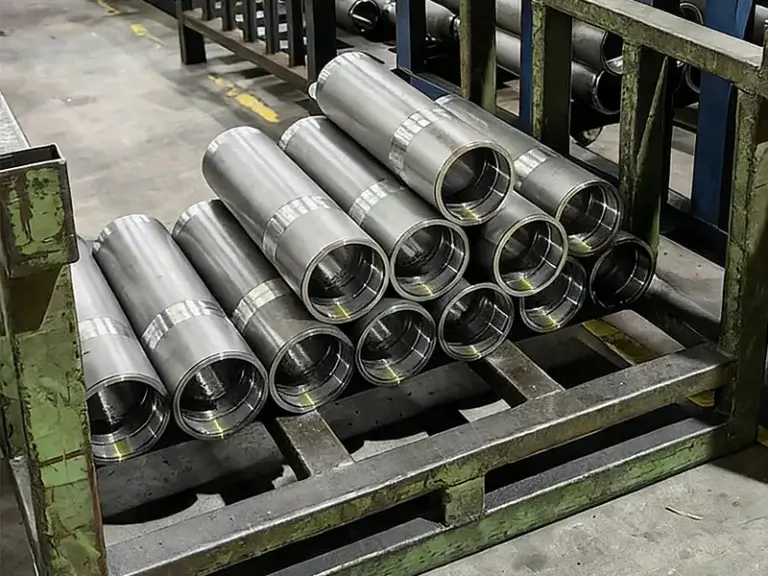
Barrel: The tube that houses the piston and fluid.
Piston: A disc that separates the two internal chambers.
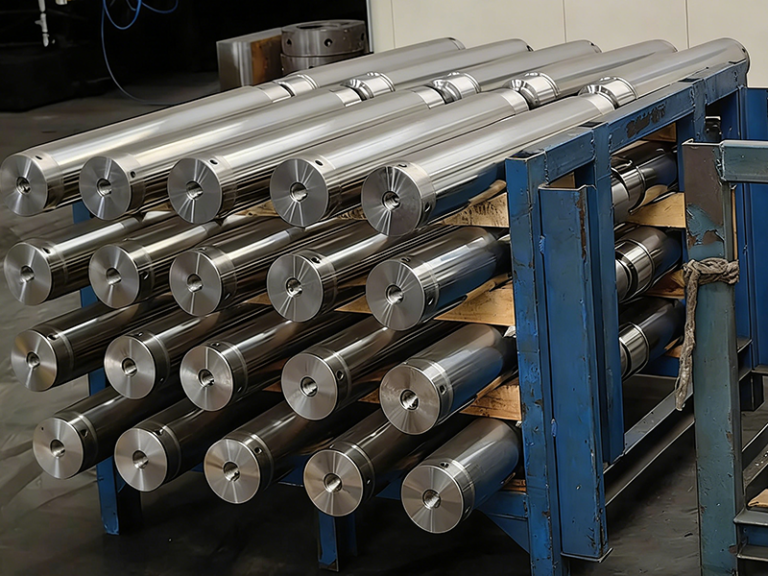
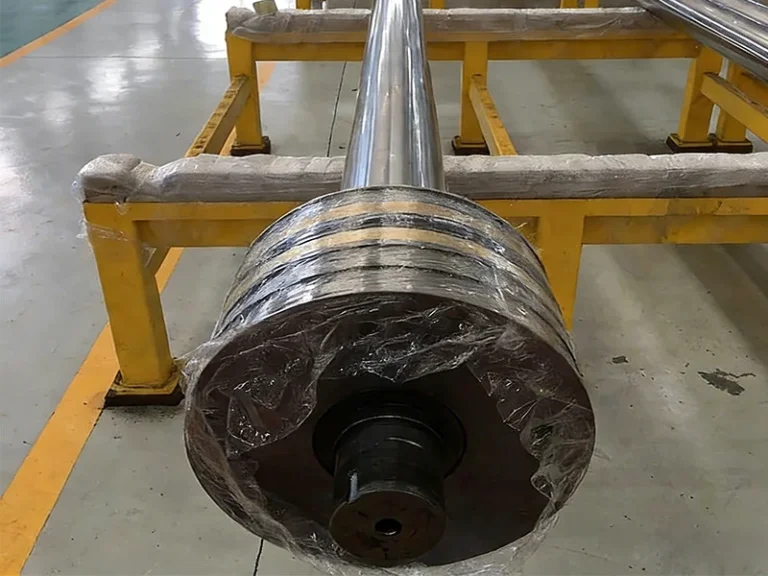
Piston rod: The chrome-plated shaft that transfers force to the load.
Gland (head gland): Seals the rod end and contains bearings.
Seals: Prevent fluid leakage between chambers and to the outside.
Ports: Openings where fluid enters and exits.
For example, a hydraulic piston cylinder uses the piston as the primary pressure surface. The quality of these components directly affects performance and lifespan.
3. The Working Cycle: Extension
To see how does a hydraulic cylinder work during extension, follow the fluid path. Pump sends oil into the cap-side port (behind the piston). Pressurized fluid pushes the piston forward, extending the rod. The fluid in the rod-side chamber is forced out through the opposite port and returns to the tank. The force generated equals pressure multiplied by the piston area (F = P × A). This simple formula explains why larger bore cylinders produce more force.
In double acting hydraulic cylinders, fluid can be directed to either side of the piston, allowing powered extension and retraction. This is the most common design in mobile and industrial equipment.
4. The Working Cycle: Retraction
Retraction works similarly but with fluid entering the rod-side port. Pressurized fluid pushes against the annular area (piston area minus rod cross-section). Because the area is smaller, retraction force is less than extension force at the same pressure. Understanding how does a hydraulic cylinder work in both directions helps operators anticipate performance differences.
For applications requiring high retraction force, engineers may specify larger rod diameters or use alternative designs. But in most cases, the natural imbalance is acceptable.
5. Single-Acting vs. Double-Acting Cylinders
A single-acting cylinder uses fluid pressure to move in one direction (usually extension); gravity or a spring returns the rod. A double acting hydraulic cylinders uses fluid pressure for both extension and retraction. The latter offers more control and is used in most modern machinery.
When answering how does a hydraulic cylinder work, it is important to note that double-acting designs have two ports, one for each direction. They are ideal for applications like hydraulic cylinder for press, where both pushing and pulling may be needed.
6. Real-World Applications and Special Designs
Hydraulic cylinders appear in countless machines. Here are a few examples that illustrate how does a hydraulic cylinder work in specific contexts:
Agricultural machinery: A hydraulic cylinder for agricultural machinery lifts implements, steers wheels, and folds equipment. The harsh environment demands durable seals and rod protection.
Industrial presses: A hydraulic cylinder for press provides high tonnage for forming, stamping, and molding. These cylinders often operate at extreme pressures.
Rotary motion: A helical rotary actuator converts hydraulic pressure into rotary motion (torque) rather than linear motion, using a helical gear mechanism.
General industry: An industrial hydraulic cylinder is a broad category covering many standard and custom designs for factories, mills, and workshops.
Each variation relies on the same basic principle. Once you understand how does a hydraulic cylinder work, you can adapt that knowledge to any specialized configuration.

7. Common Misconceptions and Safety Notes
Some people think hydraulic cylinders are simply “oil rams” that push without precision. In reality, they can be positioned very accurately with proper valving. Also, never assume a cylinder is safe just because the equipment is off. Trapped pressure can cause sudden movement. Always relieve pressure before maintenance.
Understanding how does a hydraulic cylinder work includes knowing the dangers of high-pressure oil, which can inject through skin and cause severe injury.
Conclusion
From construction sites to factory floors, the question how does a hydraulic cylinder work has a straightforward answer: pressurized fluid acting on a piston creates linear force. The cylinder’s design—whether double acting hydraulic cylinders, a hydraulic piston cylinder, a hydraulic cylinder for agricultural machinery, a helical rotary actuator, a hydraulic cylinder for press, or a general industrial hydraulic cylinder—all follow Pascal’s law. By mastering this principle and the measurement techniques covered in how to measure a hydraulic cylinder, you can confidently select, maintain, and troubleshoot hydraulic cylinders in any application.