A Compact Hydraulic Cylinder is designed to deliver high force in space-constrained applications. However, even the best cylinder will fail prematurely if its mounting style does not match the machine’s geometry and load conditions. Selecting the correct mounting style for a Compact Hydraulic Cylinder ensures proper alignment, minimizes side loads, and maximizes service life. In this guide, we will explain the most common mounting styles for a Compact Hydraulic Cylinder and help you choose the right one for your equipment. For an introduction to this cylinder type, see our guide on What Is a Compact Hydraulic Cylinder.
1. Why Mounting Style Matters for Compact Cylinders
A Compact Hydraulic Cylinder is often installed in tight spaces where misalignment is difficult to correct. The mounting style determines how the cylinder attaches to the machine, how loads are transmitted, and whether the cylinder can pivot during operation. Choosing the wrong mount can cause rod bending, seal leakage, or barrel distortion. Compact cylinders are typically used in automation, machine tools, and mobile equipment, so a well-chosen mount is essential for reliability.
2. Flange Mount (Front or Rear)
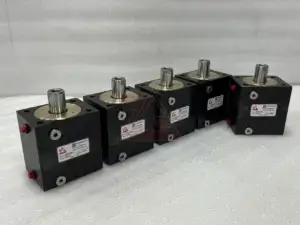
Flange mounting is a rigid, zero-misalignment style. The Compact Hydraulic Cylinder has a rectangular or square flange on the head end (rod end) or cap end. The flange is bolted directly to a flat machine surface. Flange mounts are ideal for applications where the cylinder must push or pull in perfect axial alignment with the load, such as in presses, clamping units, and test stands. A front flange compact cylinder provides a compact footprint, while a rear flange compact cylinder allows the cylinder to be mounted deeper inside the machine. This style is common when you need a high force compact cylinder for pressing or forming operations.
3. Side Lug Mount (Foot Mount)
Side lug mounts (also called foot mounts) consist of two lugs extending from the cylinder body. The Compact Hydraulic Cylinder is bolted down through these lugs onto a flat base. This style is easy to align and is frequently used in conveyors, assembly tables, and material handling equipment. A low profile hydraulic cylinder with side lugs can be mounted directly under a workpiece support. Side lug mounts accommodate some misalignment in the horizontal plane but do not allow pivoting.
4. Clevis Mount (Rod End or Cap End)
A clevis mount uses a U-shaped bracket and a pin to attach the Compact Hydraulic Cylinder to the machine. The clevis can be at the rod end, the cap end, or both. This mount allows the cylinder to pivot in one plane as it extends and retracts, making it ideal for linkages, dumpers, and steering mechanisms. A pivot mount compact cylinder is another name for this style. For applications where the cylinder must follow an arc, such as in a scissor lift or a tipper, a clevis mount is often the best choice. A stainless steel compact cylinder with a clevis mount is common in food processing or marine environments where pivoting motion is needed.
5. Trunnion Mount (Fixed or Intermediate)
Trunnion mounts have pins (trunnions) that project from the cylinder body, perpendicular to the axis. The Compact Hydraulic Cylinder pivots around these pins. Trunnion mounts are available as head end trunnion, cap end trunnion, or intermediate trunnion (pins at the middle of the barrel). This style allows the cylinder to swing through a wide angle and is used in heavy-duty applications such as dump truck hoists, excavator linkages, and agricultural implements. A heavy duty compact cylinder with trunnion mount can handle high side loads and shock. Trunnion mounts are also space-efficient because the cylinder body rotates, not just the rod end.
6. Threaded Body Mount
Some small Compact Hydraulic Cylinder models have threads machined on the barrel or on the rod end. The cylinder is screwed into a mating threaded hole in the machine frame. This mount is extremely compact and eliminates extra brackets. It is common in miniature cylinders for robotics, clamping tools, and fixture applications. A small bore hydraulic cylinder with a threaded body can be installed in very tight spaces. However, threaded mounts do not allow any misalignment and are best suited for purely axial loads.
7. Nose Mount (Rectangular or Square)
A nose mount is a variation of the flange mount where the flange is at the rod end (the “nose”) of the Compact Hydraulic Cylinder. The cylinder is inserted into a hole in the machine structure, and the flange is bolted against the face. This style provides excellent rigidity and is often used in machine tools and die-casting machines. A metric compact cylinder with a nose mount simplifies installation on European-designed equipment.
8. How to Choose the Right Mounting Style
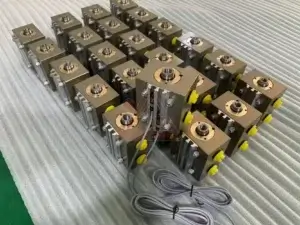
When selecting a mounting style for your Compact Hydraulic Cylinder, consider the following factors:
Load direction: Is the force purely axial, or is there a side load?
Machine structure: What mounting surfaces or brackets are available?
Movement required: Does the cylinder need to pivot during operation?
Space constraints: Some mounts (like flange or nose) are more compact than clevis or trunnion.
Serviceability: Pivot mounts require access to pins for maintenance.
For a custom compact cylinder, you can often combine a different rod end attachment (e.g., a clevis on the rod) with a flange or trunnion body mount. Always follow the manufacturer’s recommendations for torque and alignment.
9. Common Mistakes to Avoid
Using a rigid mount (flange or side lug) where pivoting is needed – will cause rod bending and seal wear.
Ignoring side loads – leads to premature failure of bearings and seals.
Overtightening mounting bolts – can distort the cylinder barrel.
Misalignment between cylinder and load – reduces life dramatically.
Using a non-standard mount without spare parts availability – complicates future replacement.
10. Application Examples by Mounting Style
Flange mount: Hydraulic press, injection molding clamp – rigid, high force.
Side lug mount: Conveyor stop, pallet positioner – easy alignment.
Clevis mount: Forklift tilt cylinder, scissor lift – allows pivot.
Trunnion mount: Dump truck hoist, excavator arm – wide angle articulation.
Threaded body mount: Miniature clamp, robotic gripper – very tight space.
Conclusion
Selecting the correct mounting style for a Compact Hydraulic Cylinder is essential for reliable operation, long seal life, and safe machine performance. From flange and side lug to clevis, trunnion, threaded body, and nose mount, each style serves a specific purpose. Whether you need a front flange compact cylinder, low profile hydraulic cylinder, stainless steel compact cylinder, heavy duty compact cylinder, small bore hydraulic cylinder, or metric compact cylinder, matching the mount to your application’s load, space, and motion requirements is critical. For foundational knowledge, revisit What Is a Compact Hydraulic Cylinder. A well-chosen mount ensures your compact cylinder delivers years of trouble-free service.