In modern industrial machinery, space is often at a premium. Engineers constantly face the challenge of fitting powerful actuators into increasingly tight machine envelopes. The answer to this challenge is the Compact Hydraulic Cylinder – a space-saving linear actuator that delivers substantial force from a small package. Unlike traditional tie-rod cylinders, a Compact Hydraulic Cylinder is specifically engineered to minimize overall length and diameter while maintaining high pressure capacity. In this guide, we will explain what a Compact Hydraulic Cylinder is, how it works, its key design features, typical applications, and the advantages it offers over standard cylinder designs.
1. Definition and Basic Principle
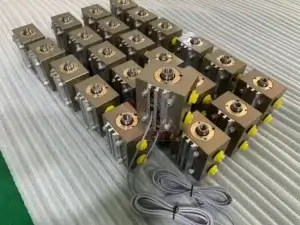
A Compact Hydraulic Cylinder is a mechanical device that converts hydraulic fluid pressure into linear motion or force within a space-efficient envelope. It operates on the same fundamental principle as any hydraulic cylinder: pressurized fluid acts on a piston, generating linear force. However, the Compact Hydraulic Cylinder achieves this with a much smaller form factor. These cylinders typically feature a low profile, a metric design, and a corrosion-resistant aluminum body that allows installation where space is severely limited. Their total length is often about half that of a comparable tie-rod cylinder, yet they deliver comparable force.
2. Key Design Features
Several design elements distinguish a Compact Hydraulic Cylinder from standard cylinders. First, many models use a welded or integrated construction rather than external tie-rods, reducing overall length and diameter. Second, the body is often made of lightweight aluminum, though heavy-duty versions use steel or stainless steel for demanding environments. Third, a Compact Hydraulic Cylinder frequently includes features such as magnetic pistons that allow position-indicating switches to be mounted, with grooves on the body to accept sensors. These design choices enable the Compact Hydraulic Cylinder to fit into machine tools, molds, and fixtures where a standard cylinder simply would not fit.
3. How a Compact Hydraulic Cylinder Works
The working principle of a Compact Hydraulic Cylinder is identical to that of any double-acting hydraulic cylinder. Hydraulic fluid enters one side of the piston, pushing it and extending the rod. Fluid on the opposite side returns to the tank. To retract, fluid is directed to the rod side. The Compact Hydraulic Cylinder achieves its small size through optimized internal porting, reduced dead volume, and compact sealing arrangements. For example, many compact cylinders use a cushion seal system that reduces impact at stroke end while improving durability. Some are available as single-acting versions (pressure in one direction, spring return) or double-acting versions (powered extension and retraction). A small bore hydraulic cylinder variant is common for light-duty applications, while a heavy duty compact cylinder with thicker walls handles higher pressures.
4. Common Applications
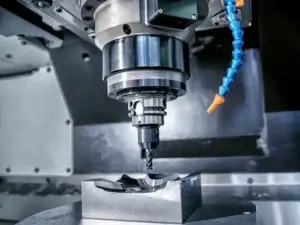
The Compact Hydraulic Cylinder is used across a wide range of industries and applications. In factory automation, these cylinders perform clamping, pushing, lifting, and workpiece support in assembly lines and packaging machinery. In the automotive industry, a Compact Hydraulic Cylinder provides reliable actuation in robotic assembly cells and conveyor systems. In machine tools, they serve as clamp cylinders to secure workpieces during machining or welding operations. Other common uses include injection molding machines, material handling systems, aerospace actuators, and mobile equipment where space is constrained. A low height hydraulic cylinder (often called a pancake cylinder) is specifically designed for lifting and positioning in extremely confined working spaces where other cylinders will not fit.
5. Compact vs. Tie-Rod Cylinders
Compared to traditional tie-rod cylinders, a Compact Hydraulic Cylinder offers several distinct advantages. The most obvious is space savings – the compact design reduces overall length by up to 50% for the same bore and stroke. Additionally, a Compact Hydraulic Cylinder can be mounted directly without special accessories, simplifying installation. The absence of external tie-rods also eliminates crevices where dirt and debris can accumulate. However, tie rod cylinders are generally easier to disassemble and repair. For applications where every inch matters, the Compact Hydraulic Cylinder is the superior choice.
6. Material and Coating Options
Compact hydraulic cylinders are available in various materials to suit different environments. Standard models often feature an aluminum body for light weight, while a stainless steel hydraulic cylinder variant offers superior corrosion resistance for food processing, marine, or chemical applications. Rod coatings include hard chrome for general use, nickel-chromium for saltwater resistance, and ceramic coatings for extreme wear protection. A high pressure hydraulic cylinder variant may use steel construction with reinforced seals. Choosing the right material ensures that your Compact Hydraulic Cylinder delivers long, trouble-free service.
7. Mounting Styles and Customization
Manufacturers offer a wide range of mounting options for the Compact Hydraulic Cylinder, including flange mounts, side lug mounts, clevis mounts, and trunnion mounts. Many compact cylinders follow NFPA dimensional standards, allowing interchangeability between different brands. A custom compact cylinder can be specified with special port threads, integrated sensors, unique rod end attachments, or non-standard stroke lengths. This flexibility makes the Compact Hydraulic Cylinder adaptable to almost any machinery design.
8. Advantages and Limitations
The primary advantages of a Compact Hydraulic Cylinder include: space efficiency, high force density, smooth motion control, and the ability to mount sensors directly on the body. These cylinders are typically lighter than tie-rod equivalents and require fewer mounting accessories. Limitations include generally higher cost per unit (due to more complex manufacturing) and reduced repairability (many compact cylinders are welded or have non-serviceable designs). For applications that require frequent rebuilding, a tie-rod design may still be preferable. However, for original equipment where space is the driving constraint, the Compact Hydraulic Cylinder is unmatched.
9. Selection Criteria
When selecting a Compact Hydraulic Cylinder for your project, consider: bore size (determines force output), stroke length, operating pressure, mounting style, rod diameter, seal material (compatible with your hydraulic fluid), and environmental factors such as temperature and corrosiveness. Also decide between single-acting or double-acting configurations. For mobile equipment subject to vibration, a heavy duty compact cylinder with robust bearings is recommended. Always consult manufacturer specifications and dimensional drawings before ordering.
10. Future Trends
The demand for Compact Hydraulic Cylinder technology continues to grow as machines become more compact and automated. Innovations include integrated sensors for Industry 4.0 applications, lightweight composite materials, and electro-hydraulic compact cylinders that combine a hydraulic cylinder with an electric motor and pump. These advances will make the Compact Hydraulic Cylinder even more versatile in the coming years.
Conclusion
A Compact Hydraulic Cylinder is a space-efficient linear actuator that delivers high force in a small package, making it ideal for tight machinery envelopes. Whether you need a small bore hydraulic cylinder, low height hydraulic cylinder, stainless steel hydraulic cylinder, high pressure hydraulic cylinder, custom compact cylinder, or heavy duty compact cylinder, understanding this technology helps you select the right component for your application. From factory automation to aerospace, the Compact Hydraulic Cylinder continues to enable innovative machine designs that would be impossible with standard cylinders. By matching the cylinder type to your specific space and performance requirements, you ensure efficient, reliable operation.