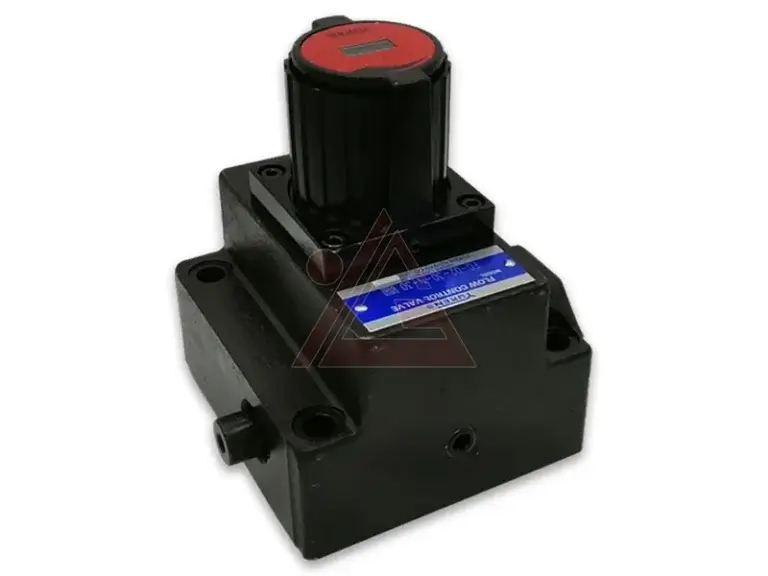
A Hydraulic Flow Control Valve is a critical component in hydraulic systems, designed to regulate the flow rate of hydraulic fluid to actuators such as cylinders and motors. By controlling the volume of fluid passing through a circuit per unit of time, a Hydraulic Flow Control Valve directly determines the speed of hydraulic cylinders and motors. Without a properly functioning Hydraulic Flow Control Valve, actuators would move erratically, loads would be difficult to position, and energy would be wasted. Understanding how a Hydraulic Flow Control Valve works is essential for anyone involved in designing, maintaining, or operating hydraulic systems.
In this comprehensive guide, we will explore the basic principles of flow control, the internal workings of a Hydraulic Flow Control Valve, the different types available, and how they are applied in hydraulic circuits.
1. What Is a Hydraulic Flow Control Valve? Basic Definition
A Hydraulic Flow Control Valve is a mechanical device that regulates the rate of fluid flow in a hydraulic system. It accomplishes this by creating a variable restriction in the fluid path. By adjusting the size of the flow passage, the valve controls the volume of fluid that passes through it per unit of time.
The fundamental purpose of a Hydraulic Flow Control Valve is to control actuator speed. In a hydraulic cylinder, speed is directly proportional to flow rate: the more fluid that enters the cylinder, the faster it extends. The less fluid that enters, the slower it moves. This relationship—flow rate determines speed—is the foundation of hydraulic flow control. A Hydraulic Flow Control Valve is used whenever precise speed control is required, from machine tools and presses to mobile equipment and agricultural machinery.
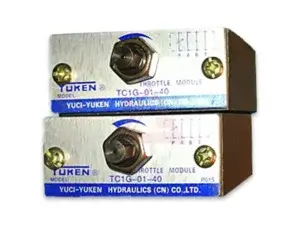
2. The Basic Working Principle of a Hydraulic Flow Control Valve
The working principle of a Hydraulic Flow Control Valve is based on the concept of fluid restriction. When fluid flows through a restriction, a pressure drop occurs. The smaller the opening, the greater the restriction and the lower the flow rate. By changing the size of this opening, a Hydraulic Flow Control Valve can precisely control the amount of fluid passing through.
Think of it like a garden hose: when you partially cover the opening with your thumb, the water comes out faster but the total flow rate is reduced. The same principle applies to a Hydraulic Flow Control Valve—the valve restricts flow to control actuator speed.
The most common designs of a Hydraulic Flow Control Valve include:
Variable Orifice: An adjustable opening that can be changed manually or automatically.
Compensating Element: A piston or spool that maintains a constant pressure drop across the orifice.
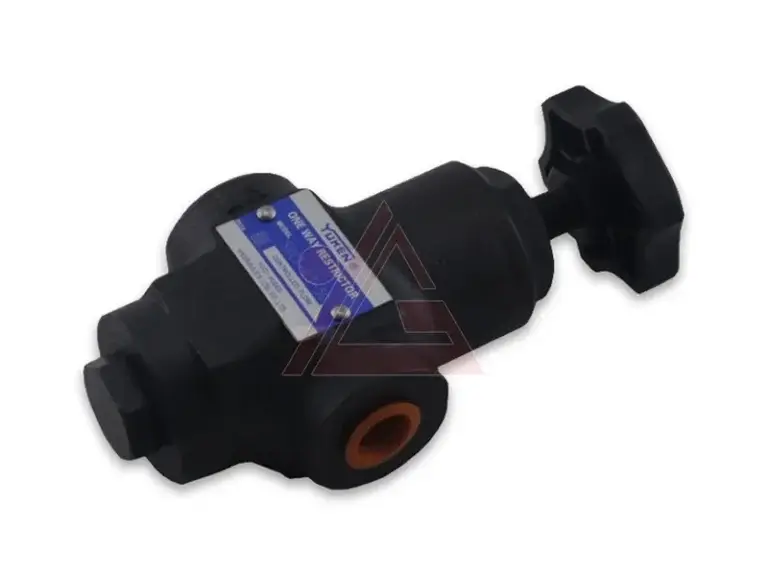
Check Valve: Allows free flow in one direction while restricting flow in the opposite direction (in many flow control valves).
3. Types of Hydraulic Flow Control Valves
Different types of Hydraulic Flow Control Valves are used depending on the application requirements.
Fixed Orifice
A fixed orifice is the simplest type of flow control. It is a fixed restriction that cannot be adjusted. It provides a constant flow rate but is sensitive to pressure and temperature changes. Fixed orifices are typically used in simple, low-cost applications where precise control is not required.
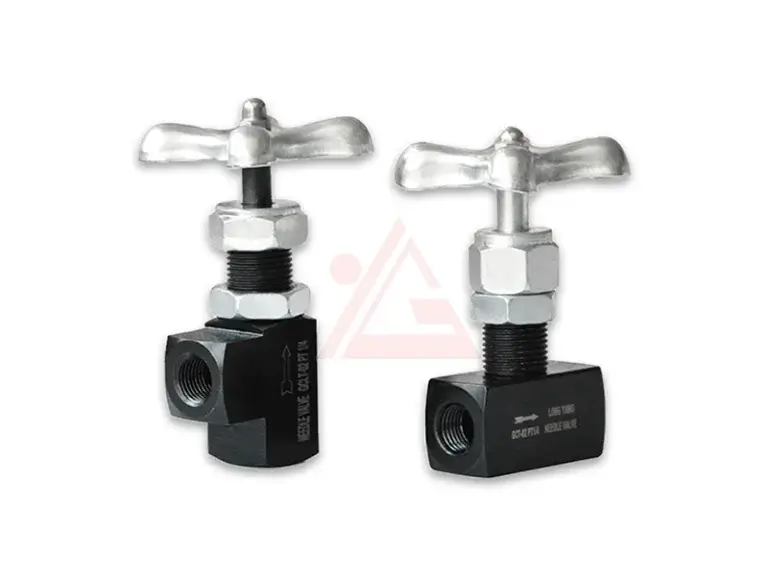
Variable Orifice (Needle Valve)
A variable orifice (often called a needle valve) allows manual adjustment of the flow passage. The user turns a knob or screw to change the opening size, thereby controlling flow. Needle valves are simple, inexpensive, and widely used for basic speed control. They are suitable for applications where precision is not critical.
Pressure Compensated Flow Control Valve
A pressure compensated flow control valve is designed to maintain a constant flow rate regardless of pressure changes in the system. This is achieved by combining a variable orifice with a pressure compensator. The compensator adjusts the orifice size automatically to maintain a constant pressure drop across the orifice, ensuring a consistent flow rate despite load variations. Pressure compensated valves are essential for applications where cylinder speed must remain constant under varying loads.
Temperature Compensated Flow Control Valve
A temperature compensated flow control valve adjusts for changes in fluid viscosity caused by temperature fluctuations. As temperature increases, oil viscosity decreases, which would normally increase flow. The temperature compensator adjusts the orifice to compensate for this effect, maintaining a constant flow rate across a range of operating temperatures.
4. How Pressure Compensation Works in a Flow Control Valve
Pressure compensation is one of the most important features of many Hydraulic Flow Control Valves. In a non-compensated valve, flow rate changes when system pressure fluctuates. For example, if the load on a cylinder increases, the pressure in the system rises, which can increase the flow rate through a fixed orifice, causing the cylinder to move faster.
A pressure compensated flow control valve solves this problem by maintaining a constant pressure drop across the variable orifice. A compensator spool senses the pressure at the inlet and outlet of the orifice and adjusts the orifice size to keep the pressure drop constant. As a result, the flow rate remains consistent regardless of changes in system pressure. This ensures that cylinder speed stays constant even when loads vary.
5. Meter-In and Meter-Out Flow Control
The placement of a Hydraulic Flow Control Valve in a circuit determines the control strategy.
Meter-In Control
In meter-in control, the Hydraulic Flow Control Valve is placed on the inlet side of the actuator, controlling the flow of fluid entering the cylinder. This method is typically used when the load opposes the direction of movement (e.g., a cylinder lifting a load). In meter-in control, the valve restricts the flow going into the cylinder.
Meter-Out Control
In meter-out control, the Hydraulic Flow Control Valve is placed on the outlet side of the actuator, controlling the flow of fluid leaving the cylinder. This method provides better control for overrunning loads where the load tends to pull the cylinder (e.g., a cylinder lowering a load). Meter-out control provides smoother deceleration and helps prevent cavitation.
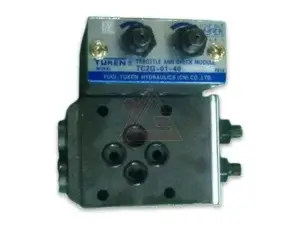
6. How a Hydraulic Flow Control Valve Works with Cylinders
The interaction between a Hydraulic Flow Control Valve and a hydraulic cylinder is straightforward but critical to system performance.
When the valve is fully open, maximum fluid flows to the cylinder, resulting in the fastest extension speed. When the valve is partially closed, flow is restricted, reducing cylinder speed. By adjusting the valve, the operator can precisely control the cylinder’s speed.
In a meter-in configuration, the Hydraulic Flow Control Valve controls the flow entering the cylinder. The pump supplies fluid to the valve, which then meters the flow to the cylinder. In a meter-out configuration, the valve controls the flow leaving the cylinder, providing control over the return flow to the tank.
7. Selecting the Right Hydraulic Flow Control Valve
Choosing the correct Hydraulic Flow Control Valve for your application requires consideration of several factors:
Flow Rate: The valve must handle the required flow without excessive pressure drop.
Pressure Rating: The valve must be rated for your system’s maximum operating pressure.
Control Accuracy: Determine whether standard, pressure-compensated, or temperature-compensated control is needed.
Circuit Type: Choose between meter-in and meter-out control based on load conditions.
Adjustability: Decide between fixed or variable orifice.
Conclusion
A Hydraulic Flow Control Valve is an essential component for regulating the speed of hydraulic cylinders and motors. By creating a variable restriction in the fluid path, it controls the volume of fluid passing through a circuit, directly determining actuator speed. Understanding how a Hydraulic Flow Control Valve works—whether it is a simple needle valve, a pressure compensated flow control valve, or a temperature compensated flow control valve—is fundamental to designing and maintaining efficient hydraulic systems. By selecting the right valve and control method (meter-in or meter-out), you can achieve precise speed control, maximize energy efficiency, and extend the service life of your hydraulic system.