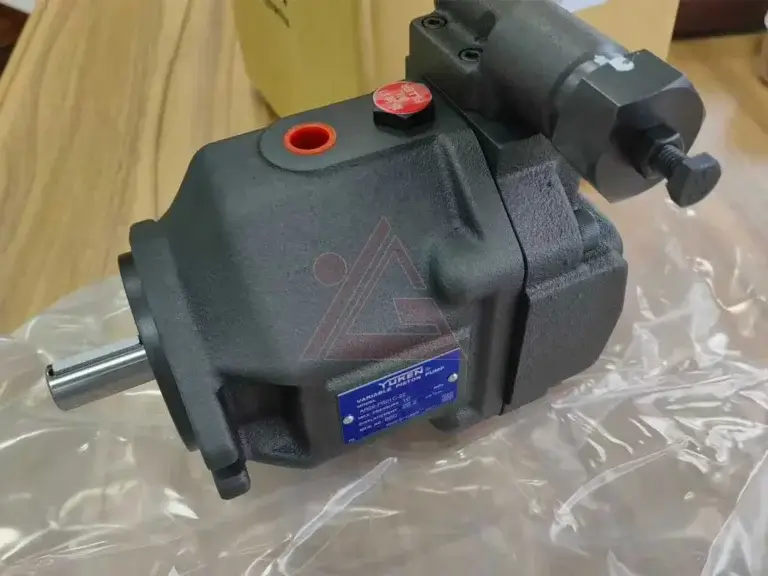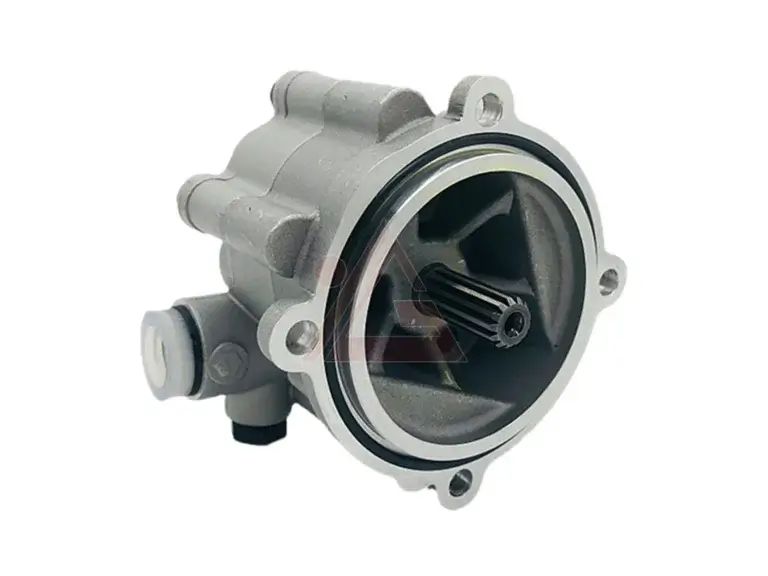
A Piston Pump is one of the most durable and efficient types of positive displacement pumps, but “durable” does not mean “indestructible.” The honest answer to how long a Piston Pump lasts is: it depends—on the pump type, the operating conditions, the fluid, and above all, the maintenance it receives. Some industrial piston pumps run for tens of thousands of hours; others fail within a few thousand. The difference is rarely the pump itself. It is how well the owner understands what drives wear and how consistently they act on it. This guide breaks down realistic lifespan expectations, the maintenance schedule that separates long-lived pumps from short-lived ones, and the failure modes that most often cut a Piston Pump’s service life short.
1. What “Lifespan” Actually Means for a Piston Pump
Lifespan for a Piston Pump is not a single number. Manufacturers express it in several different ways, and understanding the distinction prevents both unrealistic expectations and premature replacement.
B10 bearing life is the most common industrial metric. It represents the number of hours at which 10% of a population of bearings will have failed under rated conditions. A B10 rating of 8,000 hours does not mean the pump fails at 8,000 hours; it means 90% of units should still be running. Some Danfoss and Eaton axial Piston Pump series are rated for B10 bearing life in the 5,500 to 80,000-hour range depending on load and pressure conditions.
Cycle-based life applies more to small precision piston pumps, such as those used in medical and laboratory dosing. These are often rated for 5 million to 15 million maintenance-free cycles rather than hours. Cycle life and hour life are not interchangeable; a pump cycling continuously at high frequency can accumulate millions of cycles in a fraction of the hours a slower industrial pump would see.
Real-world service records provide the widest range. Documented cases include pumps retired after 23,000 hours in remote locations, municipal wastewater pumps still in service beyond 129,900 hours, and high-pressure plunger pumps that run for thousands of hours between major interventions when maintained correctly. At the other extreme, contaminated or misapplied pumps can fail in tens or hundreds of hours.
The practical takeaway is that a Piston Pump has a design life envelope, not a fixed expiry date. Where a specific unit lands within that envelope is decided by operation and maintenance.
2. The Maintenance Schedule That Defines Piston Pump Life
The single most reliable predictor of Piston Pump longevity is adherence to a structured preventive maintenance schedule. The intervals below reflect common industry practice for high-pressure piston pumps; exact values should always be confirmed against the specific manufacturer’s manual.
Daily Checks
Every operating day, inspect for oil or water leaks around the pump and its fittings. Check the oil level through the sight glass and confirm the oil condition—milky oil indicates water ingress, and dark oil suggests overheating or contamination. Verify that suction filters are not blocked and that fittings and piping show no signs of aging, bulging, or abrasion. These checks take minutes and catch the majority of developing problems before they become failures.
The First Oil Change at 50 Hours
The first crankcase oil change on a new or rebuilt Piston Pump should be performed after approximately 50 hours of operation. This early change removes break-in wear particles that would otherwise circulate through bearings and piston pairs. Skipping this step is one of the most common self-inflicted causes of reduced pump life.
Oil Changes Every 500 Hours
After the initial change, crankcase oil should be replaced every 500 hours of operation, or more frequently under heavy-duty or high-temperature conditions. Use only the oil grade specified on the pump nameplate; the wrong viscosity changes film thickness, alters slip, and accelerates wear on the piston-cylinder interface. For hydraulic axial Piston Pump units, many manufacturers recommend changing the hydraulic fluid at least annually or every 2,000 operating hours, whichever comes first, and verifying fluid suitability through laboratory analysis.
Seals Every 1,000 Hours
Seals are the most frequently replaced wear component in a Piston Pump. Worn seals cause pressure loss, leakage, and loss of volumetric efficiency. Good practice is to replace seals every 1,000 operating hours, or immediately if leaks appear, rather than waiting for failure. Seal life is also a diagnostic indicator: unusually short seal life almost always points to an unfavorable operating condition—cavitation, excessive temperature, or abrasive contamination—rather than a defective seal.
Valves Every 1,500 Hours
Suction and delivery valves must open and close cleanly to maintain pressure and flow. Inspect them at each service interval and plan replacement around every 1,500 hours. Foreign bodies lodged in valve seats cause erratic pressure and pulsation; worn valves cause progressive loss of capacity.
Adapt Intervals to Actual Duty
Standard intervals assume normal operating conditions. Intensive use, high ambient temperatures, contaminated environments, or fluids outside the specified viscosity range all justify shortening the intervals. A Piston Pump in a clean, temperature-controlled industrial system may comfortably exceed standard intervals; the same pump in a dusty mobile application may need checks and changes at half the recommended hours.
3. Operating Practices That Extend Piston Pump Life
Maintenance intervals matter, but day-to-day operating decisions determine how much wear the pump accumulates between services.
Protect Suction Conditions and Prevent Cavitation
Cavitation is the most destructive avoidable condition for a Piston Pump. In piston and plunger pumps, cavitation typically occurs when the suction chamber cannot fill completely during the suction stroke. The mechanism is the acceleration head: with every stroke, the entire fluid column in the suction line must accelerate from standstill. If the suction line is too long, too narrow, or insufficiently damped, the fluid cannot keep up, and local pressure drops below vapor pressure, forming vapor bubbles that implode and damage valve seats and metal surfaces.
The consequences are specific: a crackling or ticking sound in the rhythm of the piston stroke, irregular flow at constant speed, and accelerated valve wear as imploding bubbles erode the valve seat. Prevention requires adequate suction line diameter, short and direct suction runs, clean suction filters, and avoiding operation at excessive stroke frequency with viscous fluids.
Never Run Dry
Dry running destroys seals within minutes. A Piston Pump that turns without fluid on the suction side develops rapid seal wear and can score piston and cylinder surfaces. Confirm suction supply before every start, and verify that the discharge path is open so the pump can prime.
Control Fluid Temperature
Excessive inlet temperature reduces viscosity, impairs lubrication, and accelerates seal degradation. Most piston pumps for water service are rated for inlet temperatures up to 65°C, with high-temperature series reaching 85°C. Operating consistently near the upper limit shortens seal and valve life. For hydraulic Piston Pump units, maintaining the appropriate oil temperature is repeatedly identified as a key factor in extending service life.
Keep Fluid Clean
Wear-related issues account for approximately 80% of failures in axial piston pumps, and contamination is a leading contributor. For hydraulic axial Piston Pump units with tight internal clearances, filtration must match the manufacturer’s specification. A common field indicator is volumetric efficiency: when it drops to around 72%, routine maintenance—including bearing and seal replacement and attention to worn friction pairs—is due.
Maintain Alignment and Coupling Condition
Misalignment between pump and motor introduces radial and axial loads that bearings were not designed to carry. Constant excessive noise is often attributable to worn bearings or coupling problems; check keys, flexible couplings, and pulley condition, and confirm that pump and motor shafts are perfectly aligned. Vibration during operation also loosens fasteners, so periodically verify that pump mounting screws remain tight.
4. Common Failure Modes and What They Reveal
Understanding how a Piston Pump fails is as useful as knowing how to maintain it, because each failure mode points to a specific root cause.
Loss of pressure or failure to reach set pressure is the most frequently reported problem. Causes include a worn or oversized nozzle that provides insufficient resistance, insufficient water supply from a clogged filter or undersized suction hose, a misadjusted pressure regulating valve, foreign bodies in the valves, worn piston seals, or rotation speed that is too low. Work through these systematically rather than replacing the pump.
Excessive noise, pulsation, and vibration usually trace to valves first—foreign bodies or worn valves—followed by high inlet temperature, worn piston seals, worn bearings, or coupling misalignment.
Premature seal wear is a symptom, not a cause. It signals cavitation, overheating, abrasive particles, or chemical incompatibility with the pumped fluid.
Volumetric efficiency decline is the slow, quiet failure mode. Output falls gradually, cycle times lengthen, and the loss is often tolerated until production suffers. Tracking flow against a baseline catches this early.
Check valve problems—sticking, jamming, or failure to seat—cause no-flow or intermittent-flow conditions and are among the most common causes of a pump that will not build pressure.
5. When to Repair and When to Replace
A Piston Pump is generally worth rebuilding if the housing and major castings are intact and the wear is confined to serviceable components: seals, valves, bearings, piston assemblies, and friction pairs. Rebuilding restores performance at a fraction of replacement cost and is standard practice for high-value industrial and mobile pumps.
Replacement becomes the better decision when the pump has suffered catastrophic internal damage, when repeated rebuilds no longer restore volumetric efficiency, when the cost of downtime exceeds the cost of a new unit, or when the existing pump is obsolete and parts are unavailable. For critical processes, keeping a rebuilt spare on the shelf is often the most cost-effective risk-management strategy.
Conclusion
How long a Piston Pump lasts is not a fixed number printed in a catalog. Bearing life ratings, cycle ratings, and real-world service records all describe a range, and where a specific pump falls within that range is determined by suction conditions, fluid cleanliness, temperature, alignment, and above all, adherence to a disciplined maintenance schedule. The 50-hour first oil change, 500-hour oil intervals, 1,000-hour seal replacement, and 1,500-hour valve inspection are not arbitrary—they are the checkpoints that keep wear within design limits. Combine that schedule with cavitation prevention, dry-run avoidance, and filtration discipline, and a Piston Pump will deliver thousands of hours of reliable service. Neglect any of these, and even the best-built Piston Pump will fall far short of its potential. The lifespan question, in the end, is really a maintenance question—and the answer is largely in the operator’s hands.