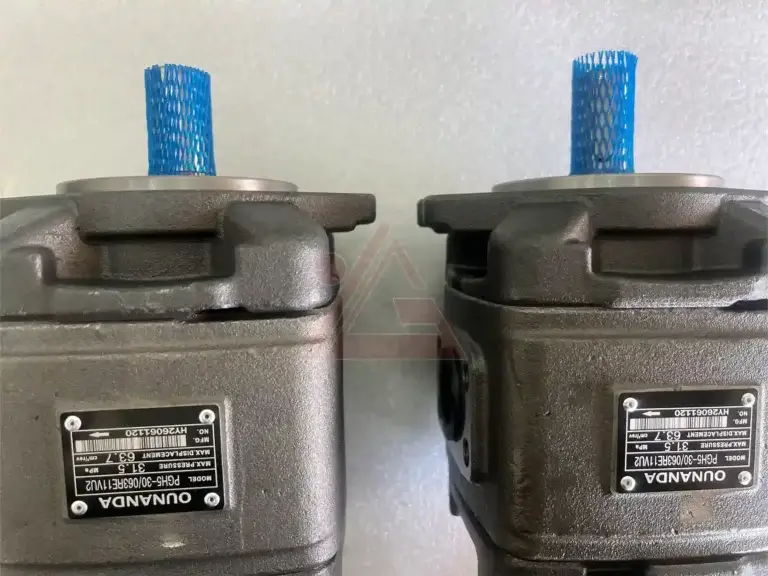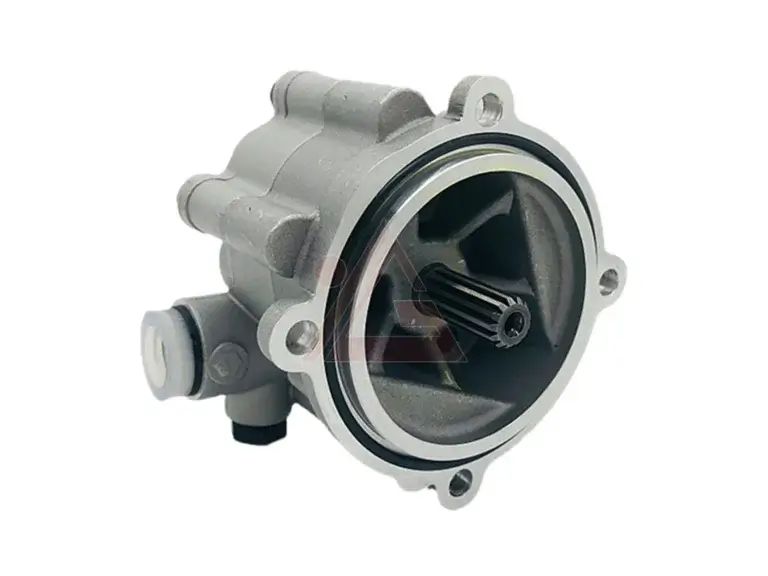
A Piston Pump is a positive displacement pump that moves fluid through the linear stroke of a piston inside a cylinder. Unlike centrifugal pumps that accelerate fluid dynamically, a Piston Pump displaces fluid mechanically, which gives it three defining characteristics: flow is pulsating, achievable pressures far exceed those of other pump types, and the pump is self-priming. From simple hand pumps to fully automated high-pressure industrial units, the Piston Pump covers an exceptionally wide performance range and remains the preferred technology wherever high pressure and high efficiency are non-negotiable.
1. What Is a Piston Pump? Basic Definition
A Piston Pump belongs to the reciprocating family of positive displacement pumps. A piston moves back and forth inside a cylinder, drawing fluid in through an inlet valve on the suction stroke and forcing it out through an outlet valve on the discharge stroke. Because the piston displaces a fixed volume with each stroke, the Piston Pump delivers a predictable amount of fluid per cycle—a property that makes it highly controllable and suitable for metering and precision applications.
The term Piston Pump is often used broadly to include piston, plunger, and diaphragm designs, all of which rely on reciprocating motion. Within this family, the plunger pump has become the dominant design for industrial high-pressure service because the dynamic seal is fixed in the pump head rather than travelling with the piston, allowing tighter tolerances and operating pressures up to 4,000 bar (58,000 psi).

2. How Does a Piston Pump Work?
The Piston Pump operates in two distinct strokes. During the suction stroke, the retracting piston increases the cylinder volume, creating a vacuum that opens the inlet valve and draws fluid in. During the discharge stroke, the inlet valve closes, pressure rises until the outlet valve opens, and fluid is forced into the discharge line. Both valves are typically spring-loaded check valves with no external actuation, which keeps the design mechanically simple and reliable.
A crankshaft driven by a motor converts rotary motion into reciprocating stroke motion through a connecting rod and crosshead. A gearbox usually reduces motor speed to the required 300 to 700 crankshaft revolutions per minute. The displacement of a Piston Pump is calculated as the number of pistons multiplied by piston area, piston stroke, and drive speed.
Because a single cylinder delivers flow only during its discharge stroke, the output of a Piston Pump is inherently pulsating. This is a physical characteristic, not a design flaw. Multiple cylinders offset in phase smooth out the pulsation, which is why the three-cylinder triplex configuration has become the industrial standard—it offers the best balance of pulsation control, maintenance requirements, and manufacturing cost.
3. Types of Piston Pump
Piston pumps are built in several distinct configurations, and understanding the differences is essential for choosing the right one.
Axial Piston Pump
In an axial Piston Pump, the pistons are arranged parallel to the drive shaft inside a rotating cylinder block. They are stroked by an angled swash plate, or in bent-axis designs by the angle between the shaft and the cylinder block. The larger the swash plate angle, the longer the piston stroke and the higher the output flow. Axial piston pumps are compact, suitable for high speeds, and offer flexible variable control, with typical pressure ranges of 200–450 bar and volumetric efficiency above 95%. They are widely used in construction machinery, injection molding machines, and mobile equipment.
Radial Piston Pump
In a radial Piston Pump, the pistons are arranged in a star pattern perpendicular to the drive shaft and are pushed against an eccentric cam ring. Radial designs are structurally robust and are reserved for ultra-high-pressure applications above 600–1000 bar, such as hydraulic presses, forging presses, and deep-sea equipment. They tolerate contamination well and suit harsh environments, but they are larger, noisier, and less responsive in variable control than axial designs.
Plunger Pump
A plunger pump works on the same principle as a piston pump but differs in one critical construction detail: the seal is fixed in the pump head, and the plunger slides through it. This allows more sophisticated sealing systems, tighter tolerances, and the use of solid ceramic plungers, which is why the plunger design supports pressures up to 4,000 bar and dominates high-pressure cleaning, water hydraulics, and process technology.
Single-Acting and Double-Acting Piston Pump
A single-acting Piston Pump discharges only on the forward or return stroke, while a double-acting design delivers fluid on both strokes, reducing pulsation for a given cylinder count. Double-acting piston pumps are common in mud pumps and certain process applications where smoother delivery is required.
4. Piston Pump vs. Gear Pump vs. Vane Pump
Choosing a Piston Pump is rarely a decision made in isolation. It is usually a comparison against gear and vane pumps.
Gear pumps are the simplest and least expensive option, with fixed displacement and volumetric efficiency typically in the 80–90% range. They are ideal for low-to-medium pressure applications where cost and durability matter more than precision. Vane pumps sit in the middle: quieter than gear pumps, more efficient, and often available with variable displacement, with volumetric efficiency around 82–92%.
A Piston Pump takes the premium end of the range. It reaches the highest pressures, often exceeding 400 bar, and delivers volumetric efficiency above 98% in well-maintained units. It also offers variable displacement through swash plate angle adjustment, allowing flow to match system demand and improving energy efficiency. The trade-offs are higher cost, greater complexity, more demanding filtration requirements, and a need for more skilled maintenance.
The practical rule is straightforward: for low pressure and simple duty, choose a gear pump; for quiet, balanced medium-pressure performance, choose a vane pump; for high pressure, high efficiency, and precise variable control, choose a Piston Pump.
5. How to Choose the Right Piston Pump
Selecting a Piston Pump requires working through a defined set of application parameters rather than comparing catalog numbers.
Fluid type and viscosity come first. The four key selection factors are the type of fluid, its viscosity or thickness, the required flow rate, and the required output pressure. Abrasive, corrosive, or high-viscosity fluids may push the decision toward a plunger design or special materials.
Pressure and flow requirements follow. Determine the maximum continuous pressure, including any pressure spikes, and the flow needed to achieve the required actuator speed. A Piston Pump should be rated above the system’s relief setting, not at it.
Displacement control is the next decision. If the system’s flow demand varies—as it does on excavators, presses with variable cycle profiles, or wind turbine pitch systems—a variable-displacement axial Piston Pump is the efficient choice. If flow is constant and high pressure is the only requirement, a fixed-displacement radial or plunger pump may be more economical.
Speed and drive configuration must match the prime mover. A Piston Pump has a minimum and maximum speed, and the gearbox or direct drive must keep it within that window. Running too slowly starves suction; running too fast accelerates wear.
Filtration and fluid cleanliness deserve early attention. Axial piston pumps have tight clearances between the swash plate and piston pairs and typically require fine filtration to NAS Class 6 or better. Specifying a Piston Pump without matching the filtration to its requirements is one of the most common causes of premature failure.
Mounting, porting, and controls complete the specification. Consider whether the pump needs integrated pressure compensators, load-sensing controls, or proportional displacement control, and confirm that the mounting flange and shaft match the drive.
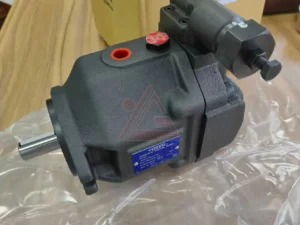
6. Common Applications of Piston Pump
The Piston Pump dominates applications where pressure and precision are the deciding factors.
In metal forming and hydraulic presses, radial piston pumps deliver the ultra-high pressure needed for forging, stamping, and extrusion. In construction and earthmoving equipment, axial piston pumps provide the variable flow and high pressure required for excavator booms, travel circuits, and attachment control. In injection molding machines, piston pumps deliver precise, repeatable injection profiles.
High-pressure cleaning and waterjet cutting rely almost exclusively on plunger pumps, which can sustain pressures up to 4,000 bar. Oil and gas applications use piston and plunger pumps for mud circulation, well service, and chemical injection. Agricultural and mobile equipment uses piston pumps where gear pumps cannot reach the required pressure or efficiency. Wind turbine pitch systems increasingly specify variable-displacement axial piston pumps for precise, energy-efficient blade control.
7. Maintenance and Troubleshooting Basics
A Piston Pump rewards correct installation and disciplined maintenance. Keep the fluid clean and within the specified viscosity range, because contamination accelerates wear on pistons, valves, and sealing surfaces. Monitor inlet conditions to prevent cavitation, which damages valves and erodes metal surfaces. Check suction and discharge valves for wear, and replace them as a set when performance degrades.
Common symptoms point to specific causes. Reduced flow with normal pressure often indicates internal wear or a sticking inlet valve. Excessive noise or pulsation may indicate cavitation, air ingress, or a worn valve. Loss of pressure usually points to worn piston seals, a faulty discharge valve, or a relief valve that is opening early. Overheating can result from internal leakage, incorrect viscosity, or a restriction on the discharge side.
For high-pressure plunger pumps, the packing or seal is a wear item and should be replaced on a schedule rather than after failure. Record operating pressure, flow, and temperature to establish a baseline, so deviations are detected before they become failures.
Conclusion
A Piston Pump is the highest-performance choice among positive displacement pumps, delivering the pressure, efficiency, and variable control that gear and vane pumps cannot match. Its reciprocating action produces pulsating flow, which multi-cylinder designs such as the triplex configuration effectively smooth. Axial designs offer compact, efficient variable displacement for mobile and industrial machinery, while radial and plunger designs serve the most extreme high-pressure duties. Choosing the right Piston Pump means matching fluid, pressure, flow, displacement control, speed, filtration, and mounting to the application—and then maintaining it with clean fluid and disciplined inspection. Used correctly, a Piston Pump delivers reliable, precise performance in the applications where failure is not an option.