Fluid power systems are the quiet driving force behind modern heavy industry. From the rhythmic movement of an excavator bucket to the immense pressing force of manufacturing equipment, these machines depend on a fundamental principle: containing pressurized fluid to generate mechanical force. At the heart of this process is the fluid power cylinder, but its performance rarely depends on the heavy steel components alone. Instead, the real burden of operational efficiency falls on smaller, elastomeric components. Investing in quality hydraulic cylinder seal kits is often the primary dividing line between seamless, high-efficiency production and catastrophic, unexpected equipment failure.
When fluid passes across a damaged sealing surface, internal bypass occurs. This phenomenon manifests as drifting cylinders, loss of system pressure, and an overall degradation of control. The operational environment of these components is notoriously brutal, characterized by rapid pressure spikes, abrasive dust, and thermal fluctuations. Consequently, selecting, identifying, and installing the correct sealing bundle is a fundamental skill for any maintenance professional or fleet operator.
What are Hydraulic Cylinder Seal Kits?
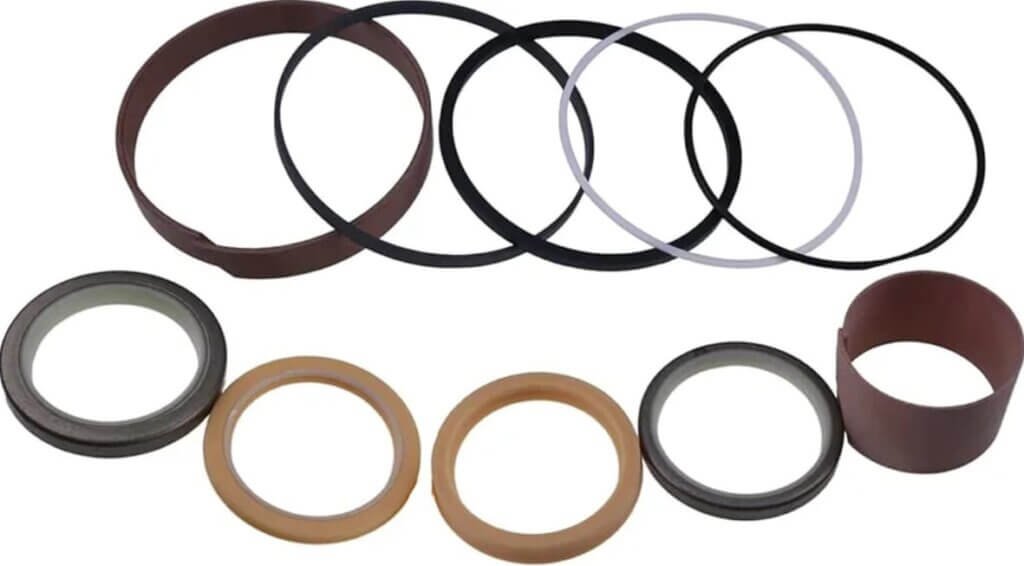
To the untrained eye, a seal kit might look like a random assortment of rubber rings and plastic bands. In practice, however, these packages represent a highly engineered system where each individual element has been selected to handle a distinct stressor within the fluid power loop. Rather than sourcing individual rings when a leak occurs, using pre-assembled bundles ensures that all adjacent components wear at a similar rate and remain chemically compatible with one another.
These sealing groups serve a dual purpose within the circuit. They must retain thousands of pounds of fluid pressure inside the cylinder body while simultaneously preventing external grit, moisture, and ambient contaminants from entering the hydraulic fluid supply. Given the tightly integrated nature of modern fluid power networks, a failure in one sealing area can quickly lead to contaminated oil, which can then score control valves and damage expensive pumps across the entire machinery group. These kits are vital components within the broader catalog of Hydraulic Parts, serving as the critical wear items that preserve the structural integrity of larger, more capital-intensive mechanical assemblies.
Core Component Types within a Seal Kit
A comprehensive service pack is divided into distinct zones based on whether the component handles dynamic movement or remains static during operation. Understanding the individual role of each element makes diagnosing premature failures significantly simpler.
Rod Seals and Buffer Seals
The rod seal is arguably the most critical dynamic element in the entire assembly. Positioned within the cylinder head, its job is to prevent fluid from escaping past the moving rod into the atmosphere. Because it experiences direct pressure variations, a secondary component known as a buffer seal is often placed just ahead of it. The buffer seal acts as a shock absorber, smoothing out extreme pressure spikes before they can distort the primary rod seal lip.
Piston Seals
Located on the moving piston head itself, these seals divide the internal bore into two distinct pressure chambers. When the control valve directs oil to the cap end, the piston seal must maintain a perfect barrier so that fluid pressure translates directly into linear force. If this seal degrades, oil slips across the piston into the rod end, causing the cylinder to “drift” or fail to hold its rated load under heavy strain.
Wiper Seals and Wear Rings
As the polished cylinder rod extends, it is exposed to the ambient environment, which might include ambient dust, mud, fly ash, or moisture. When the rod retracts, the wiper seal (or dust seal) scrapes the metal surface clean, preventing debris from riding along the rod into the internal components. Meanwhile, wear rings or guide strips made of low-friction materials like nylon or PTFE sit inside the assembly to absorb lateral mechanical forces. They ensure the piston and rod travel in a perfectly straight line, preventing destructive metal-to-metal contact against the steel cylinder walls.
O-Rings and Back-up Rings
These are the static workhorses of the kit. They seal the non-moving joints, such as the connection between the cylinder head gland and the main barrel tube. Because elastomeric O-rings can squeeze or extrude into tiny clearances under high pressure, tough plastic back-up rings are positioned alongside them to hold the softer rubber material firmly in place.
| Component Name | Primary Function | Dynamic or Static | Common Industry Materials |
|---|---|---|---|
| Rod Seal | Prevents fluid leakage past the extending rod | Dynamic | Polyurethane (PU), Nitrile (NBR), Viton |
| Piston Seal | Prevents fluid from bypassing between internal chambers | Dynamic | PTFE, Filled Nylon, NBR |
| Wiper / Dust Seal | Scrapes external dirt and moisture off the rod surface | Dynamic | Polyurethane, Metal-cased NBR |
| Wear Ring | Absorbs side loads and prevents internal metal scoring | Dynamic | Phenolic resin, Glass-filled Nylon, PTFE |
| O-Ring | Seals static metal joints between heads and barrels | Static | Nitrile (Buna-N), Fluoroelastomer (FKM) |
| Back-up Ring | Prevents softer O-rings from extruding under high pressure | Static | Nylon, Hard Hytrel, PTFE |
Standard vs. Custom Cylinders: Does One Size Fit All?
A common mistake made during machinery maintenance is assuming that any seal kit designed for a specific rod and bore diameter will fit any cylinder with those same basic dimensions. Industrial machinery relies on a mix of common off-the-shelf components and highly specialized, application-specific designs, and their sealing requirements differ considerably.
For standard machinery setups working in typical factory environments, operators generally rely on Standard Hydraulic Cylinders. These units follow standard geographic or international design templates, meaning their internal groove depths, seal profiles, and clearances are highly predictable. Finding a matching service pack for these units is usually straightforward, relying on standard catalog numbers and generic sizing charts.
However, when equipment operates under unusual conditions, such as extreme temperatures in steel mills, corrosive environments in offshore marine settings, or intense duty cycles in heavy mining, standard components often fall short. These demanding roles are filled by specialized Custom Hydraulic Cylinders, which feature unique internal geometries and customized seal configurations.
A custom cylinder might use a wider piston groove to accommodate thick fabric-reinforced seals, or it might require specialized compound formulations like fluorocarbon or specialized PTFE compounds to withstand synthetic, fire-resistant fluids. Trying to fit a standard nitrile or polyurethane service bundle into a custom system operating with specialized fluids will often lead to rapid seal softening, swelling, or complete structural breakdown within hours of operation.
How to Select the Right Hydraulic Cylinder Seal Kits
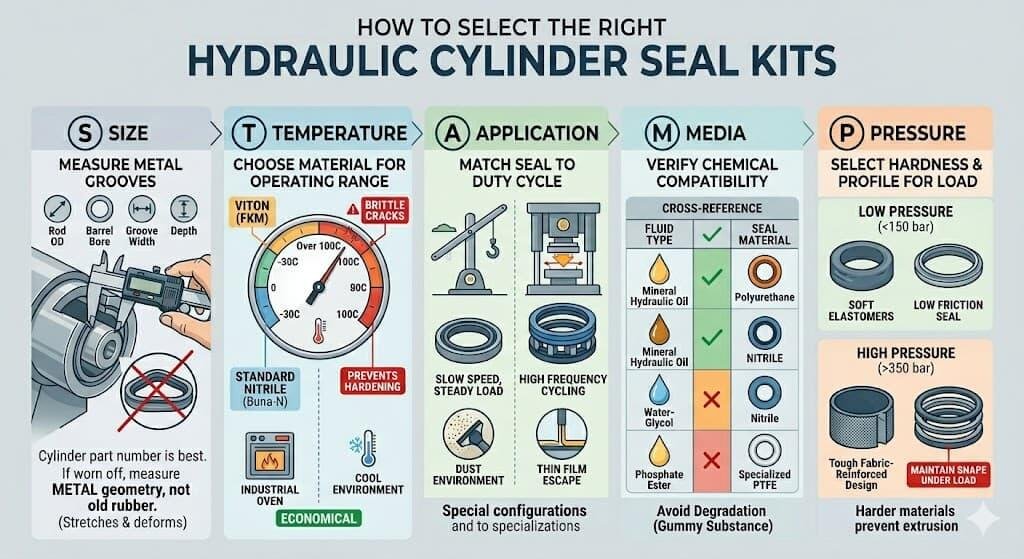
Choosing the correct service package requires evaluating the specific operating conditions of your machinery. Experienced maintenance technicians often follow the S.T.A.M.P. method to ensure every design variable is properly accounted for before placing an order.
Size (S)
The most reliable way to find a replacement kit is by using the cylinder manufacturer’s part number. If that information has worn off the cylinder body, you will need to manually measure the metal grooves with a digital caliper. Never measure a used, worn-out rubber seal to determine your kit size; old elastomeric parts stretch, swell, and deform over time. Instead, measure the physical metal dimensions: the rod outer diameter, the cylinder barrel internal bore, and the exact width and depth of the seal retaining grooves.
Temperature (T)
The operating temperature of your hydraulic oil dictates which seal material you should choose. Standard Nitrile (Buna-N) seals are economical and perform well in normal industrial environments ranging from -30℃ to 100℃. However, if your machinery operates near hot industrial ovens or handles molten metal, those temperatures will quickly bake standard rubber until it becomes brittle and cracks. For these high-temperature environments, specifying a kit made from Viton (FKM) or specialized fluoropolymers is necessary to prevent premature hardening.
Application (A)
Consider what the machine actually does during a normal shift. Is it an aerial lift that moves slowly and holds a position for hours, or is it a high-speed industrial stamping press cycling multiple times per minute? High-frequency operations create thin fluid films that can escape past simple seal lips, requiring specialized multi-lip sealing configurations. Additionally, if the machine operates in abrasive environments like an aggregate quarry, the kit must include an aggressive, heavy-duty scraping wiper to protect the internal seals.
Media (M)
The type of fluid pumped through your system must be chemically compatible with the seal material. Standard mineral-based hydraulic oils work well with common materials like polyurethane and nitrile. However, if your operation uses fire-resistant fluids like water-glycol mixtures or synthetic phosphate esters (such as Skydrol), these fluids will quickly degrade standard polyurethane seals, causing them to turn into a soft, gummy substance. Always cross-reference your fluid type with a material compatibility chart before completing your selection.
Pressure (P)
The maximum operating pressure and regular pressure spikes within your system dictate the hardness (durometer rating) and design profile of the seals you choose. In low-pressure systems operating under 150 bar, softer elastomeric compounds provide an excellent low-friction seal. In high-pressure industrial systems running above 350 bar, those same soft materials will easily squeeze into the small clearances between metal parts. High-pressure kits rely on harder materials, specialized anti-extrusion rings, or tough, fabric-reinforced designs to maintain their shape under load.
Step-by-Step Guide to Replacing Hydraulic Cylinder Seals
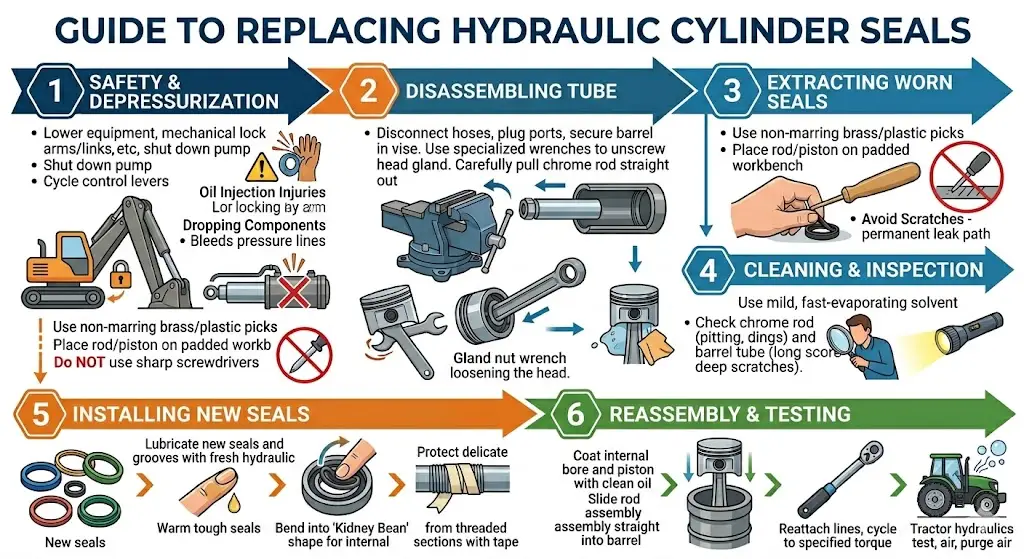
Replacing a worn seal pack requires careful attention to detail and a clean work environment. Introducing even a tiny speck of grit into a hydraulic system during reassembly can quickly ruin a brand-new set of seals and scratch the polished metal components.
Step 1: Safety First and Fluid Depressurization
Before loosening any hydraulic fittings, lower the equipment to the ground and mechanical lock all moving arms or links. Shut down the hydraulic pump and cycle the control levers multiple times to bleed off any residual pressure trapped inside the lines. Working on a system that is still under pressure can cause dangerous oil injection injuries or lead to heavy components dropping unexpectedly.
Step 2: Disassembling the Cylinder Tube
Disconnect the fluid hoses from the cylinder ports and plug the open lines to prevent oil spills. Secure the cylinder barrel firmly in a large bench vise. Use a specialized pin wrench or gland nut wrench to unscrew the cylinder head gland from the barrel tube. Carefully pull the chrome rod straight out of the barrel assembly, taking care not to let the heavy steel piston drag along or scratch the finished internal bore walls.
Step 3: Extracting Worn Seals Safely
Place the rod and piston assembly on a clean, padded workbench. To remove the old, worn parts from their grooves, use specialized non-marring brass or plastic picks. Avoid using sharp screwdrivers or steel pocket knives for this task; a single small scratch on the bottom or side of a seal groove provides a permanent path for high-pressure oil to leak past the new seal.
Step 4: Cleaning and Inspecting the Metal Surfaces
Thoroughly clean the piston, rod, and head gland using a mild, fast-evaporating solvent cleaner. Inspect the chrome plating on the rod for any deep scratches, pitting, or rough stone dings. If the rod is bent or has rough spots, it will quickly ruin your new seals. Similarly, look down the inside of the barrel tube with a flashlight to check for any long, scored lines in the steel wall.
Step 5: Preparing and Installing the New Seal Kit
Unpack your new hydraulic cylinder seal kits and confirm that all components match the pieces you removed. Lubricate all new seals and the metal grooves with clean, fresh hydraulic oil before installation.
When installing tough polyurethane rod seals into an internal head groove, gently warm the seal in clean oil to make it more flexible, then bend it into a temporary “kidney bean” shape to pop it into place without kinking the material. Avoid using sharp tools to force the seals over sharp metal corners. If you must slide a new seal over threaded sections on the rod end, wrap those threads in thin plastic or electrical tape first to protect the delicate sealing lips from cuts.
Step 6: Final Reassembly and Testing
Coat the entire internal barrel bore and the piston assembly with a generous layer of clean hydraulic oil. Carefully slide the rod assembly straight back into the barrel tube, making sure the piston enters smoothly without shaving off pieces of the new piston seals. Tighten the head gland nut back down to the manufacturer’s specified torque settings.
Reattach the fluid lines to the machine, start the engine at a low idle, and cycle the cylinder back and forth several times without a load. This purges trapped air out of the system and lets you verify that everything moves smoothly before returning the machine to heavy work.
Preventing Premature Seal Failure
If your machinery seems to go through replacement service bundles every few months, simply changing out the rubber parts is not addressing the root cause of the issue. Seals are excellent diagnostic tools; their appearance upon removal usually tells a clear story about what is going wrong elsewhere in the fluid system.
A common issue found during teardowns is a seal lip that looks scorched or charred. This is often caused by the “dieseling effect,” which occurs when tiny air bubbles become trapped within the hydraulic oil under high pressure. When the cylinder experiences a sudden load spike, these small air bubbles compress instantly, causing their temperature to spike high enough to scorch the surrounding polymer material. Bleeding the air out of your system after any component replacement is the best way to prevent this type of burn damage.
Environmental contamination is another frequent issue. If a machine works in an environment with fine, abrasive dust—such as a concrete recycling facility or a sandblasting yard—very fine particles can slip past a worn wiper seal. These particles embed themselves into the soft plastic wear rings, turning them into a rough surface that scores the polished chrome rod with every stroke. Regularly inspecting your external wiper seals and replacing them at the first sign of cracking can save you from having to buy an expensive replacement rod down the line.
Finally, keep a close eye on your system’s operating temperatures. Chronic overheating breaks down hydraulic oil and bakes elastomeric seals until they lose their elasticity, hardening into brittle rings that crack under minimal stress. Ensuring your oil coolers stay clean and free of debris is a simple maintenance step that significantly extends the working life of your internal seals.
Conclusion
While heavy steel barrels and thick chrome rods provide hydraulic machinery with its structural strength, it is the flexible sealing elements working inside that make that power usable. Choosing high-quality hydraulic cylinder seal kits that match your system’s specific operating pressures, fluid types, and temperature ranges is a straightforward way to keep your equipment running reliably. Taking the time to properly clean components, use the right installation tools, and fix underlying fluid issues will keep your machinery working efficiently and prevent unexpected downtime.
FAQ
How do I know if my Hydraulic Cylinder Seal Kits are failing before a total breakdown occurs?
Early warning signs include a noticeable drop in operating speed, minor fluid weeping around the rod wiper gland, or a cylinder that slowly drifts out of position when the control valves are centered. You might also notice your hydraulic oil turning a cloudy, milky color, which indicates that external moisture and ambient air are slipping past worn sealing lips into the main system reservoir.
Can I reuse any part of an old seal assembly during an emergency repair?
It is highly recommended to avoid reusing old components. Once an elastomer has been subjected to high operating temperatures and compressed within a metal groove, it takes a permanent physical set and loses its original resilience. Even if an O-ring looks undamaged to the naked eye, reinstalling it usually results in immediate leaks once the system reaches full operating pressure. Replacing the entire bundle at once is the safest approach.
What is the shelf life of unused elastomeric seals in warehouse storage?
The usable shelf life depends on the specific base material and how the parts are stored. Standard nitrile and polyurethane components can typically be stored for 5 to 10 years if kept in an optimal environment. To prevent premature aging, store spare kits in sealed, airtight bags away from direct sunlight, high humidity, and ozone-producing sources like large electric motors or shop welding equipment.