When sourcing hydraulic cylinders for critical applications, certifications are not just paper – they are proof of quality, safety, and reliability. Asking about certifications helps you separate professional Hydraulic Cylinder Manufacturers from low-quality suppliers. This guide explains the most important certifications to look for and why they matter. For a broader selection approach, refer to our guide on How to Choose Reliable Hydraulic Cylinder Manufacturers.
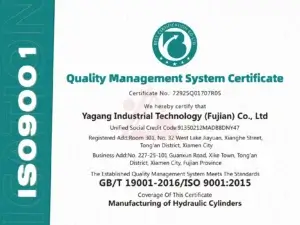
1. ISO 9001 – Quality Management System
ISO 9001 is the baseline certification for any serious manufacturer. It ensures that Hydraulic Cylinder Manufacturers have standardized processes for design, production, testing, and continuous improvement. An ISO 9001 certified supplier follows documented procedures, conducts internal audits, and corrects non-conformities. This directly affects the quality of every custom hydraulic cylinder they produce. Without ISO 9001, you cannot trust consistent quality.
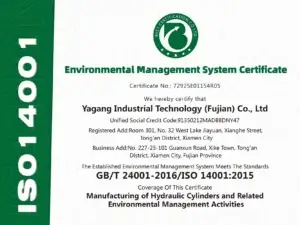
2. ISO 14001 – Environmental Management
ISO 14001 focuses on environmental responsibility. Hydraulic Cylinder Manufacturers with this certification manage waste, reduce emissions, and comply with environmental regulations. While not directly related to cylinder performance, it indicates a well-managed company. Such a hydraulic cylinder manufacturer is more likely to invest in modern equipment and responsible practices.
3. ISO 45001 – Occupational Health and Safety
ISO 45001 covers worker safety. Manufacturers with this certification have systems to prevent accidents and ensure safe working conditions. This indirectly reflects on product quality – a safe workplace reduces errors. For a heavy duty hydraulic cylinder built for harsh environments, choosing an ISO 45001 certified hydraulic cylinder manufacturer adds an extra layer of confidence.
4. Industry-Specific Certifications
Different industries require specialized certifications:
API (American Petroleum Institute): For oil & gas cylinders. API Spec 7K or 16C covers drilling and production equipment. A high pressure hydraulic cylinder for wellhead control often needs API certification.
ABS, DNV, Lloyd’s Register: Marine certifications for cylinders used on ships, offshore platforms, and subsea applications. A marine hydraulic cylinder must withstand saltwater corrosion and dynamic loads.
ATEX / IECEx: For explosive atmospheres (mining, chemical plants). Cylinders with these certifications have anti-spark features and special seals.
Ask Hydraulic Cylinder Manufacturers if they hold the specific certs your industry demands.
5. CE Marking
CE marking is mandatory for products sold in the European Economic Area. It indicates compliance with EU safety, health, and environmental requirements. For a tie rod hydraulic cylinder sold in Europe, CE marking is non negotiable. Hydraulic Cylinder Manufacturers that export globally will be familiar with CE requirements.
6. ASME / PED (Pressure Equipment Directive)
Pressure equipment directives (ASME Boiler and Pressure Vessel Code in the US, PED in Europe) apply to cylinders operating above certain pressure thresholds. Certification ensures that the hydraulic cylinder design, materials, and testing meet rigorous safety standards. A high quality hydraulic cylinder from an ASME-certified manufacturer is less likely to fail under extreme pressure.
7. Material Certificates (EN 10204 3.1 / 3.2)
While not a manufacturer certification, material certificates are critical. Reputable Hydraulic Cylinder Manufacturers provide EN 10204 3.1 or 3.2 certificates for barrel, rod, and piston materials. These trace chemical composition and mechanical properties. For a reliable hydraulic cylinder, always request material certificates.
8. NADCAP (National Aerospace and Defense Contractors Accreditation Program)
For aerospace and defense applications, NADCAP certification is the gold standard. It covers special processes like heat treating, welding, and non-destructive testing. Hydraulic Cylinder Manufacturers with NADCAP are trusted by prime contractors like Boeing and Lockheed Martin. A precision hydraulic cylinder for flight controls requires this level of certification.
9. Why Certifications Matter for Your Order
Certifications protect you from counterfeit or substandard products. They also reduce liability risks. When you evaluate Hydraulic Cylinder Manufacturers, ask for copies of their certificates and verify them with the issuing bodies. Using certified suppliers ensures that your hydraulic cylinder – whether standard or custom hydraulic cylinder – will perform as specified.
10. How to Verify Certifications
Don’t just take the manufacturer’s word. Check the certification number on the issuing body’s website. Look for scope details – some Hydraulic Cylinder Manufacturers may be certified for certain processes but not all. Also ask about recertification audits (usually annual or every three years). Proper verification aligns with the guidance in How to Choose Reliable Hydraulic Cylinder Manufacturers.
Conclusion
Certifications are essential indicators of a professional Hydraulic Cylinder Manufacturers. Prioritize ISO 9001, ISO 14001, and industry-specific certs like API, marine, or ATEX. Also look for CE marking, ASME/PED compliance, material certificates, and NADCAP for aerospace. Whether you need a custom hydraulic cylinder, heavy duty hydraulic cylinder, marine hydraulic cylinder, tie rod hydraulic cylinder, high quality hydraulic cylinder, or reliable hydraulic cylinder, always verify certifications before ordering. A certified manufacturer saves you from failures, downtime, and safety risks.