The fluidity of modern industrial machinery relies on more than just high-quality oil; it depends on the precise translation of fluid power into linear motion. While many projects begin with off-the-shelf components, there often comes a point where standard specs fail to meet unique spatial or mechanical demands. This is where the decision to integrate a Custom Hydraulic Cylinder becomes the defining factor between a machine that simply functions and one that excels in its specific environment.
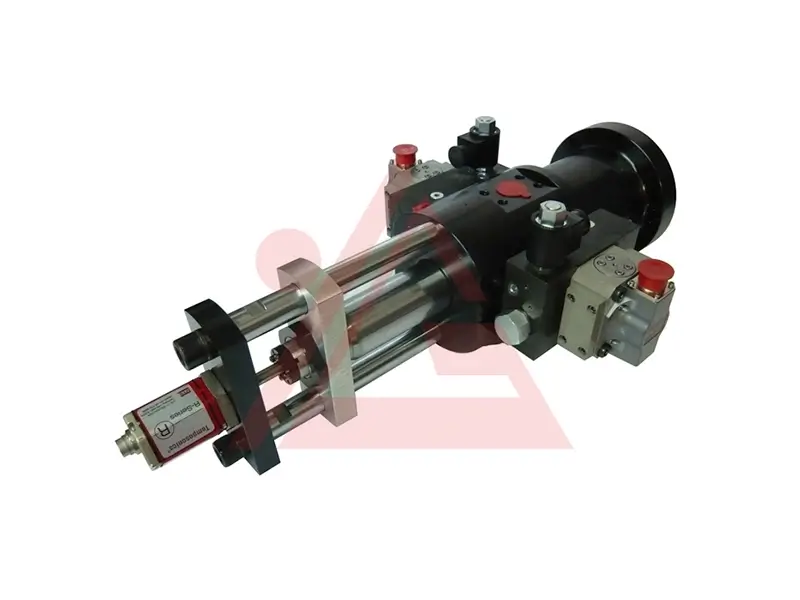
Defining Your Baseline: Standard vs. Custom Hydraulic Cylinder
In many engineering circles, there is a tendency to force a project to fit around existing components. Using Standard Hydraulic Cylinders is often the most cost-effective route for general-purpose applications like simple agricultural lifts or light material handling. They are reliable, accessible, and well-documented.
However, “standard” often means a compromise in stroke length, mounting flexibility, or material durability. If your project involves restricted installation envelopes, non-standard mounting geometry, or cycle counts that exceed typical industrial ratings, transitioning to Custom Hydraulic Cylinders isn’t just an “upgrade”—it is a necessity for system longevity. Customization allows for the optimization of every millimeter, ensuring that the cylinder doesn’t just “fit,” but thrives.
When evaluating your needs, consider the duty cycle. High-frequency applications—those moving hundreds of times an hour—require different sealing and bearing surfaces compared to a cylinder that might only actuate twice a day but must hold a massive load with zero drift. This level of nuance is often why engineers move beyond the capabilities of a standard Hydraulic System and opt for bespoke engineering.
Critical Design Parameters for Customization
When moving away from the catalog and toward a bespoke design, several technical variables must be balanced. It is rarely as simple as choosing a bore size and moving on.
Bore and Rod Diameter
The core of any hydraulic calculation is the force requirement. To determine the necessary bore size, one must look at the system pressure and the required output force using the standard formula:
Where F is force, P is pressure, and A is the effective area of the piston. However, in a custom scenario, we also have to consider the rod diameter. A thicker rod provides better resistance to buckling, especially in long-stroke applications, but it also reduces the “retract” force and increases the speed of the return stroke due to the smaller annular area.
Stroke Length and Buckling Concerns
Long-stroke cylinders are prone to “column failure” or buckling if the rod is too thin for the extension length. In a custom build, engineers can specify stop tubes—internal spacers that prevent the piston from coming too close to the head—thereby increasing the bearing surface and stability when fully extended.
Mounting Styles
The way a cylinder connects to the machine determines the stress distribution across the rod and seals.
Clevis Mounts: Ideal for applications where the cylinder needs to pivot.
Trunnion Mounts: Better for absorbing heavy force along the centerline.
Flange Mounts: Provide the most rigid connection but require perfect alignment.
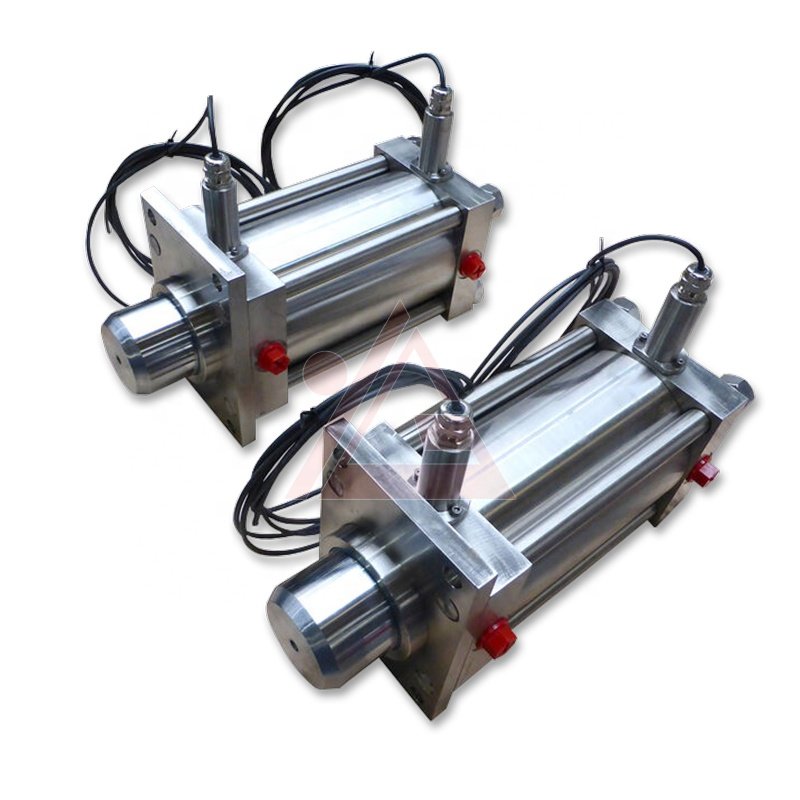
Material Selection: Beyond Carbon Steel
Most industrial cylinders are made from high-strength carbon steel, which works perfectly fine in controlled, indoor environments. But industrial reality is often messy, wet, or chemically aggressive.
For applications in the food industry, chemical processing, or marine environments, a Stainless Steel Hydraulic Cylinder is essentially mandatory. Beyond just the housing, the choice of rod plating—such as high-quality chrome, ceramic coatings, or nickel-chrome—will dictate how well the unit resists pitting and corrosion. In a custom design, you can also specify seal materials like Viton for high-heat applications or low-friction PTFE for high-speed cycling.
Performance Under Pressure
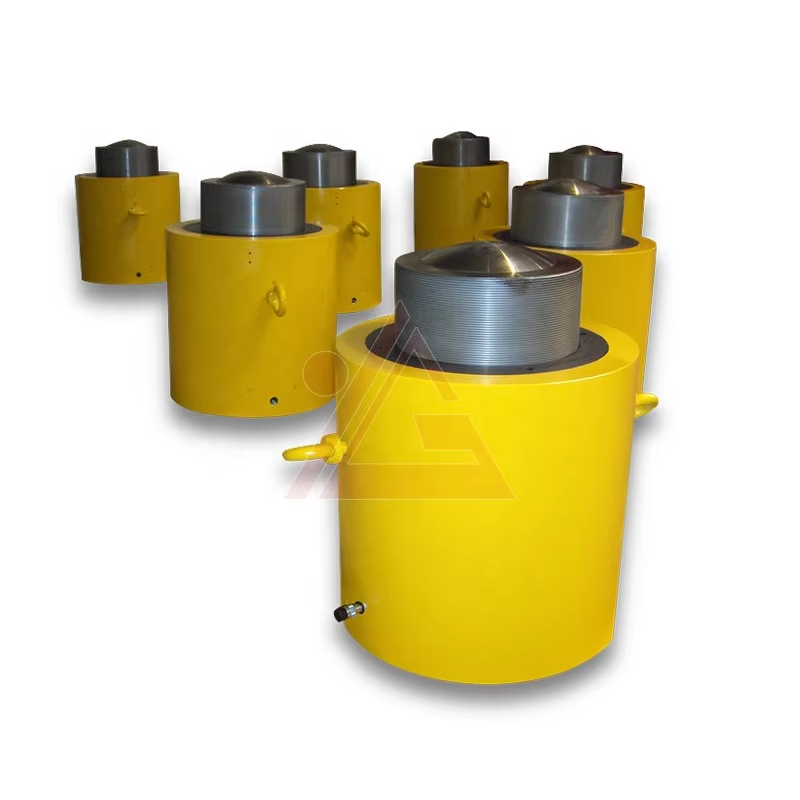
Not all hydraulic systems are created equal. While a standard system might operate at 2,000 to 3,000 PSI, heavy-duty industrial presses or deep-sea exploration equipment often require a High Pressure Hydraulic Cylinder capable of 5,000 to 10,000 PSI.
Engineering for high pressure involves more than just thicker walls. It requires specialized sealing configurations to prevent “extrusion”—where the seal is literally squeezed out of its groove—and advanced porting to manage the intense flow of fluid. Safety factors are also paramount; a custom build allows you to define a specific burst pressure ratio that aligns with your industry’s safety standards (like ISO or ASME).
Custom Configuration Matrix
To help visualize the trade-offs, the following table outlines common customization pathways:
| Feature | Standard Option | Custom Benefit | Ideal Industry |
|---|---|---|---|
| Material | Carbon Steel | Stainless Steel Hydraulic Cylinder | Marine, Food, Chemical |
| Pressure | Up to 3,000 PSI | High Pressure Hydraulic Cylinder | Pressing, Oil & Gas |
| Seals | Nitrile (Buna-N) | Viton or Low-Friction PTFE | Aerospace, High-Heat Mfg |
| Sensors | External Switches | Integrated Linear Transducers | Automation, Robotics |
| Cushioning | Non-adjustable | Progressive internal cushions | Heavy lifting, Demolition |
Common Pitfalls in the Specification Process
It is easy to get carried away when you have the freedom to customize. One common mistake is ignoring lateral (side) loads. If a machine isn’t perfectly aligned, the cylinder rod will experience forces it wasn’t designed to handle, leading to “leaking seals” and “scored rods.”
Another trap is “over-engineering.” Adding unnecessary sensors or choosing exotic materials when they aren’t required can significantly drive up costs without providing a tangible ROI. The goal is “fit-for-purpose,” not “perfect-at-any-cost.”
Industry-Specific Case Studies
In the world of maritime engineering, we often see Custom Hydraulic Cylinders used for deck cranes and steering gear. In these cases, the primary focus is salt-spray resistance and zero-leakage reliability. Conversely, in the construction sector, a custom cylinder on an excavator might prioritize shock load resistance and the ability to operate in extremely dusty environments.
Conclusion: Future-Proofing Your Hydraulic System
Choosing the right Custom Hydraulic Cylinder is an investment in the “uptime” of your project. By moving away from the “one-size-fits-all” mentality, you reduce the risk of catastrophic failure and ensure that your hydraulic system operates at peak efficiency. Whether you need the corrosion resistance of a Stainless Steel Hydraulic Cylinder or the brute force of a High Pressure Hydraulic Cylinder, customization provides the precision that modern engineering demands. For more insights on fluid power, consider researching authoritative guides from the International Fluid Power Society or the National Fluid Power Association.
FAQ
1. What is the typical lead time for a Custom Hydraulic Cylinder compared to stock?
While stock cylinders are available immediately, custom builds typically take 4 to 12 weeks depending on the complexity and material availability. This lead time is the “price” paid for a component that won’t require costly machine modifications later.
How do I determine if my application requires a High Pressure Hydraulic Cylinder?
If your calculated force requirements (F) exceed the capacity of standard 3,000 PSI components within your available space, you likely need a high-pressure solution. High-pressure systems allow for smaller bore sizes while maintaining high force output.
Can custom cylinders be repaired as easily as standard ones?
Yes, provided you keep the design documentation. Most custom manufacturers use standard seal sizes even in custom housings, meaning a local hydraulic shop can often perform maintenance as long as they have the original specification sheet.