A Heavy Duty Hydraulic Cylinder is a rugged linear actuator engineered to withstand extreme pressures, shock loads, continuous operation, and harsh environmental conditions. Unlike standard industrial cylinders, a Heavy Duty Hydraulic Cylinder features thicker barrel walls, larger rod diameters, heavy-duty bearings, and specially formulated seals. These cylinders are the backbone of industries such as mining, construction, steel mills, offshore drilling, and heavy material handling. In this comprehensive guide, we will explore what a Heavy Duty Hydraulic Cylinder is, how it differs from standard cylinders, its key design features, common applications, and selection considerations.
1. What Is a Heavy Duty Hydraulic Cylinder? Basic Definition
A Heavy Duty Hydraulic Cylinder is a high-force, high-reliability actuator built to operate at pressures typically exceeding 3,000 psi (210 bar) and often up to 5,000 psi or more. It is designed for millions of cycles under shock loads, vibration, and contamination. The term “heavy duty” refers not only to the cylinder’s physical robustness but also to its ability to perform in demanding applications where standard cylinders would quickly fail. A Heavy Duty Hydraulic Cylinder is commonly found in excavators, bulldozers, hydraulic presses, scrap metal balers, and mining haul trucks.
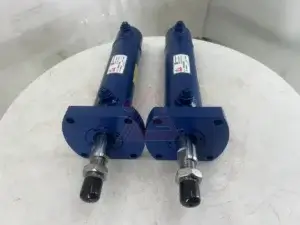
2. Key Design Features of a Heavy Duty Hydraulic Cylinder
Several design elements distinguish a Heavy Duty Hydraulic Cylinder from a standard tie-rod or welded cylinder.
Thicker Barrel Wall: The barrel is made from high-strength alloy steel with a wall thickness significantly greater than standard cylinders. This resists expansion under high pressure and withstands impact damage from external forces.
Larger Piston Rod Diameter: The rod diameter is increased to provide greater column strength, preventing buckling under compressive loads. This is critical in long-stroke applications where the rod is subjected to high compressive forces.
Induction-Hardened or Nitrided Rod: The piston rod surface is hardened through induction hardening or nitriding to provide superior scratch and wear resistance. This extends seal life and maintains smooth operation in abrasive environments.
Heavy-Duty Wear Rings: Wear rings, also called guide rings or bearings, support the piston and rod, absorbing side loads and preventing metal-to-metal contact. In a Heavy Duty Hydraulic Cylinder, these are made from high-strength materials such as bronze-filled PTFE or phenolic fabric.
High-Strength Alloy Steel Components: End caps, pistons, and mountings are made from forged or high-tensile steel to withstand shock loads and vibration.
Special Seal Materials: Seals are made from polyurethane or PTFE-filled compounds for high pressure and abrasion resistance. Viton seals are used for high-temperature applications. Backup rings prevent seal extrusion under extreme pressure.
Double Wipers: Two wipers are often installed to keep contaminants out in dusty or muddy environments. The primary wiper removes large particles, while the secondary wiper provides an extra barrier.
3. How Does a Heavy Duty Hydraulic Cylinder Work?
The working principle of a Heavy Duty Hydraulic Cylinder is identical to that of any hydraulic cylinder. Pressurized hydraulic fluid enters one side of the piston, pushing it and extending the rod. Fluid on the opposite side returns to the tank. To retract, fluid is directed to the opposite port.
What makes the Heavy Duty Hydraulic Cylinder unique is its ability to operate reliably under extreme conditions. The thicker barrel and larger rod allow it to handle higher pressures and shock loads. The heavy-duty bearings and seals ensure long life even in contaminated environments. The force output is calculated using the same formula: Force = Pressure × Piston Area. Because heavy-duty cylinders often have larger bores, they can generate tremendous force—hundreds of tons in some applications.
4. Heavy Duty Hydraulic Cylinder vs. Standard Cylinder
A standard industrial hydraulic cylinder (often tie-rod type) may operate at 1,500–2,500 psi and is suitable for factory automation, machine tools, and general manufacturing. A Heavy Duty Hydraulic Cylinder, by contrast, is built for mobile equipment, mining, and heavy pressing.
Pressure Rating: Heavy-duty cylinders are rated for 3,000–5,000+ psi vs. 1,500–2,500 psi for standard.
Service Life: Heavy-duty designs endure millions of shock cycles; standard cylinders may fail under similar conditions.
Mounting Robustness: Heavy-duty cylinders use forged mounts (clevis, trunnion) rather than welded or bolted brackets.
Repairability: Many heavy-duty cylinders are field-serviceable with replaceable seal kits and wear rings.
Material and Coating: Heavy-duty cylinders use induction-hardened rods, nickel-chromium or ceramic coatings, and high-strength alloy steel barrels.
5. Common Types of Heavy Duty Hydraulic Cylinder
There are several types of Heavy Duty Hydraulic Cylinder, each suited to specific applications.
Mill Type Cylinders: These are used in steel mills and are designed for extreme pressures and high cycle rates. They feature forged steel bodies, large rods, and heavy-duty bearings.
Tie Rod Cylinders: Heavy-duty tie rod cylinders use larger tie rods and thicker end caps to handle higher pressures. They are easy to repair and commonly used in industrial presses and mining equipment.
Welded Cylinders: Welded heavy-duty cylinders have the end caps welded to the barrel for maximum strength and compactness. They are used in mobile equipment, construction, and agriculture.
Telescopic Cylinders: Heavy-duty telescopic cylinders have multiple stages for long stroke in a short retracted length. They are used in dump trucks, dump trailers, and lifting platforms.
Custom Heavy Duty Cylinders: A custom heavy duty hydraulic cylinder is designed and built to meet specific requirements for bore, stroke, mounting, and materials. Custom cylinders are essential for unique machinery and specialized applications.
6. Applications of Heavy Duty Hydraulic Cylinder
The Heavy Duty Hydraulic Cylinder is indispensable in severe-duty industries.
Mining: Excavator boom cylinders, dump truck hoist cylinders, crusher feed cylinders, and drilling rig cylinders. Mining cylinders must withstand abrasive dust, shock loads, and extreme temperatures.
Construction: Bulldozer blade lift cylinders, loader tilt cylinders, backhoe arm cylinders, and crane cylinders. Construction cylinders face mud, water, and impact loads.
Steel Mills: Mill type cylinders for rolling mills, AGC cylinders, ladle turret cylinders, and furnace door cylinders. These cylinders operate in extreme heat and must resist scale and corrosion.
Waste Management: Scrap metal baler cylinders, landfill compactor cylinders, and waste transfer station cylinders. These cylinders face abrasive debris and continuous cycling.
Offshore and Marine: Jack-up platform lifting cylinders, subsea control cylinders, crane cylinders, and steering cylinders. These cylinders must resist saltwater corrosion and high pressure.
Heavy Presses: Forging presses, stamping presses, and extrusion presses. These cylinders generate thousands of tons of force and must maintain precise control.

7. How to Select a Heavy Duty Hydraulic Cylinder
Choosing the right Heavy Duty Hydraulic Cylinder requires careful consideration of several factors.
Operating Pressure: Must match system pressure, typically 3,000–5,000 psi for heavy-duty applications. Always choose a cylinder with a pressure rating at least 10–20% above the maximum working pressure.
Force Requirement: Bore size must generate the required force with a safety margin. Calculate force using F = P × A.
Stroke Length: Longer strokes may need larger rod diameter to prevent buckling. Consider intermediate supports for very long strokes.
Mounting Style: Must align with load and allow articulation if needed. Clevis, trunnion, flange, and side lug mounts are common.
Seal Material: Based on temperature, fluid type, and abrasion. Polyurethane for abrasion resistance, Viton for high temperature, PTFE for low friction.
Environmental Factors: Dust, moisture, salt, or chemicals. Choose appropriate rod coatings and wiper designs.
Certifications: For critical applications, request API, ABS, DNV, or other industry certifications. Also request material test reports and fatigue test data.
8. Maintenance Tips for Heavy Duty Hydraulic Cylinder
Even a Heavy Duty Hydraulic Cylinder needs regular care to achieve its full service life.
Inspect Rod Surface Weekly: Check for scratches, pitting, or chrome flaking. Minor scratches can be polished; deep gouges require rod repair or replacement.
Check for External Leaks: Inspect the gland and port fittings regularly. A small leak today can become a major failure tomorrow.
Monitor Hydraulic Fluid Cleanliness: Contamination is the leading cause of seal failure. Take fluid samples and change filters regularly.
Replace Seals at Recommended Intervals: Even without visible leakage, seals degrade over time. Plan seal replacement every 2–3 years or 5,000–10,000 operating hours.
Re-Torque Mounting Bolts: Vibration can loosen mounting bolts. Re-torque to manufacturer specifications periodically.
Lubricate Pivot Pins and Bearings: For clevis or trunnion mounts, lubricate pivot pins with lithium-based grease.
Keep Cylinder Exterior Clean: Dirt and debris can hide leaks and accelerate corrosion. Clean the exterior regularly.
9. Common Failure Modes and Troubleshooting
External Leakage: Worn rod seals, damaged rod surface, or loose fittings. Replace seals, polish or replace rod, tighten fittings.
Internal Leakage: Worn piston seals, damaged barrel, or scored piston. Replace piston seals, hone or replace barrel.
Rod Bending: Side loading, misalignment, or impact. Straighten or replace rod, correct alignment, use larger rod if needed.
Seal Extrusion: Excessive pressure spikes, missing backup rings, or incorrect seal material. Install backup rings, use correct seals, add pressure relief.
Corrosion: Moisture, saltwater, or chemicals. Use corrosion-resistant coatings, stainless steel rods, or ceramic coatings.
Overheating: Internal leakage, high pressure drop, or continuous operation at high speed. Replace seals, reduce pressure drop, add cooling.
10. Market Trends and Future of Heavy Duty Hydraulic Cylinder
The Heavy Duty Hydraulic Cylinder market continues to evolve with advancements in materials, coatings, and digital technologies.
Smart Cylinders: Integrated sensors for position, pressure, and temperature enable predictive maintenance and real-time monitoring.
Advanced Materials: High-strength alloys, composites, and ceramics reduce weight and improve performance.
Energy-Efficient Designs: Reduced pressure drops, optimized porting, and regenerative circuits improve efficiency.
Sustainability: Biodegradable hydraulic fluids and recyclable materials reduce environmental impact.
Digital Twins: Virtual models of cylinders and systems allow simulation and optimization before physical builds.
As industries demand higher productivity, lower operating costs, and greater safety, the Heavy Duty Hydraulic Cylinder will remain a cornerstone of hydraulic power transmission. Advances in sealing technology, coatings, and digital controls will make future cylinders more reliable, efficient, and intelligent.
Conclusion
A Heavy Duty Hydraulic Cylinder is a rugged, high-pressure linear actuator designed for the most demanding industrial, mining, and construction applications. Its thick walls, large rod, heavy-duty bearings, and specialized seals enable it to survive shock loads, vibration, and contamination that would destroy standard cylinders. Whether you need a mill type cylinder, a heavy duty tie rod cylinder, a welded cylinder, a telescopic cylinder, or a custom heavy duty hydraulic cylinder, understanding the features, applications, and selection criteria of the Heavy Duty Hydraulic Cylinder ensures you choose the right component for reliable, long-lasting performance. From mining and construction to steel mills and offshore platforms, the Heavy Duty Hydraulic Cylinder delivers the power and reliability that modern industry demands.