Selecting the right Heavy Duty Hydraulic Cylinder is critical for equipment reliability, safety, and operational efficiency. A poorly chosen cylinder can lead to premature failure, costly downtime, and even safety hazards. The selection process involves evaluating force requirements, operating pressure, mounting styles, materials, seals, and environmental conditions. In this guide, we will walk you through the key steps to select a Heavy Duty Hydraulic Cylinder that matches your application. For a detailed introduction to this cylinder type, see our guide on What Is a Heavy Duty Hydraulic Cylinder.
1. Calculate Required Force (Bore Size)
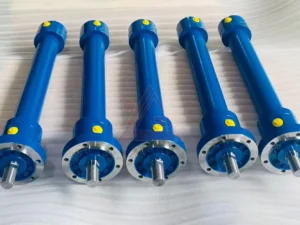
The first step in selecting a Heavy Duty Hydraulic Cylinder is determining the force it must generate. Use the formula: Force = Pressure × Piston Area (F = P × A). Measure your system’s maximum operating pressure. Then calculate the required force for pushing, lifting, or pressing. Add a safety margin of 15-20% to account for pressure fluctuations and shock loads. For a mining hydraulic cylinder used in excavators, the force requirement is often hundreds of tons. A construction cylinder for bulldozers may need high thrust at low speed. Choose a bore size that delivers the calculated force without exceeding the cylinder’s pressure rating.
2. Define Stroke Length and Rod Diameter
Stroke length is the total distance the piston rod travels. Measure your machine’s exact movement requirement. For a long stroke heavy cylinder (e.g., in dump truck hoists), consider rod buckling – use a larger rod diameter or specify intermediate supports. Rod diameter also affects column strength and seal compatibility. A mill type cylinder in steel mills often requires a large rod to withstand side loads. Always verify that the chosen Heavy Duty Hydraulic Cylinder has adequate rod strength for both tension and compression.
3. Select the Appropriate Mounting Style
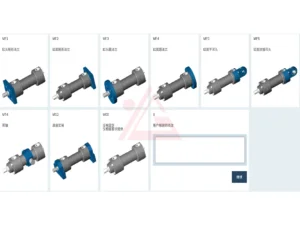
Mounting style determines how the Heavy Duty Hydraulic Cylinder attaches to your equipment. Common options include:
Clevis mount: Allows pivoting – ideal for excavator arms and loader linkages.
Trunnion mount: Wide angle articulation – used in hoist and tipper applications.
Flange mount: Rigid – for presses and stationary machinery.
Side lug mount: For conveyor drives and mobile equipment.
A forging press cylinder typically uses a heavy flange mount to handle extreme axial forces. An offshore cylinder on a jack-up platform may use a trunnion mount to accommodate platform movement. Ensure the mount is forged or heavy-duty welded, not lightly fabricated.
4. Choose Rod Material and Coating
The piston rod of a Heavy Duty Hydraulic Cylinder must resist wear, corrosion, and impact. Standard hard chrome rods work for general applications. For abrasive environments (mining, construction), specify induction-hardened rods with hard chrome overlay. For saltwater or chemical exposure, choose nickel-chromium or ceramic coatings. A baler cylinder in scrap recycling needs extreme abrasion resistance. A marine heavy cylinder requires corrosion-resistant coatings to survive salt spray. For food-grade or pharmaceutical applications, stainless steel rods are available.
5. Select Seal Material and Temperature Range
Seals are critical for preventing leakage in a Heavy Duty Hydraulic Cylinder. Choose seal material based on:
Hydraulic fluid type: Mineral oil, water-glycol, or phosphate ester.
Operating temperature: Standard nitrile (-20°C to +80°C), Viton (up to 200°C), or polyurethane (abrasion resistance).
Pressure: High pressure requires backup rings to prevent seal extrusion.
A high temperature heavy cylinder in steel mills needs Viton seals. A heavy cylinder for mining in cold climates requires low-temperature seals.
6. Verify Operating Pressure and Speed
Your Heavy Duty Hydraulic Cylinder must be rated for the system’s maximum pressure – typically 3,000-5,000 psi for heavy duty applications. Also consider speed: speed = flow rate / piston area. High-speed applications (e.g., scrap balers) need large ports and optimized porting to avoid cavitation. A heavy duty press cylinder may require regenerative circuits for fast approach and slow pressing.
7. Consider Environmental Factors
The environment directly affects cylinder life:
Dust and debris: Use double wipers and rod boots.
Moisture and salt: Specify stainless steel or coated rods.
Chemicals: Select compatible seal materials and coatings.
Shock loads: Choose thicker barrel walls and forged components.
8. Evaluate Serviceability and Spare Parts
A Heavy Duty Hydraulic Cylinder should be repairable. Look for designs with replaceable seal kits, wear rings, and rod bearings. Ask the manufacturer about seal kit availability and lead times. A custom heavy cylinder may have unique seals – ensure they are stocked. For critical applications, keep spare cylinders or complete seal kits on site.
9. Request Test Data and Certifications
Before ordering, request:
Pressure test certificates.
Material test reports (EN 10204 3.1 or 3.2).
Fatigue test data (if available).
Certification for API, ABS, DNV, or other industry standards.
10. Review Dimensional Drawings
Always review the manufacturer’s dimensional drawing of the Heavy Duty Hydraulic Cylinder. Check bore, stroke, rod diameter, port locations, mounting dimensions, and overall length. Verify that fittings and hoses have adequate clearance.
Conclusion
Selecting the right Heavy Duty Hydraulic Cylinder requires careful analysis of force, stroke, mounting, rod material, seals, pressure, environment, serviceability, certifications, and dimensional fit. Whether you need a mining hydraulic cylinder, construction cylinder, mill type cylinder, baler cylinder, forging press cylinder, or offshore cylinder, following this systematic process ensures you get a cylinder that performs reliably and lasts. For foundational knowledge, revisit What Is a Heavy Duty Hydraulic Cylinder. A well-chosen cylinder reduces downtime, lowers maintenance costs, and improves safety.