A Compact Hydraulic Cylinder is a specialized linear actuator designed to deliver high force within an extremely limited space. Unlike standard tie-rod or welded cylinders, a Compact Hydraulic Cylinder is engineered with a shorter overall length, a smaller footprint, and often a square or rectangular body profile. These design features make it ideal for applications where mounting space is at a premium but force requirements remain demanding. Understanding what a Compact Hydraulic Cylinder is, how it works, and where it is used is essential for engineers, machine builders, and maintenance professionals. In this comprehensive guide, we will explore the definition, design features, working principle, types, applications, and selection criteria of the Compact Hydraulic Cylinder.
1. What Is a Compact Hydraulic Cylinder? Basic Definition
A Compact Hydraulic Cylinder is a hydraulic actuator that converts fluid pressure into linear force and motion, but with a significantly reduced physical envelope compared to conventional cylinders. The term “compact” refers to the cylinder’s shortened overall length, reduced diameter, and space-saving mounting design. This is achieved by integrating the end caps into the cylinder body, eliminating external tie rods, and using advanced sealing technologies.
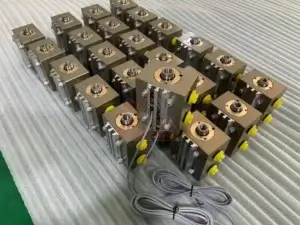
A Compact Hydraulic Cylinder typically features a square, rectangular, or block-shaped body rather than the traditional round barrel. This design allows the cylinder to be mounted directly into a machine frame, mold base, or fixture without the need for additional brackets. The result is a cylinder that delivers substantial force—often several tons—from a package that may be only a few inches long.
2. Key Design Features of a Compact Hydraulic Cylinder
Several distinctive design features set a Compact Hydraulic Cylinder apart from standard cylinders.
Integrated Body Construction: Most compact cylinders use a welded or threaded body construction where the end caps are integrated into the cylinder body. This eliminates external tie rods and reduces overall length by as much as 50% compared to a tie-rod cylinder of the same bore and stroke.
Square or Rectangular Profile: The body of a Compact Hydraulic Cylinder is often square or rectangular, allowing for flush mounting against flat surfaces. This profile also provides more surface area for mounting bolts and helps distribute load forces evenly.
Short Stroke Lengths: Compact cylinders are typically designed for short strokes—often 5 mm to 100 mm—although custom units can achieve longer strokes. The short stroke contributes to the overall compactness of the design.
High Force Density: Despite their small size, compact cylinders operate at high pressures (often 150 to 350 bar) to generate significant force. A Compact Hydraulic Cylinder with a 50 mm bore operating at 250 bar can produce nearly 5 tons of force.
Integrated Sensors: Many compact cylinders include magnetic pistons that allow position sensors (reed switches or Hall effect sensors) to be mounted directly on the body. This enables precise position feedback without external hardware.
Versatile Mounting Options: Compact cylinders are available with a variety of mounting configurations, including threaded body, flange mount, and block mount. Some models also feature a threaded nose or rear for direct installation.
3. How Does a Compact Hydraulic Cylinder Work?
The working principle of a Compact Hydraulic Cylinder is identical to that of any hydraulic cylinder. Pressurized hydraulic fluid enters one side of the piston, pushing it and extending the rod. Fluid on the opposite side returns to the tank. To retract, fluid is directed to the opposite port.
What makes the Compact Hydraulic Cylinder unique is how it achieves this function within a confined space. The internal porting is optimized to minimize dead volume, and the sealing arrangement is designed to be compact yet reliable. Many compact cylinders use a double-acting configuration, allowing powered extension and retraction. Some are also available as single-acting (spring return) for simpler applications.
The force output of a Compact Hydraulic Cylinder is calculated using the same formula as any cylinder: Force = Pressure × Piston Area. Because the bore size is often smaller than a standard cylinder, compact cylinders rely on higher system pressure to achieve the required force. This is why they are commonly used in systems operating at 200 bar or higher.
4. Types of Compact Hydraulic Cylinder
There are several types of Compact Hydraulic Cylinder, each suited to specific applications.
Block Cylinders
Block cylinders are the most common type of Compact Hydraulic Cylinder. They feature a solid block body with a rectangular or square profile, making them ideal for clamping, pressing, and holding applications in fixtures and molds. Block cylinders are often used in machining centers, welding fixtures, and assembly stations.
Threaded Body Cylinders
Threaded body compact cylinders have external threads on the barrel, allowing them to be screwed directly into a threaded hole in the machine frame. This eliminates the need for mounting brackets and provides a very rigid installation. Threaded body cylinders are commonly used in tight spaces where traditional mounting is impossible.
Flat Cylinders
Flat cylinders, also known as pancake cylinders, are extremely low-profile Compact Hydraulic Cylinder designs. They are used for lifting, positioning, and clamping where vertical clearance is severely limited. Flat cylinders often have a very short stroke and are designed for high-force applications.
Miniature Compact Cylinders
Miniature compact cylinders are the smallest category of Compact Hydraulic Cylinder. They are used in robotics, small fixtures, and precision automation where space is extremely tight. Despite their small size, these cylinders can deliver significant force.
Custom Compact Cylinders
A custom Compact Hydraulic Cylinder is designed and built to meet specific requirements for bore, stroke, mounting, and sensor integration. Custom compact cylinders are essential for unique machinery and specialized applications where standard products do not fit.
5. Applications of Compact Hydraulic Cylinder
The Compact Hydraulic Cylinder is used across many industries where space is limited but force is required.
Machine Tools and Fixtures
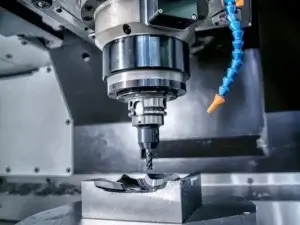
In machining centers, compact cylinders clamp workpieces securely during cutting. Their small size allows them to be integrated directly into fixtures without interfering with tool paths. Block cylinders are particularly common in this application.
Injection Molding and Die Casting
Compact cylinders are used in molds for core pulling, part ejection, and slide actuation. Their compact design allows them to fit inside the mold base, and their high force ensures reliable operation under high pressure.
Automation and Robotics
In automated assembly and robotic work cells, Compact Hydraulic Cylinder units perform gripping, clamping, and positioning tasks. Their ability to integrate position sensors makes them ideal for closed-loop control systems.
Material Handling
Compact cylinders are used in conveyor diverters, pallet positioners, and lifting mechanisms where space is limited. Their high force density allows them to handle heavy loads in tight spaces.
Medical and Laboratory Equipment
Compact cylinders are used in medical devices, laboratory automation, and testing equipment where precise, controlled motion is required in a small package.
Energy and Offshore
In wind turbines and offshore equipment, compact cylinders are used for blade pitch control, hatch operation, and valve actuation where space is at a premium.
6. Advantages and Limitations of Compact Hydraulic Cylinder
The Compact Hydraulic Cylinder offers several distinct advantages over standard cylinders:
Space Savings: Up to 50% shorter than comparable tie-rod cylinders.
High Force Density: Delivers high force from a small package.
Easy Installation: Direct mounting without brackets or adapters.
Integrated Sensing: Options for built-in position sensors.
Lightweight: Aluminum bodies reduce weight in mobile applications.
Versatile: Available in many configurations for different applications.
Despite their advantages, Compact Hydraulic Cylinder designs have some limitations:
Shorter Strokes: Typically limited to shorter stroke lengths.
Lower Repairability: Many compact cylinders are welded and non-serviceable.
Higher Cost: More complex manufacturing increases unit cost.
Side Load Sensitivity: Compact designs may be more sensitive to side loads.
Limited Pressure Ratings: Some models are limited to lower pressures than heavy-duty tie-rod cylinders.
7. How to Select a Compact Hydraulic Cylinder
Choosing the right Compact Hydraulic Cylinder requires consideration of several factors:
Force Requirements: Calculate the required force based on load and system pressure.
Bore Size: Determines force output; must be sized correctly.
Stroke Length: The distance the rod travels; must match the application.
Mounting Style: Threaded body, flange, block, or custom.
Operating Pressure: Must match the system’s maximum pressure.
Seal Material: Compatible with hydraulic fluid and temperature range.
Sensor Requirements: Determine whether position feedback is needed.
Environmental Conditions: Corrosion, dust, moisture, and temperature extremes.
For unique applications, a custom compact cylinder may be required to meet specific dimensional or performance requirements.
8. Maintenance Tips for Compact Hydraulic Cylinder
Proper maintenance extends the life and reliability of a Compact Hydraulic Cylinder:
Inspect regularly: Check for external leaks, rod damage, and loose mountings.
Keep fluid clean: Contamination is the leading cause of seal failure.
Monitor temperature: Excessive heat degrades seals and fluid.
Replace seals on schedule: Even without visible leaks, seals degrade over time.
Protect the rod: Use rod boots or wipers in dirty environments.
Check alignment: Misalignment causes side loads and premature wear.
9. Common Mistakes to Avoid
When working with a Compact Hydraulic Cylinder, avoid these common mistakes:
Using the wrong mounting style: Ensure the mount matches the machine structure.
Ignoring side loads: Compact cylinders are not designed for heavy side loading.
Overtightening fittings: This can damage threads or deform seals.
Skipping filtration: Contamination will quickly damage internal components.
Not allowing for thermal expansion: High-pressure systems generate heat.
10. Future Trends in Compact Hydraulic Cylinder Technology
The Compact Hydraulic Cylinder continues to evolve with advancements in materials, sensors, and control systems. Emerging trends include:
Smart Compact Cylinders: Integrated IoT sensors for predictive maintenance.
Lightweight Materials: Advanced aluminum alloys and composites.
Electro-Hydraulic Compact Cylinders: Combining hydraulic power with electric control.
Higher Pressure Ratings: New seal materials enable operation at higher pressures.
Conclusion
A Compact Hydraulic Cylinder is a powerful, space-saving linear actuator that delivers high force from a small package. Its integrated design, square or rectangular body, and versatile mounting options make it ideal for applications where traditional cylinders simply will not fit. Whether you need a miniature hydraulic cylinder, a pancake hydraulic cylinder, or a threaded body hydraulic cylinder, understanding the features, applications, and selection criteria of the Compact Hydraulic Cylinder ensures you choose the right component for your machine. From machine tools and injection molding to automation and material handling, the Compact Hydraulic Cylinder continues to enable innovative designs that would be impossible with standard cylinders. As industries demand smaller, more efficient machines, the Compact Hydraulic Cylinder will remain a cornerstone of modern hydraulic system design.