A Hydraulic Cylinder is a mechanical actuator that converts hydraulic fluid pressure into linear force and motion. It is one of the most important components in modern machinery, used to push, pull, lift, lower, clamp, and position heavy loads with remarkable precision. From excavators and forklifts to industrial presses and offshore platforms, the Hydraulic Cylinder provides the muscle that makes hydraulic systems perform useful work. Understanding what a Hydraulic Cylinder is, how it operates, and how to select and maintain it is essential for engineers, maintenance technicians, equipment operators, and procurement professionals.
1. Basic Definition of a Hydraulic Cylinder
A Hydraulic Cylinder is a linear actuator that uses pressurized hydraulic fluid—usually oil—to generate force in a straight line. It transforms the hydraulic energy supplied by a pump into mechanical energy. Unlike an electric motor that produces rotary motion, a Hydraulic Cylinder produces linear motion, making it ideal for applications that require pushing, pulling, lifting, or pressing.
The operating principle is based on Pascal’s law: pressure applied to a confined fluid is transmitted equally in all directions. When pressurized fluid enters one side of the cylinder, it pushes against a piston. The piston moves, and the attached piston rod extends. When fluid is directed to the opposite side, the rod retracts. This simple but powerful mechanism allows a Hydraulic Cylinder to generate enormous force from a compact package. A Hydraulic Cylinder does not create pressure by itself; it creates force by resisting the flow of pressurized fluid. The pump creates flow, and the load creates resistance, which in turn produces pressure.
2. How a Hydraulic Cylinder Works
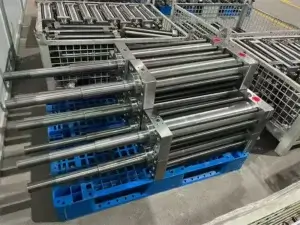
To understand how a Hydraulic Cylinder works, imagine a sealed tube with a movable piston inside. The piston divides the tube into two chambers: the cap end and the rod end. Hydraulic fluid is supplied by a pump through ports located at each end. When fluid enters the cap end, pressure builds behind the piston and pushes it forward. The rod extends. The fluid in the rod end is forced out and returns to the reservoir. To retract the rod, the directional control valve routes fluid into the rod end, pushing the piston back.
The force produced by a Hydraulic Cylinder is calculated with the formula: Force = Pressure × Piston Area (F = P × A). If the pressure is 200 bar and the piston area is 50 cm², the theoretical force is 10,000 kg. Speed is determined by flow rate: Speed = Flow Rate ÷ Piston Area. This means a larger bore produces more force but moves slower for the same flow. Engineers balance bore size, rod diameter, pressure, and flow to achieve the required force and speed. A Hydraulic Cylinder can be single-acting, using pressure in one direction only, or double acting hydraulic cylinder, using pressure in both directions for powered extension and retraction.
3. Key Components of a Hydraulic Cylinder
A typical Hydraulic Cylinder consists of several precision components. The barrel, or cylinder tube, is the main body that contains the piston and fluid. It is usually made of honed steel, stainless steel, or aluminum. The piston separates the two internal chambers and transfers force from the fluid to the rod. The piston rod is the chrome-plated shaft that extends from the cylinder to perform work. It must resist bending, wear, and corrosion.
The gland, or head gland, seals the rod end and contains the rod seal, wiper, and bearing. The end cap seals the opposite end of the barrel. Seals prevent internal and external leakage. Common seals include rod seals, piston seals, wipers, O-rings, wear rings, and backup rings. Ports allow hydraulic fluid to enter and exit. Mountings such as clevis, flange, trunnion, side lug, or pin eye secure the Hydraulic Cylinder to the machine. Each component must be manufactured to tight tolerances to ensure reliable operation, long service life, and safe performance.
4. Common Types of Hydraulic Cylinder
There are many types of Hydraulic Cylinder, each designed for specific applications and operating conditions.
A single-acting Hydraulic Cylinder uses hydraulic pressure to move in one direction, usually extension. Retraction is achieved by gravity, a spring, or an external force. These cylinders are simple and cost-effective, often used in dump trucks, jacks, and log splitters. A double acting hydraulic cylinder uses hydraulic pressure for both extension and retraction, providing precise control in both directions. This is the most common type in industrial and mobile machinery.
A telescopic Hydraulic Cylinder has multiple stages that nest inside each other, providing a very long stroke from a short retracted length. Telescopic cylinders are common in dump trailers and lifting platforms. A tie rod Hydraulic Cylinder uses external threaded rods to hold the end caps to the barrel. It is easy to repair and follows NFPA dimensional standards. A welded Hydraulic Cylinder has end caps welded to the barrel, creating a compact and robust design for demanding applications. A compact Hydraulic Cylinder is designed for tight spaces, often with a square or rectangular body. A custom Hydraulic Cylinder is built to meet specific bore, stroke, mounting, and material requirements.
5. Applications Across Industries
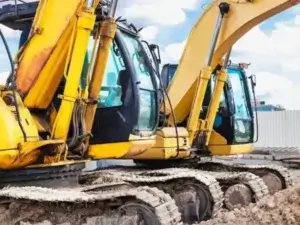
The Hydraulic Cylinder is used in virtually every industry that requires linear force and motion. In construction, excavators, loaders, bulldozers, and cranes rely on Hydraulic Cylinder units for boom movement, bucket articulation, steering, and outrigger positioning. In industrial manufacturing, hydraulic presses, injection molding machines, and machine tools use Hydraulic Cylinder actuators for clamping, pressing, forming, and positioning. In agriculture, tractors, combines, and balers use Hydraulic Cylinder systems for implement control, steering, and lifting.
Material handling equipment such as forklifts, scissor lifts, and aerial work platforms depend on Hydraulic Cylinder units for lifting and positioning loads. Marine and offshore applications use Hydraulic Cylinder systems for steering, hatch covers, winches, and platform lifting. Mining and steel mills use heavy-duty Hydraulic Cylinder units for drilling, crushing, rolling, and ladle handling. Energy projects, including wind turbines, hydropower dams, and solar tracking systems, also rely on Hydraulic Cylinder technology for precise control.
6. How to Select the Right Hydraulic Cylinder
Choosing the right Hydraulic Cylinder requires careful analysis of the application. First, determine the required force. Calculate the load and decide the system pressure. Use the formula F = P × A to select the bore size. Add a safety margin of 10–20%. Next, define the stroke length. Measure the exact travel required and allow a small margin to avoid bottoming out. Then select the rod diameter. A larger rod resists buckling but reduces retraction force because it reduces the effective annular area.
Choose the mounting style based on the machine structure and load direction. A clevis mount allows pivoting, while a flange mount provides rigid support. Consider the operating environment. For corrosive conditions, choose stainless steel or coated rods. For high temperatures, select Viton seals. For dirty environments, specify double wipers and rod boots. Finally, decide between standard and custom designs. A hydraulic cylinder manufacturer can help specify the correct cylinder for your application. If the cylinder is damaged, a professional hydraulic cylinder repair service can restore performance at a fraction of replacement cost.
7. Maintenance Best Practices
Proper maintenance extends the life of a Hydraulic Cylinder. Inspect the cylinder regularly for external leaks, rod damage, and loose mountings. Keep hydraulic fluid clean because contamination is the leading cause of seal failure. Monitor fluid temperature and ensure it stays within the recommended range. Replace seals at scheduled intervals, even if no leak is visible. Protect the piston rod with boots or wipers in dirty environments. Check alignment to prevent side loads, which can bend the rod and damage seals.
Use the correct hydraulic fluid and maintain proper filtration. When replacing seals, use a complete seal kit and follow the manufacturer’s torque specifications. Lubricate pivot pins and bearings regularly. Keep a maintenance log for each Hydraulic Cylinder to track service history and identify recurring issues. A proactive maintenance program reduces downtime, extends service life, and improves safety.
8. Troubleshooting Common Issues
Common Hydraulic Cylinder problems include external leakage, internal leakage, slow operation, drift, overheating, and unusual noise. External leakage usually indicates worn rod seals or a damaged rod surface. Internal leakage causes drift and loss of force. Slow operation may result from low pump flow, restricted flow controls, or internal bypass. Overheating can be caused by contamination, incorrect viscosity, or excessive internal leakage.
To troubleshoot, first check fluid level and condition. Inspect the rod surface for scoring. Test system pressure and flow. Isolate the cylinder by blocking ports to check for internal leakage. If the rod drifts under load, the piston seals are likely worn. If the cylinder is a double acting hydraulic cylinder, test both directions. Many problems can be solved with a seal replacement. For severe damage, consult a hydraulic cylinder manufacturer or a qualified repair specialist.
9. Hydraulic Cylinder vs. Pneumatic and Electric Actuators
Compared with pneumatic cylinders, a Hydraulic Cylinder offers much higher force density. Pneumatic systems are cleaner and faster but cannot match hydraulic force. Hydraulic systems also provide smooth, controllable motion and can hold position without continuous energy input using check valves. Electric actuators offer precise control and are clean and quiet, but they are generally limited in force and can be expensive at high power levels.
For heavy lifting, pressing, and mobile equipment, the Hydraulic Cylinder remains the preferred choice. For light assembly or clean environments, pneumatic or electric actuators may be suitable. The decision depends on force, speed, duty cycle, environment, and cost.
10. Market Trends and Future of Hydraulic Cylinder Technology
The Hydraulic Cylinder market continues to evolve. Manufacturers are developing lighter materials, higher pressure ratings, and integrated sensors. Smart cylinders with position feedback and IoT connectivity enable predictive maintenance and real-time monitoring. Electro-hydraulic actuators combine hydraulic power with electric control for greater efficiency and precision. Energy-efficient designs reduce pressure losses and improve system performance. Sustainability is also driving innovation, with biodegradable hydraulic fluids and recyclable materials.
As industries demand higher productivity and lower operating costs, the Hydraulic Cylinder will remain a cornerstone of hydraulic power transmission. Advances in sealing technology, coatings, and digital controls will make future Hydraulic Cylinder systems more reliable, efficient, and intelligent.
Conclusion
A Hydraulic Cylinder is a versatile and powerful linear actuator that converts hydraulic pressure into force and motion. From construction and manufacturing to agriculture, material handling, marine, mining, and energy, the Hydraulic Cylinder powers the machines that build and sustain modern society. Understanding what a Hydraulic Cylinder is, how it works, and how to select and maintain it is essential for anyone working with hydraulic systems. Whether you need a single-acting cylinder, a double acting hydraulic cylinder, a telescopic cylinder, a tie rod cylinder, a welded cylinder, a compact cylinder, or a custom design, choosing the right Hydraulic Cylinder ensures reliable, efficient, and long-lasting performance.