Selecting the right Hydraulic Rotary Cylinder for your application is crucial for achieving precise rotational motion, high torque, and long service life. A poorly chosen rotary cylinder can lead to inadequate torque, excessive wear, or premature failure. The selection process involves evaluating torque requirements, rotation angle, operating pressure, mounting styles, environmental factors, and seal compatibility. In this guide, we will walk you through the key steps to select a Hydraulic Rotary Cylinder that matches your specific needs. For a detailed introduction to this cylinder type, see our guide on What Is a Hydraulic Rotary Cylinder.
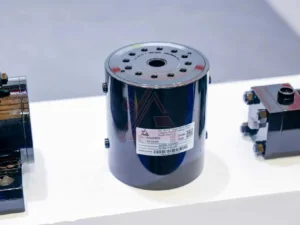
1. Determine Torque Requirements
The first step in selecting a Hydraulic Rotary Cylinder is calculating the torque needed to rotate your load. Torque is the product of force and the distance from the center of rotation (T = F × r). Consider factors such as load mass, friction, acceleration, and any external resistance. For applications requiring high rotational force, a hydraulic rotary actuator with robust internal gearing is often necessary. For lighter duties, a rotary vane actuator may suffice. Always add a safety margin of 15-20% to account for pressure fluctuations and unexpected loads.
2. Define the Required Rotation Angle
Different applications demand different rotation angles. Some need limited angular movement (e.g., valve actuation), while others require continuous rotation (e.g., conveyor drives). A helical rotary actuator can provide full 360-degree rotation with high torque, while a hydraulic swing cylinder is ideal for oscillating movements within a fixed arc. Determine whether your application needs a specific fixed angle or continuous rotation. For applications requiring both high torque and full rotation, a rack and pinion design (covered by hydraulic rotary actuator) is often the best choice.
3. Select the Appropriate Operating Pressure
Your Hydraulic Rotary Cylinder must be rated for your hydraulic system’s maximum pressure. Typical hydraulic systems operate at pressures between 1,500 and 3,000 psi. Higher pressure increases torque output but also demands stronger seals and thicker housing. Verify the cylinder’s pressure rating against your system pressure. For a rotary indexing cylinder used in precise positioning, ensure the seals can handle the pressure without compromising accuracy.
4. Choose the Right Mounting Style
Mounting style determines how the Hydraulic Rotary Cylinder attaches to your equipment. Common options include flange mount, foot mount, shaft mount, and trunnion mount. For a hydraulic oscillating actuator that needs to pivot during operation, a trunnion or flange mount provides stability. For compact installations, a shaft mount directly couples to the load.
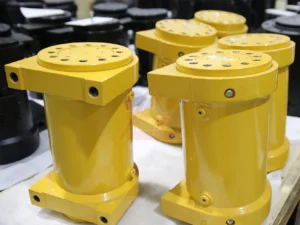
5. Consider Environmental Conditions
The operating environment significantly impacts the performance and lifespan of a Hydraulic Rotary Cylinder. Factors to consider include temperature extremes, corrosive environments, dust and debris, and vibration. For harsh conditions, choose a hydraulic swing cylinder with corrosion-resistant coatings and heavy-duty seals.
6. Select Seal Materials and Lubrication
Seals are critical for preventing leakage in a Hydraulic Rotary Cylinder. Choose seal material based on hydraulic fluid type, operating temperature, and pressure. Proper lubrication of internal bearings and seals extends the life of your rotary vane actuator or any other rotary cylinder type.
7. Evaluate Space Constraints
Measure the available space for the Hydraulic Rotary Cylinder, including its overall length, width, and mounting dimensions. For tight installations, a helical rotary actuator often offers a compact footprint while delivering high torque.
8. Consider Control and Feedback Requirements
Modern applications often require precise position control. A Hydraulic Rotary Cylinder can be equipped with rotary encoders, proximity switches, or hydraulic servo valves. For indexing applications, a rotary indexing cylinder with integrated feedback ensures accurate positioning.
9. Review Serviceability and Spare Parts
Choose a Hydraulic Rotary Cylinder that is easy to maintain. Look for designs with replaceable seals and bearings. A hydraulic rotary actuator with modular construction allows quick seal replacement without full disassembly.
10. Request Dimensional Drawings and Test Data
Before ordering, request detailed dimensional drawings of the Hydraulic Rotary Cylinder. Verify all mounting dimensions, port locations, and shaft specifications. Also request pressure test certificates and material test reports to ensure quality and reliability.
Conclusion
Selecting the right Hydraulic Rotary Cylinder requires careful analysis of torque, rotation angle, pressure, mounting, environment, seals, space, control needs, serviceability, and documentation. Whether you need a hydraulic rotary actuator, rotary vane actuator, helical rotary actuator, hydraulic swing cylinder, rotary indexing cylinder, or hydraulic oscillating actuator, following this systematic process ensures you get a cylinder that performs reliably. For foundational knowledge, revisit What Is a Hydraulic Rotary Cylinder. A well-chosen cylinder delivers precise motion, high efficiency, and long service life.