A Directional Control Valve is one of the most fundamental components in any hydraulic system. It directs the flow of hydraulic fluid to different actuators—cylinders, motors, or other devices—by opening, closing, or switching fluid pathways. Without a Directional Control Valve, hydraulic systems would be unable to perform the precise movements required in modern machinery. From construction equipment to industrial presses, the Directional Control Valve is the command center that determines when and how work gets done.
Understanding the various types of directional control valves is essential for anyone involved in hydraulic system design, maintenance, or operation. In this comprehensive guide, we will explore the major classifications of Directional Control Valve, including flow path configurations, position counts, spool actions, center types, actuation methods, and specialized valve categories.
1. Classification Based on Flow Paths (Number of Ports)
The most basic way to categorize a Directional Control Valve is by the number of ports it has. The ports provide passageways for hydraulic fluid to flow to or from other components.
2-Way Valves
A 2-way Directional Control Valve has two ports: one inlet and one outlet. It is essentially an on-off switch for fluid flow, allowing flow when open and blocking it when closed. Internationally, this is often called a 2/2 valve (two ports, two positions). These valves are used in simple circuits where flow only needs to be started or stopped.
3-Way Valves
A 3-way Directional Control Valve has three ports: one pump line, one return line, and one work port. These valves can divert flow between two separate paths. They are commonly used with single-acting cylinders, where fluid is directed to the cylinder for extension and allowed to exhaust during retraction.
4-Way Valves
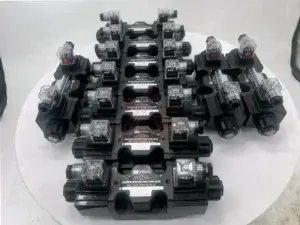
A 4-way Directional Control Valve adds an extra work port, consisting of one pump line, one return line, and two work ports. This is the most common type of Directional Control Valve for controlling double-acting cylinders. The two work ports route fluid to or from the rod end and cap end of the cylinder, allowing independent control of extension and retraction.
5-Way Valves
A 5-way Directional Control Valve combines the features of a 4-way valve with an additional exhaust port. These are found most frequently in pneumatic systems but are also used in specialized hydraulic applications.
2. Classification Based on Positions
The number of positions refers to the number of distinct flow paths a Directional Control Valve can provide.
2-Position Valves
A 2-position Directional Control Valve has two operational states. It can shift between these two positions to control fluid flow. Common examples include 2/2 valves (on/off) and 3/2 valves (extend/retract for single-acting cylinders).
3-Position Valves
A 3-position Directional Control Valve features forward, neutral, and reverse positions to handle dynamic fluid movement. The neutral (center) position is particularly important because it determines how the valve behaves when not actuated. A 4-way, 3-position Directional Control Valve is the most common configuration in hydraulic circuits.
4-Position Valves
A 4-position Directional Control Valve includes the same positions as a 3-position valve but adds a flow position, enabling free movement of oil through open work ports. This configuration is used in more complex circuits requiring additional flow path options.
3. Classification Based on Spool Action
The spool action of a Directional Control Valve determines how the valve returns to its default position after actuation.
Spring-Centered Spool Action
A spring-centered Directional Control Valve automatically returns the spool to a neutral position when released. This is ideal for applications where the valve’s default state should be inactive, such as in manually operated equipment where the operator must hold the valve in position.
Detent Spool Action
A detent Directional Control Valve locks the spool in place once moved, maintaining its set position until manually adjusted. This is useful in applications where the valve needs to remain in a particular position without continuous operator input.
Pressure Release Detent
One specialized application of detent action is the pressure release detent, commonly found in log splitter control valves. This allows the spool to spring back to neutral once a specific hydraulic pressure is reached, ensuring efficiency and safety.
4. Classification Based on Center Type
For 3-position Directional Control Valves, the center (neutral) position configuration significantly impacts system behavior. There are four main center options.
Open Center
In an open center Directional Control Valve, fluid returns to the reservoir when the valve is in the neutral position. This permits constant flow from the pump to the tank in neutral. Open center systems are typically more straightforward and cost-effective, making them suitable for applications like agricultural equipment. They are commonly paired with fixed-displacement pumps such as gear pumps.
Closed Center
In a closed center Directional Control Valve, all ports are blocked in the neutral position, ensuring no fluid flow. This maintains constant pressure in the hydraulic system even when the valve is in neutral. Closed center designs are more energy-efficient as they minimize the need to circulate fluid back to the reservoir in neutral. They are typically paired with pressure-compensated pumps for applications requiring higher energy efficiency and are often found in industrial and mobile hydraulic systems.
Tandem Center
A tandem center Directional Control Valve blocks the work ports while allowing oil to flow freely back to the reservoir in neutral. This configuration provides constant pressure while allowing fluid to circulate freely in the neutral position. It offers a compromise between open and closed center options, providing both energy efficiency and the ability to redirect fluid flow as needed. Tandem center valves are commonly used in mobile equipment and applications that require a balance between energy conservation and quick response times.
Float Center
In a float center Directional Control Valve, unrestricted fluid flow is allowed between the working ports. This permits hydraulic actuators to move freely in response to external forces, circulating fluid freely without building up pressure. Float center configurations are useful in applications where actuators need to follow external loads or where pressure should not be trapped.
5. Classification Based on Valve Construction
Directional Control Valves can also be classified by their internal design and valving elements. The most common types of valving elements are the ball, cone, sleeve, poppet, rotary spool, and sliding spool.
Spool Valves
Spool valves are the most common type of Directional Control Valve. They use a cylindrical spool that slides within a housing to control flow. The spool has different lands and grooves that direct fluid flow based on its position. Spool valves offer smooth operation, good flow characteristics, and are available in a wide range of sizes and configurations. They are ideal for applications requiring precise cylinder positioning and are commonly used as a hydraulic spool valve in industrial and mobile systems.
Poppet Valves
Poppet valves use a poppet (a tapered or mushroom-shaped plug) to control flow. They can be either direct-acting or pilot-operated. Poppet valves are known for their quick response and are often used in applications where rapid actuation is required. They offer advantages in high-pressure applications and exhibit minimal leakage, making them suitable for critical systems. The poppet valve design provides excellent sealing characteristics for load-holding applications.
Rotary Valves
Rotary valves use rotary motion to control fluid flow, typically achieved through a rotating spool or cylinder. The rotary valve has a round core with one or more passages or recesses in it. They are suitable for applications where space is limited or where linear motion is not practical. Rotary valves offer precise control over flow paths and are commonly used in specialized applications.
Check Valves
Check valves allow fluid to flow in one direction only. While primarily used to prevent backflow, they can be considered the simplest form of Directional Control Valve. Basic check valves prevent fluid from flowing in the opposite direction and are often spring-loaded.
6. Classification Based on Actuation Method
The actuation method determines how a Directional Control Valve is operated.
Manual Actuation
Manually operated valves use levers, handles, push buttons, or foot pedals to shift the spool. A manually operated Directional Control Valve is simple, reliable, and cost-effective for applications where the operator is physically present.
Solenoid Actuation
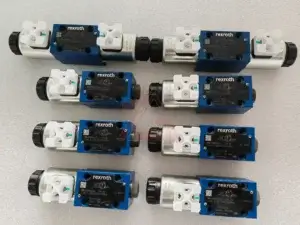
Solenoid-operated valves use electrical signals to shift the valve spool. A hydraulic solenoid valve enables remote control, automation, and fast response times—ideal for PLC-controlled systems and automated cylinder sequencing.
Pilot Actuation
Pilot-operated valves use hydraulic pressure to shift the main valve spool. They are used in high-flow applications where solenoid forces are insufficient, or where manual operation would be difficult.
Proportional Actuation
Proportional directional valves provide variable control of flow and direction. They can shift into intermediate positions to control actuator direction, speed, acceleration, and deceleration. Proportional valves offer precise, stepless control and are often used in applications requiring smooth cylinder acceleration and deceleration.
7. Specialized Directional Control Valve Types
Beyond the main categories, there are specialized Directional Control Valve types for specific applications.
Cartridge Valves
Cartridge valves are compact, modular valves that can be inserted into hydraulic manifold systems. They come in various configurations, including directional control valves, and are commonly used in mobile and industrial hydraulic systems.
Servo Valves
Servo valves provide extremely precise control of flow and pressure. They are often used in high-performance closed-loop control systems where accuracy is critical.
8. Selecting the Right Directional Control Valve
Choosing the correct Directional Control Valve for an application requires careful evaluation of several factors:
Flow Requirements: The valve must handle the required flow without excessive pressure drop.
Pressure Rating: The valve must be rated for the system’s maximum operating pressure.
Valve Function: Determine whether directional, pressure, or flow control is needed.
Center Type: Open, closed, tandem, or float center based on system requirements.
Actuation Method: Manual, solenoid, pilot, or proportional based on control needs.
Mounting Configuration: Subplate, threaded, or cartridge mounting.
9. Applications of Directional Control Valves
Directional Control Valves are used across virtually every industry that relies on hydraulic power:
Construction Equipment: Excavators, loaders, and bulldozers use valves to control boom, bucket, and steering functions.
Industrial Machinery: Machine tools, presses, and injection molding machines rely on valves for precise motion control.
Mobile Equipment: Forklifts and aerial work platforms use valves for lifting and positioning.
Agricultural Machinery: Tractors and harvesters use valves for implement control and steering.
Conclusion
Understanding the various types of directional control valves is essential knowledge for anyone working with hydraulic systems. From the basic 2-way and 3-way valves to the more complex 4-way, 3-position configurations with open, closed, tandem, or float centers, each type of Directional Control Valve serves a specific function in system control. Whether you need a hydraulic spool valve for its smooth operation, a poppet valve for zero-leakage sealing, or a rotary valve for compact installation, selecting the right valve ensures reliable, efficient, and precise hydraulic system performance. By understanding the classifications and selection criteria outlined in this guide, you can confidently choose the correct Directional Control Valve for your specific application.