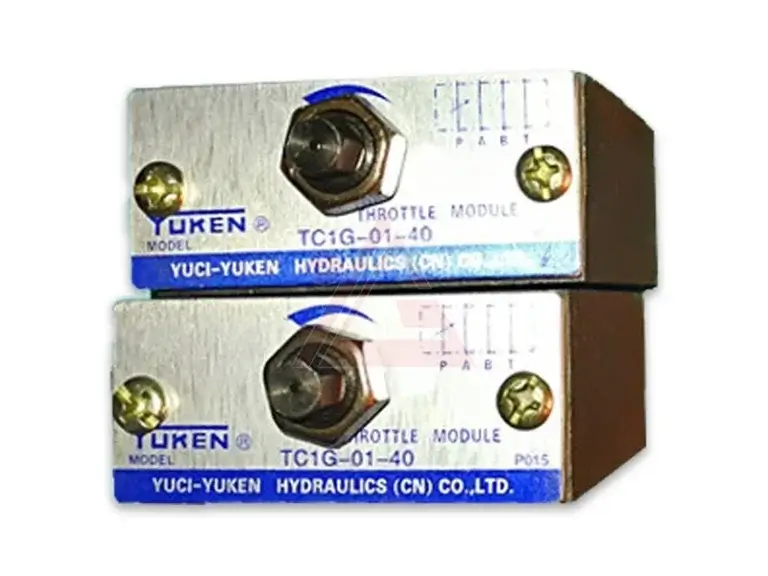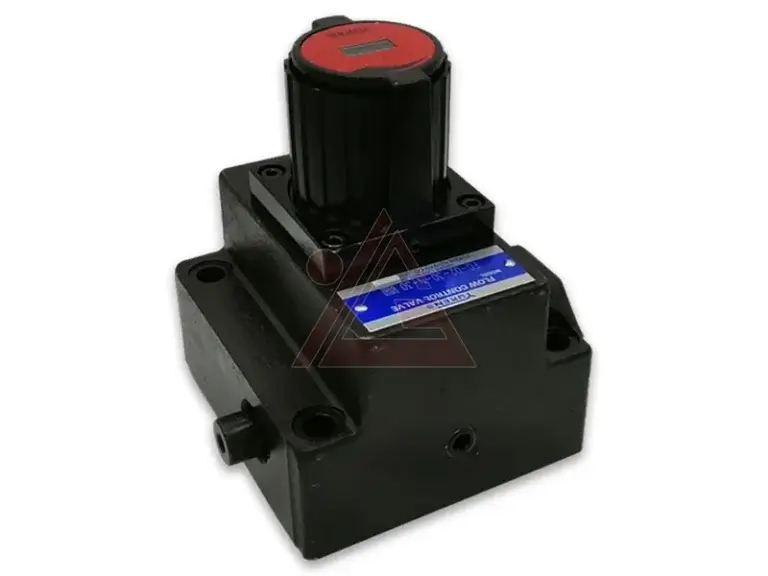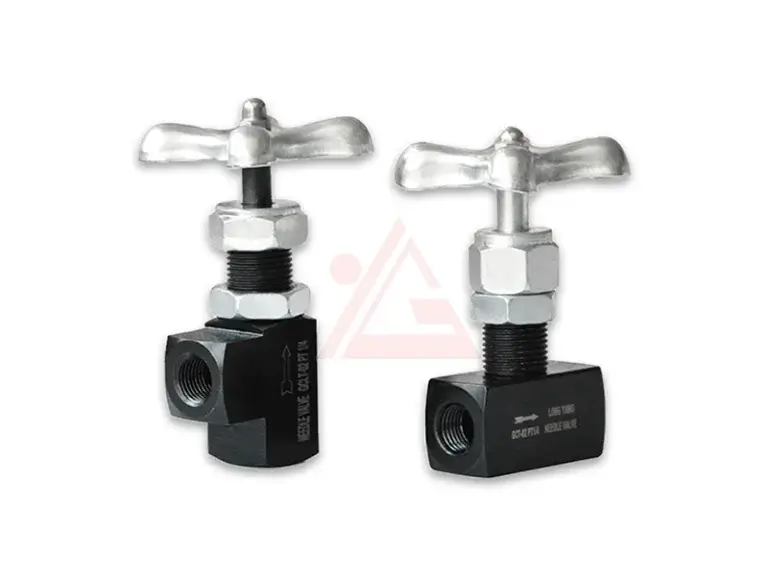
Pressure is the lifeblood of any hydraulic system. It determines the force a cylinder can exert, the torque a motor can produce, and the safety margin within which all components must operate. Without precise types of pressure control valve to manage this force, hydraulic systems would be prone to component failure, erratic operation, and energy waste. Understanding the various types of pressure control valve is essential for anyone involved in designing, maintaining, or troubleshooting hydraulic equipment—from construction machinery to industrial presses.
Pressure-control valves are found in virtually every hydraulic system, performing a variety of functions—from keeping system pressures safely below a desired upper limit to maintaining a set pressure in part of a circuit. This guide explores the five primary types of pressure control valve: relief valves, reducing valves, sequence valves, counterbalance valves, and unloading valves.
1. Pressure Relief Valves: The System Protector
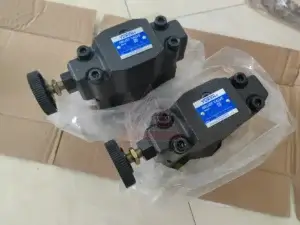
The pressure relief valve is arguably the most important pressure control valve in any hydraulic system. Its primary function is to limit maximum system pressure, protecting pumps, actuators, valves, and other components from damage due to overpressure. It acts as a safety safeguard, diverting excess fluid back to the reservoir when pressure exceeds a preset limit.
How It Works
A relief valve is a normally closed valve. It consists of a poppet or ball held against a seat by a spring. System pressure acts on one side of the poppet, while the spring provides an opposing force. When system pressure exceeds the spring setting, the fluid unseats the poppet, allowing a controlled amount of fluid to bypass to the reservoir, thereby maintaining system pressure at the valve setting.
Types of Relief Valves
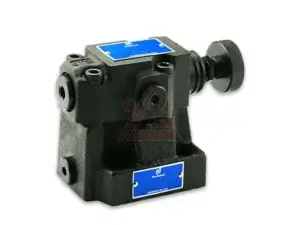
Relief valves come in two main varieties: direct-acting and pilot-operated. Direct-acting valves are simple and respond rapidly, making them ideal for relieving shock pressures. However, they are generally used for low flows. Pilot-operated relief valves are used for applications requiring large flows with small pressure differential. They operate in two stages, with a small pilot valve acting as a trigger to control the main relief valve.
Key Terminology
Cracking Pressure: The pressure at which a relief valve first opens to allow fluid to flow through.
Pressure Override: The difference between full-flow pressure and cracking pressure.
Pressure Setting: The pressure at which the valve is fully open.
Relief valves are the foundation upon which other pressure control valves are built. Their role in system protection cannot be overstated.
2. Pressure Reducing Valves: Maintaining Lower Pressures
While relief valves limit maximum pressure, pressure reducing valves maintain a reduced, constant pressure in a sub-circuit or branch of a hydraulic system. They are essential when a system operates at high pressure but certain actuators—such as clamping cylinders or pilot controls—require lower pressure.
How It Works
Unlike relief valves, a reducing valve is a normally open valve. It allows fluid to flow freely from the inlet to the outlet until the downstream pressure reaches the valve setting. When the outlet pressure exceeds the setting, the valve throttles flow to maintain the desired reduced pressure. If the outlet pressure continues to rise above the setting, the valve closes completely.
Applications
Pressure reducing valves are commonly used in hydraulic clamping systems, where it is often necessary to pressurize single clamping elements with reduced pressure. They are also found in pilot control circuits, lubrication systems, and any application requiring a lower pressure supply from a higher pressure source.
3. Sequence Valves: Controlling Actuator Order
Sequence valves are specialized pressure control valves that ensure hydraulic actuators operate in a predetermined order. They direct flow to a secondary circuit only after a primary circuit has reached a set pressure.
How It Works
A sequence valve is a normally closed valve. It has an inlet port, a sequence (or outlet) port, and a drain port. When the inlet pressure reaches the valve setting, the valve opens, allowing flow to the secondary actuator. The valve remains open as long as the inlet pressure stays above the setting.
Common Application: Clamp and Work Circuits
The most common application of sequence valves is for “clamp and work” circuits. In a typical application, a cylinder must first clamp a workpiece securely. Only after the clamping pressure builds to a sufficient level does the sequence valve open, allowing flow to the work cylinder. This ensures that the clamping operation is completed before the work operation begins.
Sequence valves can be direct-acting or pilot-operated, with pilot-operated types often used for higher flow applications.
4. Counterbalance Valves: Controlling Overrunning Loads
Counterbalance valves are motion control valves designed to control the movement of overrunning (runaway) or suspended loads. They create backpressure on the return line of an actuator to prevent losing control over the load.
How It Works
A counterbalance valve is a normally closed valve. It allows free flow in one direction (into the actuator) but restricts flow in the opposite direction until a preset pressure is reached. This creates backpressure that opposes the load, preventing the load from dropping uncontrollably.
Applications
Counterbalance valves are widely used in hydraulic circuits of engineering machinery with overrunning loads, such as the luffing and hoisting circuits of mobile cranes. They are also essential in aerial work platforms, winches, and any application where a load must be held in position or lowered in a controlled manner.
Key Functions
Counterbalance valves serve multiple functions: leak-tight load holding, controlling lowering speed, and preventing cavitation. They ensure the stability and safety of the load during lowering operations.
5. Unloading Valves: Pump Protection and Energy Efficiency
Unloading valves are used to permit a pump to operate at minimum load, reducing heat buildup and saving energy. They are commonly used in circuits with accumulators or multiple pumps.
How It Works
An unloading valve is a normally closed valve that depends on an external signal for its actuation. Unlike a relief valve, which responds to pressure at its own inlet, an unloading valve is piloted by an external pressure signal. When the external signal reaches the valve setting, the valve opens, unloading the pump to the tank at low pressure.
Applications
Unloading valves are often used in accumulator circuits. When the accumulator reaches its preset pressure, the unloading valve opens, allowing the pump to run unloaded until the accumulator pressure drops, at which point the valve closes and the pump recharges the accumulator. This reduces energy consumption and heat generation.
Unloading valves are also used in systems with multiple pumps, where one pump can be unloaded when its flow is not needed.
Selecting the Right Pressure Control Valve
Choosing the correct types of pressure control valve for your application requires careful consideration of several factors:
Valve Function: Identify whether you need to limit maximum pressure (relief), maintain reduced pressure (reducing), sequence operations (sequence), control overrunning loads (counterbalance), or unload a pump (unloading).
Pressure Range: The valve must be rated for your system’s maximum operating pressure.
Flow Capacity: The valve must handle the required flow without excessive pressure drop.
Valve Construction: Choose between direct-acting (simple, fast response) and pilot-operated (higher flow capacity, better pressure control).
Adjustability: Consider whether you need a fixed or adjustable valve.
Conclusion
Understanding the various types of pressure control valve is fundamental to designing, operating, and maintaining safe and efficient hydraulic systems. From the pressure relief valve that protects components from overpressure, to the pressure reducing valve that maintains lower pressures in sub-circuits, to the sequence valve that controls actuator order, the counterbalance valve that manages overrunning loads, and the unloading valve that improves energy efficiency—each plays a critical role in system performance. The correct selection and functioning of these pressure control elements is a key safety issue that cannot be overemphasized. By understanding the unique function of each type, you can ensure your hydraulic system operates reliably, safely, and efficiently.