In the grand theater of modern engineering, if the control system is the brain and the engine is the heart, then the hydraulic cylinder is undeniably the muscle. It’s a bit of a marvel, really—taking a relatively small amount of pressurized fluid and turning it into enough linear force to crush cars, lift skyscrapers, or delicately position a surgical robot. Yet, for those tasked with designing a machine or maintaining a production line, the sheer variety of types of hydraulic cylinders available today can feel less like a set of options and more like a labyrinth.
Choosing the right cylinder isn’t just about the “push and pull” of physics; it’s about understanding the environment where that cylinder will live out its life. A unit that thrives in the sterile, climate-controlled halls of a pharmaceutical plant would likely last about four hours in the abrasive, heat-soaked reality of a steel mill. This guide aims to pull back the curtain on the many faces of the hydraulic cylinder, examining the nuances of their construction, their specific roles in industry, and the observational lessons learned from decades of field application.
To navigate this complexity, we can first distinguish between standard hydraulic cylinders and custom hydraulic cylinders, each designed for vastly different operational demands.
The Core Concept: Understanding Linear Force for Hydraulic Cylinders
Before diving into the complex taxonomy of these machines, we have to look at the “how” and “why.” At its most basic level, a hydraulic piston cylinder is a device that converts fluid pressure into linear motion. But the way that motion is achieved—and managed—is where the complexity starts.
Functional Logic: Single vs. Double Acting
Most people looking into types of hydraulic cylinders start here. It’s the primary fork in the road of design.
- Single Acting Cylinder: This is the minimalist’s choice. Fluid pressure acts on only one side of the piston. It pushes the rod out, and then… well, then you need gravity, a heavy load, or an internal spring to bring it back. One often sees these in simple lift applications like basic jacks or dump truck beds where the weight of the truck body does the work of retraction for you.
- Double Acting Cylinder: This is the industry standard for a reason. Here, fluid is pumped into both sides of the cylinder. It provides power in both directions—extension and retraction. When you need precise control over the movement—(and let’s face it, in a modern factory, you always do)—the double-acting design is non-negotiable.
Primary Types of Hydraulic Cylinders by Construction
The physical “skeleton” of the cylinder often dictates its durability and its cost. In the field, two main construction styles dominate the landscape.
Tie Rod Hydraulic Cylinder
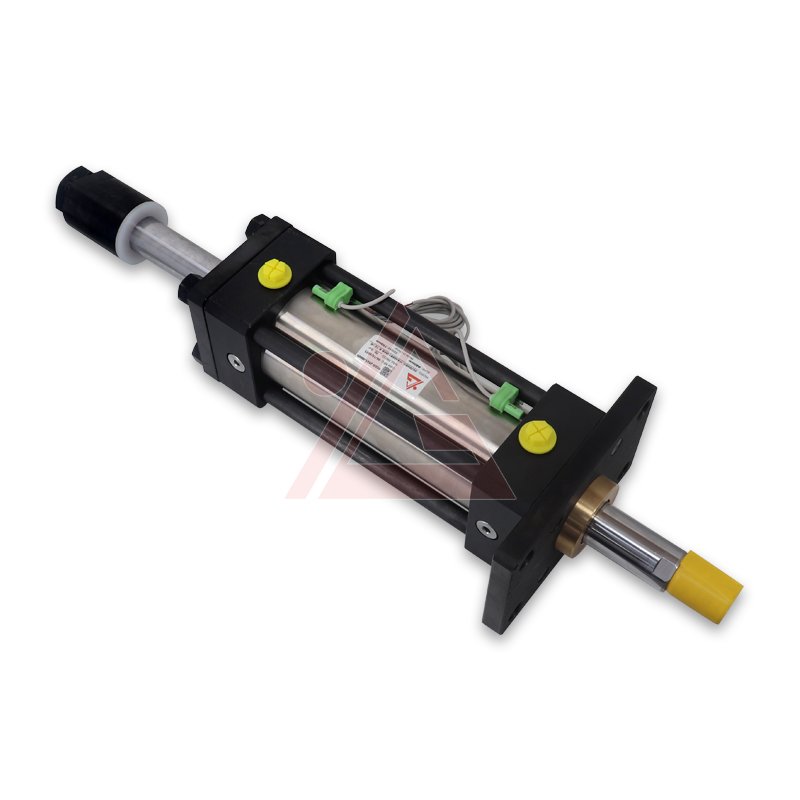
The tie rod hydraulic cylinder is perhaps the most recognizable design in the manufacturing world. It uses high-strength threaded steel tie rods (usually four of them) to hold the two end caps to the cylinder barrel.
- Observational Insight: One of the most endearing qualities of the tie rod design is its “serviceability.” If a seal goes bad in the middle of a shift, a technician with a standard wrench set can have the unit apart, serviced, and back together in a relatively short window. However, because the rods can “stretch” under extreme pressure, they are generally limited to the 2,500 to 3,000 PSI range. They are the “reliable office workers” of the hydraulic world—perfect for indoor, standard-duty tasks.
Engineering Hydraulic Cylinder
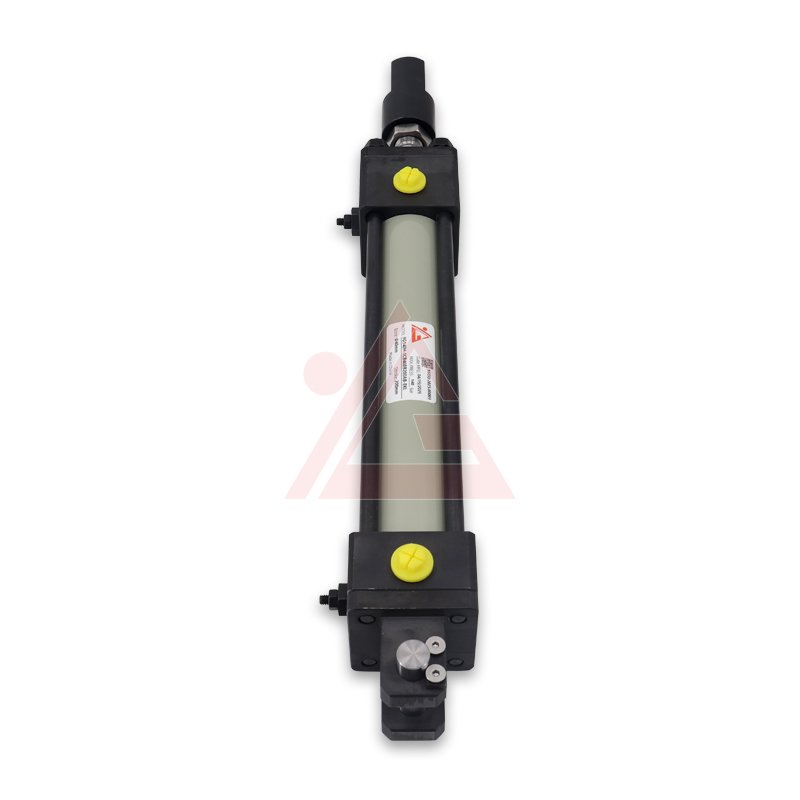
Move away from the factory floor and head toward a construction site or a mine, and the tie rods disappear. Instead, you’ll find the Engineering Hydraulic Cylinder. These units feature heavy-duty welded or bolted heads.
- Why Weld? A welded body is inherently more compact and can handle much higher pressures—often 5,000 PSI or more. Without the outer rods, the cylinder is narrower, which is crucial when trying to fit multiple cylinders into the tight joints of an excavator arm.
- The Reality of Repair: While they are tougher, they are harder to fix in the field. Often, you aren’t repairing these on a bench; you’re swapping the whole unit and sending the old one to a specialized shop.
Industry-Specific Powerhouses: Tailoring the Tool to the Task
As machines have become more specialized, so too have the types of hydraulic cylinders used to power them. Here is a breakdown of the specialists.
The Metallurgical Hydraulic Cylinder
If you’ve ever stood near a blast furnace or a rolling mill, you know it’s a vision of hell for machinery. The Metallurgical Hydraulic Cylinder is built for this purgatory.
- Heat Resistance: They don’t just use standard seals; they use specialized Viton or metallic seals that won’t melt when the radiant heat hits 400°F.
- Dust Management: The rods are often treated with specialized coatings to prevent abrasive “scale” (iron oxide dust) from tearing the seals to shreds.
The Mold Hydraulic Cylinder
In the world of plastic injection molding, precision and speed are the only metrics that matter. A Mold Hydraulic Cylinder is designed for high-frequency cycling.
- Repeatability: These units are built to hit the exact same spot, millions of times, with almost zero deviation.
- Compact Footprint: Because they have to fit inside the complex geometry of a mold base, they are often extremely slim or feature integrated mounting blocks.
The Vehicle Hydraulic Cylinder
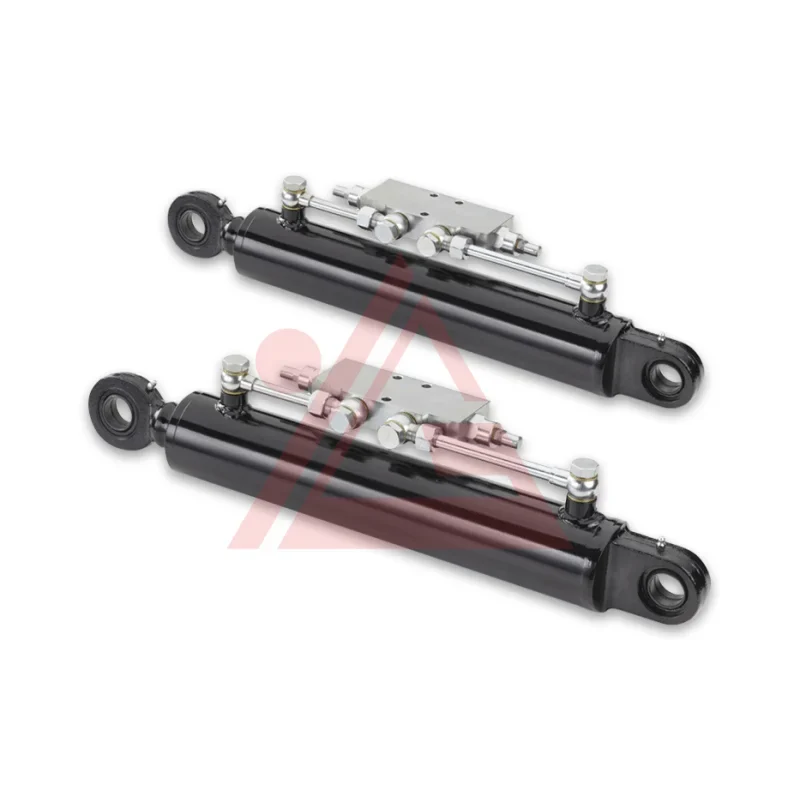
Whether it’s a sanitation truck compressing trash or a tailgate lift on a delivery van, the Vehicle Hydraulic Cylinder faces a unique set of stressors. Unlike a stationary factory machine, a truck is constantly vibrating, bouncing over potholes, and being sprayed with road salt.
- Corrosion Protection: These units almost always feature high-grade chrome plating (or increasingly, laser-cladding) to prevent rust from the salt and rain.
- Vibration Resistance: The mounting points are reinforced to prevent the fatigue cracks that often plague lighter-duty industrial cylinders when put on a mobile platform.
High-Force and Precision Variants
Sometimes, the standard “push” isn’t enough, or it isn’t precise enough. This is where the heavy hitters and the high-tech units come in.
Heavy Duty Hydraulic Cylinder
When a project involves a 2,000-ton press or the movement of a massive bridge span, you look toward the Heavy Duty Hydraulic Cylinder. These aren’t just “big” cylinders; they are engineered with massive safety factors. The cylinder walls are thick enough to resist “ballooning” under extreme pressure, and the internal bearings are oversized to handle the staggering weights involved.
Digital Hydraulic Cylinder (The "Smart" Muscle)
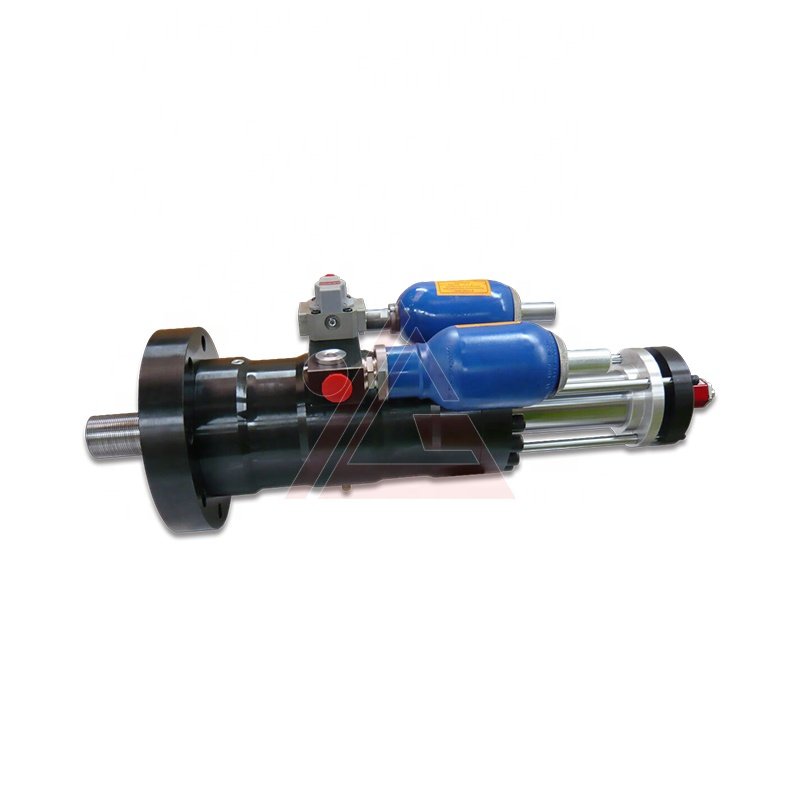
We are moving into an era where “close enough” is no longer good enough. The Digital Hydraulic Cylinder—often referred to as a servo-cylinder—is the intersection of fluid power and silicon.
- Integrated Sensors: These units have built-in linear transducers that tell the computer exactly where the piston is, down to the thousandth of an inch.
- Closed-Loop Control: Because the system knows the exact position, it can adjust flow in real-time. This is how flight simulators achieve such realistic motion and how high-speed assembly lines operate with such terrifying efficiency.
Performance and Environment Comparison of Different Types of Hydraulic Cylinders
To help visualize how these Types of Hydraulic Cylinders stack up, let’s look at the operational data.
| Cylinder Type | Structural Style | Pressure Range | Resilience Level | Typical Application |
|---|---|---|---|---|
| Tie Rod | Rod-secured | Medium (Up to 3,000 PSI) | Standard (Indoor) | Factory Automation, Food Processing |
| Engineering | Welded / Bolted | High (Up to 5,000+ PSI) | Very High (Outdoor) | Excavators, Mining, Cranes |
| Compact/Mini | Low Profile | Medium | High (Space-focused) | Injection Molds, Clamping Fixtures |
| Metallurgical | Reinforced | Very High | Extreme (Heat/Dust) | Steel Mills, Foundries |
| Digital | Integrated Sensor | Variable | High (Precision-focused) | Robotics, Aerospace, Testing Rigs |
| Vehicle | Application-specific | Medium-High | High (Vibration/Salt) | Trash Trucks, Lift Gates, Ag Equipment |
Mechanical Variations: Beyond the Straight Line
While we usually think of a hydraulic cylinder as a simple rod moving in and out, there are several variations that use mechanics to change how that force is applied.
Hydraulic Lever Cylinder
This is a clever bit of engineering. The Hydraulic Lever Cylinder uses an integrated lever arm to amplify the force. One often sees these in clamping mechanisms where you need a massive amount of “squeeze” but only have a small amount of oil flow. It’s essentially a force multiplier built right into the actuator.
Hydraulic Support Cylinder
In CNC machining, a part can sometimes flex under the pressure of the cutting tool. A Hydraulic Support Cylinder acts like a “smart jack.” It moves up to touch the part, and then—using a specialized internal locking mechanism—it becomes a rigid pillar that prevents any movement. Once the machining is done, it retracts to let the part be swapped out.
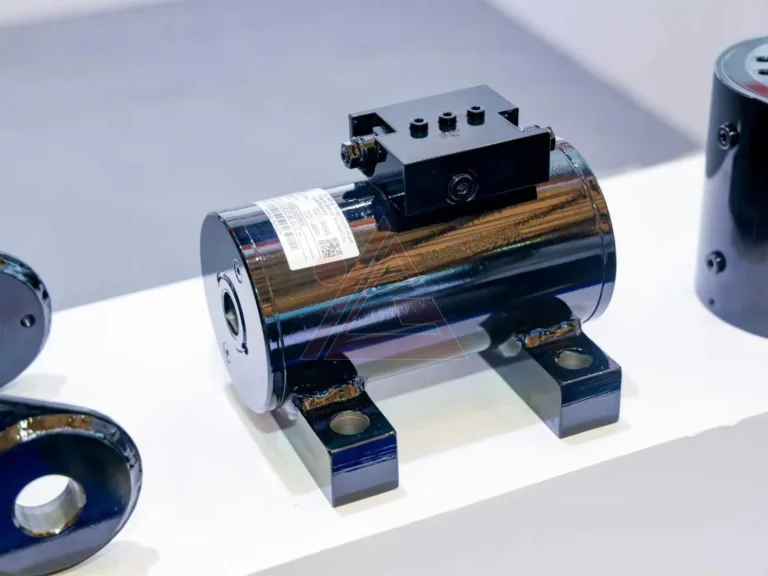
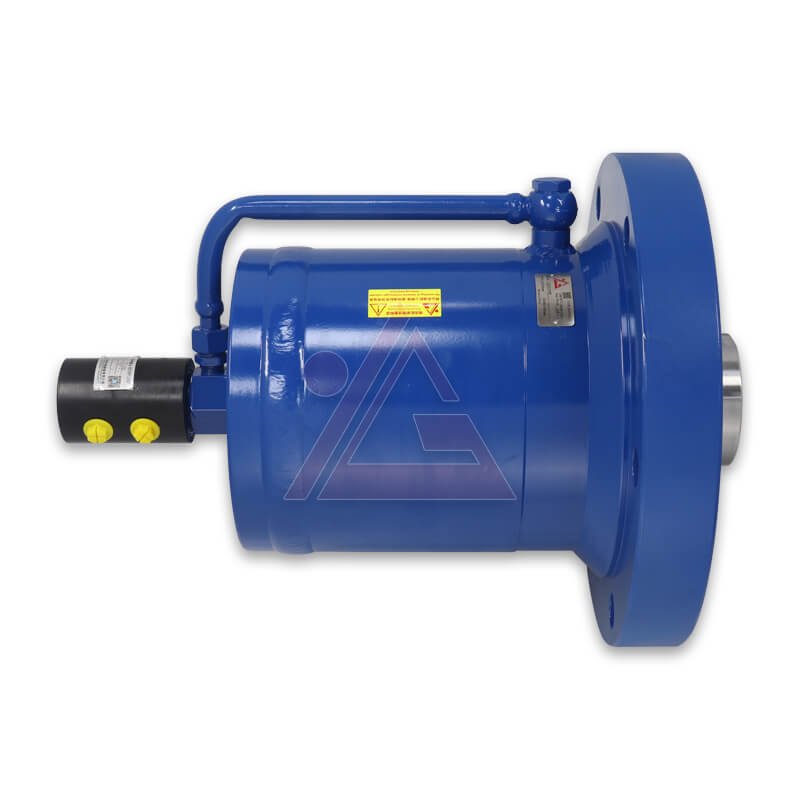
Hydraulic Rotary Cylinder
Sometimes, you don’t want to push a part; you want to flip it. A rotary cylinder (or actuator) uses a rack-and-pinion or a helical gear system to turn linear fluid motion into rotational torque. You’ll see a Rack & Pinion Rotary Actuator on heavy equipment where a boom needs to swing 180 degrees with absolute smooth control.
The Hidden Science: Rods, Seals, and Coatings
It’s easy to focus on the big pieces of steel, but the life of a hydraulic cylinder is often determined by things you can barely see.
The Rod Coating Debate
For years, hard chrome plating was the only game in town. It was cheap and durable. But chrome is porous; under a microscope, it looks like a dry lake bed. Salt and moisture can seep through those cracks and rust the steel underneath.
Today, high-end standard hydraulic cylinders are moving toward Laser Cladding. It’s a process where a laser melts a specialized alloy onto the rod. It creates a surface that is harder than chrome and—(perhaps most importantly)—entirely non-porous. It’s more expensive, but in a coastal environment, it can extend the cylinder’s life by a factor of ten.
Seal Chemistry
Not all rubber is created equal. If you are running a standard hydraulic cylinder on fire-resistant fluid (like water-glycol), your standard nitrile seals will swell and disintegrate in weeks. You have to match the seal chemistry to the fluid. It’s a common oversight that leads to more “mystery leaks” than almost anything else on the factory floor.
Real-World Failures: Why Selection Matters
From an observational standpoint, the most common reason a hydraulic cylinder fails isn’t that it wasn’t “strong” enough. It’s usually a mismatch of application.
The "Side-Loading" Nightmare
Cylinders are designed to push and pull in a perfectly straight line. If the load is even slightly off-center, it creates “side-loading.” This pushes the piston against the side of the cylinder wall.
- Result: The internal bearings wear down, the rod starts to score, and eventually, the seal fails.
- Solution: Using a Clevis Mount or a spherical bearing allows the cylinder to “breathe” and self-align, preventing the side-load from ever reaching the internal components.
The Buckling Factor
For very long Types of Hydraulic Cylinders, there is the risk of “buckling.” Imagine pushing a long piece of spaghetti; at a certain point, it doesn’t matter how hard you push, it just bends. Engineers have to calculate the “Euler Buckling Load” for long-stroke cylinders. Sometimes, the only solution is to use a much thicker rod than the pressure actually requires, simply to provide the structural rigidity needed to stay straight.
Conclusion: The Future of Hydraulic Cylinders in Fluid Power
As we look toward the 2030s, the hydraulic cylinder is undergoing a quiet revolution. We are seeing “smart” materials that can heal small scratches on the rod, and hydraulic fluids that are entirely biodegradable. The standard hydraulic cylinder is no longer just a piece of hardware; it’s becoming a data-rich component of the “Industrial Internet of Things” (IIoT).
Choosing among the various types of hydraulic cylinders requires a balance of CAPEX (initial cost) and OPEX (maintenance over time). By understanding the specific needs of your environment—whether it’s the heat of a steel mill or the precision of a laboratory—you can ensure that the “muscles” of your operation remain strong for years to come.
FAQ
Can I use a Tie Rod Hydraulic Cylinder in a mobile/construction environment?
Yes, but it is not ideal for long-term use. Among common types of hydraulic cylinders, tie rod models are less suited to mobile machinery. Constant vibration and shock in construction equipment can cause tie rods to loosen or fatigue over time, and they tend to trap dirt, mud, and debris. For mobile applications, a welded hydraulic cylinder is far more durable and reliable.
Why do my Mold Hydraulic Cylinders keep failing after a few months of use?
In injection molding, premature failure of a hydraulic cylinder is often caused by high-speed impact at the end of the stroke. Without proper cushioning, repeated hard shocks damage internal seals rapidly. When comparing types of hydraulic cylinders, models with internal cushioning are far better for molding equipment, as they gently decelerate the piston before it reaches full extension, greatly extending service life.
How to choose among different types of hydraulic cylinders for my equipment?
When selecting a hydraulic cylinder, you must match its design to your working environment. Among common types of hydraulic cylinders, tie rod models work well for stationary machinery but are less durable for mobile use. Wedded hydraulic cylinders offer better shock resistance, while digital servo cylinders provide precise control. Understanding the differences between these types of hydraulic cylinders ensures you pick the most reliable hydraulic cylinder for your machine’s load, speed, and environment.