In nearly every industrial machine, mobile equipment, or manufacturing system, there is a Hydraulic Cylinder converting fluid power into linear force and controlled motion. Understanding the primary function of a Hydraulic Cylinder in systems is essential for engineers, technicians, and operators alike. Simply put, a Hydraulic Cylinder transforms hydraulic energy into mechanical work – pushing, pulling, lifting, or holding loads. This guide will explain this core function, how it integrates with other components, and why it is indispensable. For a deeper look at one common type, see our guide on how does a single acting hydraulic cylinder work.
1. What Is the Primary Function of a Hydraulic Cylinder?
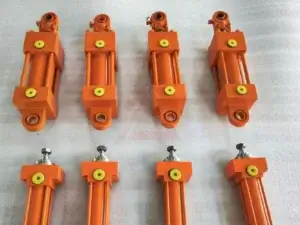
The primary function of a Hydraulic Cylinder is to generate linear force and motion using pressurized hydraulic fluid. When oil enters the cylinder’s cap end, it pushes the piston, extending the rod. When oil enters the rod end, the piston retracts. This reciprocating movement is the fundamental output. Unlike electric actuators, a Hydraulic Cylinder provides extremely high force in a compact size, with smooth, controllable speed. This function makes it the preferred choice for heavy-duty applications, such as in a hydraulic system cylinder that powers an excavator’s arm or a press’s ram.
2. How the Hydraulic Cylinder Integrates into a System
A Hydraulic Cylinder does not work alone. It is part of a complete hydraulic system that includes a pump, reservoir, valves, filters, and piping. The pump supplies pressurized oil; directional control valves determine which side of the cylinder receives oil; flow control valves regulate speed. The Hydraulic Cylinder is the final actuator – the “muscle” that performs the actual work. Understanding this integration helps answer how does a single acting hydraulic cylinder work in a broader context, but for now, note that every system relies on the cylinder’s primary function: converting pressure into linear motion. A linear actuator cylinder is another term often used interchangeably.
3. Pushing, Pulling, and Holding Loads
The Hydraulic Cylinder can exert force in both directions (if double-acting) or one direction (if single-acting). Its primary function includes three key actions:
Pushing: Extending the rod to move a load away.
Pulling: Retracting the rod to bring a load closer.
Holding: Maintaining position against external forces, using check valves or pilot operated valves.
This versatility makes the Hydraulic Cylinder suitable for countless tasks, from clamping in a fixture to steering a vehicle. An industrial hydraulic cylinder in a factory press pushes a die into a workpiece; a heavy duty hydraulic cylinder in a mining truck holds the dump body during transport.
4. Force and Speed Characteristics
The primary function of a Hydraulic Cylinder also involves force and speed. Force is determined by piston area and system pressure (F = P × A). Speed depends on flow rate and cylinder area (v = Q / A). Engineers select cylinder bore size and rod diameter to match application requirements. For example, a double acting cylinder provides equal or different forces in extension and retraction because the rod-side area is smaller. A single acting cylinder (as covered in how does a single acting hydraulic cylinder work) uses pressure only for extension, with gravity or spring return.
5. Key Components That Enable the Function
To perform its primary function, a Hydraulic Cylinder relies on several precision parts:
Barrel with a honed inner surface.
Piston with seals to prevent internal bypass.
Piston rod (chrome plated) to resist wear and corrosion.
Gland with rod seal and wiper.
Ports for fluid entry and exit.
Each component must be manufactured to tight tolerances. A well-designed Hydraulic Cylinder can operate for millions of cycles. Common variations include a tie rod cylinder (easily disassembled) and a welded hydraulic cylinder (more compact and robust). Both serve the same primary function.
6. Applications Across Industries
The primary function of a Hydraulic Cylinder is utilized everywhere:
Construction: Excavators, loaders, bulldozers.
Manufacturing: Presses, injection molding machines, robots.
Agriculture: Tractors, harvesters, balers.
Aerospace: Landing gear, cargo doors.
Marine: Steering systems, hatch covers.
In each case, the Hydraulic Cylinder converts fluid pressure into the linear motion needed to move heavy loads precisely. A hydraulic lift cylinder on a forklift raises pallets; a hydraulic press cylinder shapes metal parts. Without this function, modern industry would halt.

7. Advantages Over Other Actuators
Compared to pneumatic or electric actuators, the Hydraulic Cylinder offers:
Higher force density (more force per unit size).
Smooth, infinitely variable speed.
Ability to hold position without energy consumption (using check valves).
Overload protection via relief valves.
These advantages reinforce why the primary function of a Hydraulic Cylinder – converting hydraulic energy into linear mechanical work – remains irreplaceable in heavy-duty and precise applications.
8. Maintenance and Reliability
To ensure the Hydraulic Cylinder continues its primary function reliably, regular maintenance is necessary: check for external leaks, inspect rod surface for scoring, change hydraulic fluid, and replace seals at recommended intervals. A well-maintained Hydraulic Cylinder can last decades.
Conclusion
The primary function of a Hydraulic Cylinder in systems is to convert pressurized hydraulic fluid into linear force and motion – pushing, pulling, or holding loads. Whether it is a hydraulic system cylinder, linear actuator cylinder, industrial hydraulic cylinder, heavy duty hydraulic cylinder, double acting cylinder, or single acting cylinder, the core purpose remains the same. Understanding this function helps you select, operate, and maintain hydraulic systems effectively.