The iron and steel industry is one of the most demanding environments for industrial equipment. Extreme heat, heavy loads, dust, scale, and continuous operation push every component to its limit. Among the critical technologies that keep steel mills running is the Hydraulic Cylinder. From moving molten metal to rolling red-hot slabs, Hydraulic Cylinder systems provide the linear force needed for forming, lifting, gripping, and positioning. Understanding Hydraulic Cylinder uses in the iron and steel industry helps engineers select robust designs and maintenance teams plan effective overhauls. In this guide, we will explore key steel mill applications that rely on specialized Hydraulic Cylinder technology.
1. High-Temperature Hydraulic Cylinders in Steel Mills
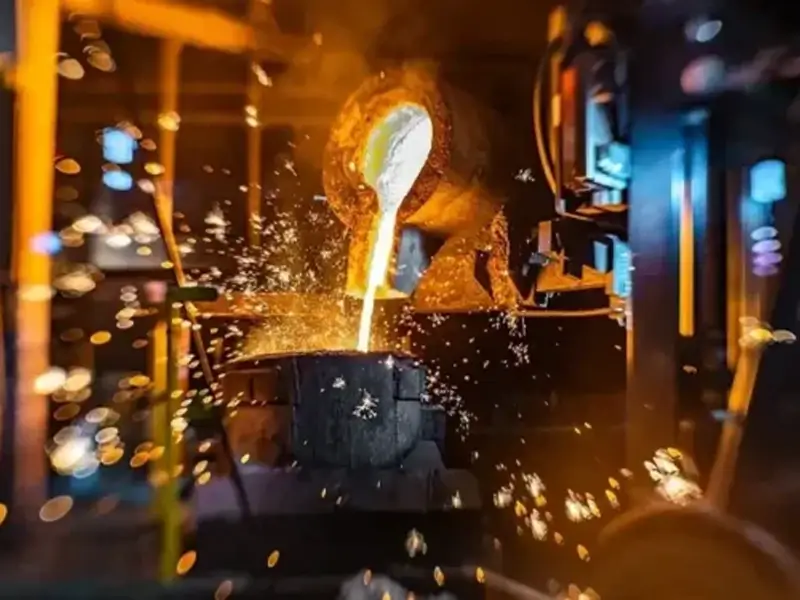
Steel production involves extreme heat. Conventional hydraulic cylinder seals and rod coatings fail quickly when exposed to radiant heat, molten metal splash, or hot scale. A high temperature hydraulic cylinder for steel mill uses special seal materials (Viton, PTFE, or proprietary compounds), high-temperature lubricants, and often heat shields or water-cooled jackets. The rod may be chrome-plated or ceramic-coated for better heat reflection. These Hydraulic Cylinder units are commonly found on furnace doors, ladle cars, and roller tables near hot zones.
2. Mill Type Hydraulic Cylinder vs Tie Rod Cylinder
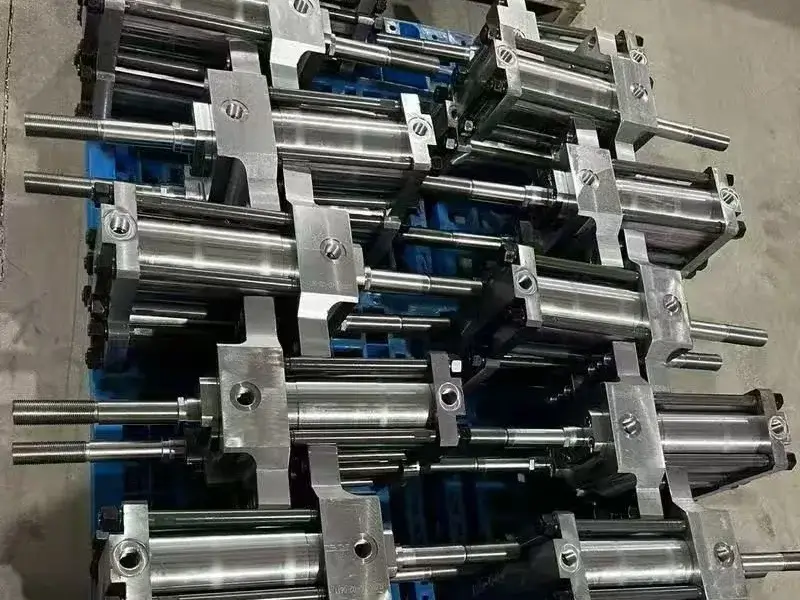
When selecting cylinders for steel mill equipment, engineers often compare mill type hydraulic cylinder vs tie rod cylinder. Mill type cylinders have a welded or bolted construction with massive end caps and heavy-duty bearings. They are designed to withstand shock loads, vibration, and side forces typical in rolling mills and continuous casters. Tie rod cylinders, while easier to repair, are generally less robust for high-impact applications. For most steel mill duties, the mill type Hydraulic Cylinder is preferred because it offers longer service life between overhauls and better resistance to contamination.
3. Hydraulic Cylinders in Continuous Casting Mold Oscillation
Continuous casting converts liquid steel into solid slabs. The mold oscillates (moves up and down) to prevent sticking. This oscillation is powered by Hydraulic Cylinder actuators that produce precise, sinusoidal motion at frequencies up to 400 cycles per minute. A hydraulic cylinder in continuous casting mold oscillation must respond quickly, position accurately, and operate 24/7 in a dusty, hot environment. Servo valves and position sensors (linear transducers) control the cylinder’s movement. Failure of such a Hydraulic Cylinder can stop the entire caster, causing huge production losses.
4. AGC Hydraulic Cylinder in Rolling Mill
Rolling mills reduce slab thickness by passing metal between work rolls. To achieve uniform thickness, hydraulic automatic gauge control (AGC) systems continuously adjust the roll gap. An AGC hydraulic cylinder in rolling mill is a large, high-response cylinder mounted on the mill housing. It exerts precise force to counteract thickness variations. These Hydraulic Cylinder units operate at pressures up to 5,000 psi and must respond within milliseconds. They often incorporate integrated position sensors and servo valves for closed loop control. AGC cylinders are among the most critical and expensive cylinders in a steel plant.
5. Hydraulic Cylinder for Ladle Turret in Steel Plant
A ladle turret rotates and lifts ladles filled with molten steel (up to 400 tons). The lifting function requires a robust Hydraulic Cylinder for ladle turret in steel plant. These cylinders must hold the ladle safely even if hydraulic pressure is lost – they typically include counterbalance valves and mechanical locking devices. Because the ladle emits intense radiant heat, the cylinder is often protected by a water-cooled jacket or ceramic blanket. The rod may be cooled internally by circulating water. A failure of this Hydraulic Cylinder could cause a catastrophic spill of molten steel.
6. Steel Mill Hydraulic Cylinder Repair and Reconditioning
Given the harsh conditions, steel mill hydraulic cylinders wear out faster than in other industries. A steel mill hydraulic cylinder repair and reconditioning service involves disassembly, inspection, non-destructive testing (NDT) for cracks, re-chroming of rods, honing or reboring of barrels, and installation of new seals and wear rings. Many steel mills contract with specialized repair shops that can reverse-engineer obsolete cylinders or upgrade seal materials. Preventive maintenance based on operating hours is more cost-effective than emergency repairs. Properly reconditioned Hydraulic Cylinder units can achieve near-new performance at a fraction of replacement cost.
7. Other Steel Mill Applications
Beyond the major uses, Hydraulic Cylinder systems are found in:
Coil handling: Mandrel expansion, coil lifters, and turnstiles.
Shears and crop shears: Blade actuation.
Walking beam conveyors: Lift and step motions.
Roller table tilting and lifting.
Every one of these applications demands a rugged, reliable Hydraulic Cylinder designed for steel mill conditions.
8. Maintenance Tips for Steel Mill Hydraulic Cylinders
To extend the life of a Hydraulic Cylinder in a steel mill:
Monitor rod surface temperature; add cooling if above 100°C.
Use synthetic hydraulic fluids with high flash points.
Inspect wipers regularly; replace if hardened by heat.
Check for external leaks – even small leaks allow contaminants in.
Keep a stock of critical seal kits and spare cylinders.
Conclusion
The iron and steel industry would grind to a halt without specialized Hydraulic Cylinder technology. From high temperature hydraulic cylinder for steel mill and the comparison mill type hydraulic cylinder vs tie rod cylinder to the precise hydraulic cylinder in continuous casting mold oscillation, the powerful AGC hydraulic cylinder in rolling mill, the safety-critical hydraulic cylinder for ladle turret in steel plant, and the essential steel mill hydraulic cylinder repair and reconditioning – each plays a vital role. Understanding Hydraulic Cylinder uses in this industry enables better equipment selection, reduced downtime, and safer operations. When extreme heat, shock, and continuous duty are the norm, only purpose built hydraulic cylinders can deliver the required reliability.