A Heavy Duty Hydraulic Cylinder is a linear actuator specifically engineered to withstand extreme pressures, shock loads, continuous operation, and harsh environmental conditions. Unlike standard industrial cylinders, a Heavy Duty Hydraulic Cylinder features thicker barrel walls, larger rod diameters, heavy-duty bearings, and specially formulated seals. These cylinders are the backbone of industries such as mining, construction, steel mills, offshore drilling, and heavy material handling. In this guide, we will explain what a Heavy Duty Hydraulic Cylinder is, how it differs from standard cylinders, its key design features, common applications, and selection considerations.
1. What Is a Heavy Duty Hydraulic Cylinder? Basic Definition
A Heavy Duty Hydraulic Cylinder is a high-force, high-reliability actuator built to operate at pressures typically exceeding 3,000 psi (210 bar) and often up to 5,000 psi or more. It is designed for millions of cycles under shock loads, vibration, and contamination. The term “heavy duty” refers not only to the cylinder’s physical robustness but also to its ability to perform in demanding applications where standard cylinders would quickly fail. A Heavy Duty Hydraulic Cylinder is commonly found in excavators, bulldozers, hydraulic presses, scrap metal balers, and mining haul trucks.
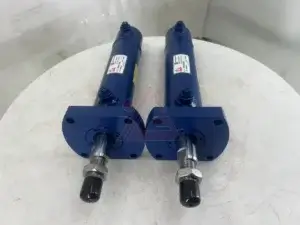
2. Key Design Features of a Heavy Duty Hydraulic Cylinder
Several design elements distinguish a Heavy Duty Hydraulic Cylinder from a standard tie rod or welded cylinder:
Thicker barrel wall: Resists expansion under high pressure and withstands impact damage.
Larger piston rod diameter: Increases column strength to prevent buckling under compressive loads.
Induction-hardened or nitrided rod: Provides superior surface hardness for scratch and wear resistance.
Heavy-duty wear rings (bearings): Support high side loads and reduce metal-to-metal contact.
High-strength alloy steel components: End caps, pistons, and mountings are made from forged or high tensile steel.
Special seal materials: Polyurethane or PTFE-filled seals for high pressure and abrasion resistance.
Double wipers: Keep contaminants out in dusty or muddy environments.
These features allow a Heavy Duty Hydraulic Cylinder to survive in applications where shock loads, high cycle rates, and contamination are the norm.
3. How It Differs from Standard Hydraulic Cylinders
A standard industrial hydraulic cylinder (often tie-rod type) may operate at 1,500-2,500 psi and is suitable for factory automation, machine tools, and general manufacturing. A Heavy Duty Hydraulic Cylinder, by contrast, is built for mobile equipment, mining, and heavy pressing. Key differences include:
Pressure rating: Heavy duty cylinders are rated for 3,000-5,000+ psi vs. 1,500-2,500 psi for standard.
Service life: Heavy duty designs endure millions of shock cycles; standard cylinders may fail under similar conditions.
Mounting robustness: Heavy duty cylinders use forged mounts (clevis, trunnion) rather than welded or bolted brackets.
Repairability: Many heavy duty cylinders are field-serviceable with replaceable seal kits and wear rings.
4. Common Applications of Heavy Duty Hydraulic Cylinders
The Heavy Duty Hydraulic Cylinder is indispensable in severe-duty industries:
Mining: Excavator boom cylinders, dump truck hoist cylinders, crusher feed cylinders.
Construction: Bulldozer blade lift cylinders, loader tilt cylinders, backhoe arm cylinders.
Steel mills: Mill type cylinders for rolling mills, AGC cylinders, ladle turret cylinders.
Waste management: Scrap metal baler cylinders, landfill compactor cylinders.
Offshore and marine: Jack-up platform lifting cylinders, subsea control cylinders.
Heavy presses: Forging presses, stamping presses, extrusion presses.
In each application, the Heavy Duty Hydraulic Cylinder must absorb shock, resist bending, and maintain sealing integrity despite debris and temperature extremes.
5. Materials and Coatings for Heavy Duty Service
To withstand corrosion and wear, a Heavy Duty Hydraulic Cylinder uses advanced materials:
Rod coatings: Hard chrome (standard), nickel-chromium (saltwater resistance), ceramic (extreme wear).
Barrel material: High-strength carbon steel (e.g., 1045, 4140), or stainless steel for corrosive environments.
Seal materials: Polyurethane for abrasion, Viton for high temperature, PTFE for low friction.
Piston and gland: Ductile iron or forged steel for impact resistance.
Choosing the right material combination ensures that your Heavy Duty Hydraulic Cylinder delivers maximum service life.
6. Mounting Styles for Heavy Duty Cylinders
Common mounting styles for a Heavy Duty Hydraulic Cylinder include:
Clevis mount: Allows pivoting, used in excavator arms and dozer linkages.
Trunnion mount: Wide angle articulation, ideal for hoist cylinders.
Flange mount (head or cap): Rigid mounting for presses and stationary equipment.
Side lug mount: For conveyor drives and mobile equipment.
Heavy duty mounts are thicker, use larger pins, and are often forged rather than welded.

7. How to Select a Heavy Duty Hydraulic Cylinder
When choosing a Heavy Duty Hydraulic Cylinder, consider:
Operating pressure: Must match system pressure (up to 5,000 psi).
Force requirement: Bore size must generate required force with safety margin.
Stroke length: Longer strokes may need larger rod diameter to prevent buckling.
Mounting style: Must align with load and allow articulation if needed.
Seal material: Based on temperature, fluid type, and abrasion.
Environmental factors: Dust, moisture, salt, or chemicals.
Also request fatigue test data and material certificates from the manufacturer.
8. Maintenance Tips for Heavy Duty Cylinders
Even a Heavy Duty Hydraulic Cylinder needs regular care:
Inspect rod surface weekly for scratches or chrome damage.
Check for external leaks at gland and fittings.
Monitor hydraulic fluid cleanliness – contamination kills seals.
Replace seals at recommended intervals (every 2-3 years or 5,000-10,000 hours).
Re-torque mounting bolts periodically.
Conclusion
A Heavy Duty Hydraulic Cylinder is a rugged, high-pressure linear actuator designed for the most demanding industrial, mining, and construction applications. Its thick walls, large rod, heavy-duty bearings, and specialized seals enable it to survive shock loads, vibration, and contamination that would destroy standard cylinders. Whether you need a mining hydraulic cylinder, construction cylinder, mill type cylinder, baler cylinder, forging press cylinder, or offshore cylinder, understanding the features of a Heavy Duty Hydraulic Cylinder ensures you select the right component for reliable, long-lasting performance.