Selecting the correct Mold Hydraulic Cylinder for your injection molding, die-casting, or compression molding application is critical for product quality, cycle time, and machine uptime. A poorly chosen cylinder can lead to part defects, excessive maintenance, or even mold damage. In this guide, we will walk you through the key selection criteria for a Mold Hydraulic Cylinder, including force, stroke, mounting style, materials, and special features. For a detailed introduction to this cylinder type, see our guide on What Is a Mold Hydraulic Cylinder.
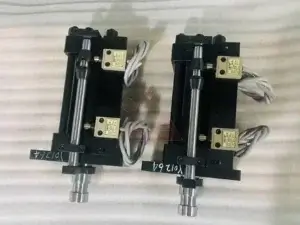
1. Determine the Required Force (Clamping, Ejection, or Core Pull)
The first step in selecting a Mold Hydraulic Cylinder is calculating the force needed for your specific operation. For a hydraulic clamping cylinder, force must be high enough to keep the mold closed against material injection pressure. Use the formula: Force = Pressure × Piston Area (F = P × A). Add a safety margin of 10-20%. For a mold ejector cylinder, force must overcome the part’s adhesion to the cavity. For a core pull cylinder, calculate the force required to retract the core pin against friction and material resistance. A high force mold cylinder is often needed for large molds or deep cores.
2. Define Stroke Length Accurately
Stroke length is the distance the piston rod travels from fully retracted to fully extended. Measure the exact movement required for mold opening, part ejection, or core withdrawal. For a long stroke mold cylinder (e.g., for tall parts), consider rod buckling – a larger rod diameter or intermediate support may be necessary. For a short stroke mold cylinder (e.g., ejector pins), standard compact designs work well. Always add a small margin (1/8″ to 1/4″) to avoid bottoming out, but oversizing stroke wastes space.
3. Select the Appropriate Mounting Style
The mounting style determines how your Mold Hydraulic Cylinder attaches to the mold base or platen. Common options include:
Flange mount: Rigid, for axial loads – ideal for clamping cylinders.
Threaded body mount: Extremely compact – used for core pull cylinders inside the mold.
Clevis mount: Allows pivoting – suitable for moving slides or lifters.
Trunnion mount: Wide angle articulation – for complex mold actions.
For a compact mold cylinder that must fit into tight mold pockets, a threaded body or rectangular flange mount is often preferred. Ensure the mount does not interfere with cooling lines or ejector plates.
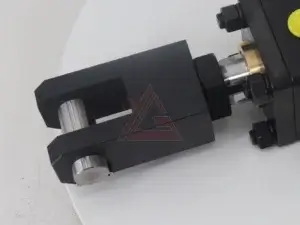
4. Choose the Right Rod Material and Coating
The piston rod of a Mold Hydraulic Cylinder is exposed to moisture, mold release agents, and temperature cycles. Standard hard chrome rods work for general applications. For corrosive environments (e.g., molding certain engineering plastics), upgrade to a stainless steel mold cylinder with electroless nickel or ceramic coating. A corrosion resistant mold cylinder extends seal life and prevents rod pitting. Also consider the rod diameter – a larger rod resists buckling but reduces retraction force.
5. Select Seal Material for Temperature and Fluid Compatibility
Seals must withstand hydraulic fluid and operating temperatures. For standard mineral oils (40-60°C), nitrile seals are sufficient. For high-temperature molding (up to 120°C), specify Viton seals. For rapid cycling, polyurethane rod seals offer better abrasion resistance. A high temperature mold cylinder with Viton seals is essential for hot runner systems or die casting. Always confirm seal compatibility with any specialty hydraulic fluids (e.g., fire-resistant fluids).
6. Consider Integrated Position Sensing
Many modern molding machines require closed-loop control of cylinder position. A mold cylinder with linear sensor (magnetostrictive transducer inside the rod) provides real-time feedback for precise mold opening, part ejection, or core position. Alternatively, magnetic pistons allow external reed switches for end-of-stroke detection. For a precision mold cylinder used in delicate molding applications (e.g., optical lenses), integrated sensing is highly recommended.
7. Verify Operating Pressure and Speed
Your Mold Hydraulic Cylinder must be rated for the machine’s maximum hydraulic pressure (typically 150-250 bar for molding machines). Also consider desired speed: speed = flow rate / piston area. For high-speed ejection or core pull, ensure the cylinder’s ports are large enough to allow sufficient flow. A fast acting mold cylinder may require optional port sizes or a dedicated intensifier circuit.
8. Evaluate Space Constraints and Mounting Details
Mold areas are notoriously tight. Measure the available space for the cylinder, including its fully extended length, rod end attachment, and port locations. For a compact mold cylinder, a threaded body or low-profile flange mount saves valuable real estate. Also check that port fittings do not interfere with mold components. Provide a dimensioned drawing to the manufacturer for custom configurations.
9. Review Cycle Life and Maintenance Access
Molding machines run millions of cycles. Choose a Mold Hydraulic Cylinder designed for high-cycle endurance – with wear rings, heavy duty bearings, and replaceable seals. Some designs are non-serviceable (welded); others allow seal replacement. For critical cylinders (clamping), a repairable mold cylinder is preferable to avoid mold removal. Ensure spare seal kits are available from the supplier.
10. Request a Sample or Detailed Drawing
Before ordering a large quantity, request a dimensional drawing of the Mold Hydraulic Cylinder with your exact specifications. Check all dimensions, port threads, sensor placement, and rod end details. If possible, test a sample cylinder under actual molding conditions to verify force, speed, and leak-free operation.
Conclusion
Selecting the right Mold Hydraulic Cylinder involves analyzing force, stroke, mounting, rod material, seals, sensors, pressure, space, cycle life, and testing. Whether you need a hydraulic clamping cylinder, mold ejector cylinder, core pull cylinder, compact mold cylinder, stainless steel mold cylinder, or high temperature mold cylinder, following this systematic process ensures reliable, long-lasting performance. For foundational knowledge, revisit What Is a Mold Hydraulic Cylinder. Invest time in selection – it pays off in higher quality parts and lower downtime.