A Tie Rod Hydraulic Cylinder is one of the most common and recognizable types of hydraulic cylinders used in industrial machinery. It gets its name from the external threaded steel rods (tie rods) that hold the end caps to the barrel. Understanding what is a tie rod hydraulic cylinder, how it works, and where it is used helps engineers, maintenance technicians, and purchasers select the right actuator for their applications. In this guide, we will explain the construction, advantages, common uses, and key considerations for this popular hydraulic cylinder design.
1. Construction and Main Components
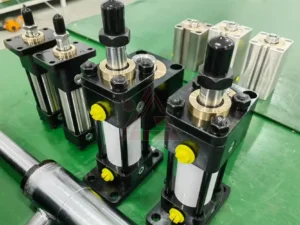
So, what is a tie rod hydraulic cylinder made of? It consists of several precision parts:
Barrel: A seamless steel tube with a honed internal surface.
Tie rods: Usually four or more high-strength threaded rods that run the full length of the cylinder, holding the two end caps tightly against the barrel.
Head cap (rod end cap): Contains the rod seal, wiper, and bearing.
Cap cap (blind end cap): Seals the opposite end.
Piston and piston rod: The moving parts that convert hydraulic pressure into linear force.
Seals: Prevent internal and external leakage.
Because the tie rods are external, a Tie Rod Hydraulic Cylinder is relatively easy to disassemble and repair – a key advantage over welded designs.
2. How a Tie Rod Hydraulic Cylinder Works
The working principle is the same as any double acting hydraulic cylinder. Pressurized oil enters one side of the piston, pushing it and extending the rod. Oil on the opposite side returns to the tank. To retract, oil is directed to the rod side. The tie rods provide the clamping force to keep the end caps sealed under high pressure. A high pressure tie rod cylinder can safely operate at pressures up to 3,000 psi (210 bar) or higher, depending on rod diameter and material.
3. Advantages of Tie Rod Construction
Why choose a Tie Rod Hydraulic Cylinder over a welded or mill-type cylinder?
Easy maintenance: Tie rods can be unbolted, allowing full access to internal seals and bearings without cutting or welding.
Cost-effective: Mass production makes tie rod cylinders generally less expensive than custom welded units.
Standardized mounting: NFPA (National Fluid Power Association) dimensions ensure interchangeability among different manufacturers.
Repairable: Seal kits are widely available, and a repairable hydraulic cylinder like this can be rebuilt multiple times.
These benefits make the Tie Rod Hydraulic Cylinder the preferred choice for most industrial applications.
4. Common Applications
You will find Tie Rod Hydraulic Cylinder units in:
Machine tools (clamping, feeding)
Plastic injection molding machines
Presses (C-frame and H-frame)
Material handling equipment
Agricultural machinery
Custom automation systems
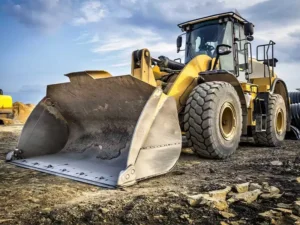
For example, a heavy duty tie rod cylinder might be used in a scrap metal baler, while a small tie rod cylinder serves in a packaging machine. Their versatility is unmatched.
5. Limitations of Tie Rod Cylinders
Despite their popularity, Tie Rod Hydraulic Cylinder designs have some limitations:
Lower shock load resistance compared to welded cylinders (tie rods can stretch).
Larger footprint due to external rods.
Not ideal for applications with extreme side loading.
May require more frequent retorquing of tie rod nuts in high-vibration environments.
For severe duty, a welded hydraulic cylinder might be a better choice. But for most factory automation and general industry, the tie rod design is perfectly adequate.
6. NFPA Standards and Interchangeability
Most Tie Rod Hydraulic Cylinder manufacturers follow NFPA (National Fluid Power Association) standards. This means cylinders from different brands with the same bore, stroke, and mounting style are mechanically interchangeable. Common mounting styles include:
MP1, MP2, MP3, MP4 (side lug mounts)
MF1, MF2, MF3, MF4 (flange mounts)
MT1, MT2, MT3, MT4 (trunnion mounts)
MS2, MS4, MS7 (clevis mounts)
NFPA standardization also defines port sizes and rod thread dimensions. A standard tie rod cylinder from any NFPA compliant manufacturer will fit your existing mounts.
7. How to Select a Tie Rod Hydraulic Cylinder
When choosing a Tie Rod Hydraulic Cylinder, consider:
Bore size (force output)
Rod diameter (buckling resistance)
Stroke length
Mounting style
Operating pressure
Seal material (Nitrile, Polyurethane, Viton for high heat)
Also decide between single acting tie rod cylinder (pressure only in one direction) or double acting tie rod cylinder (powered extension and retraction). A custom tie rod cylinder with special rod coatings or port threads is also available from many manufacturers.
8. Maintenance and Rebuilding
One major reason users love the Tie Rod Hydraulic Cylinder is serviceability. To rebuild:
- Relieve pressure and remove the cylinder.
- Unbolt the tie rods evenly in a star pattern.
- Separate end caps and slide out the piston assembly.
- Replace seals, wear rings, and wipers.
- Reassemble and torque tie rods to specification.
A replacement tie rod cylinder can often be ordered off-the-shelf, but many shops prefer to rebuild existing units to save cost.
Conclusion
So, what is a tie rod hydraulic cylinder? It is a robust, maintainable, and standardized linear actuator that uses external threaded rods to hold its end caps. Its easy disassembly, wide availability of seal kits, and NFPA interchangeability make it a top choice for industrial automation, machine tools, and general manufacturing. Whether you need a double acting hydraulic cylinder, high pressure tie rod cylinder, repairable hydraulic cylinder, heavy duty tie rod cylinder, small tie rod cylinder, or standard tie rod cylinder, this design offers reliability and cost effectiveness. Understanding its construction and limitations helps you make informed purchasing decisions.