A Mold Hydraulic Cylinder is a specialized linear actuator designed to control the movement of molds in injection molding machines, die-casting machines, and various molding presses. Unlike general-purpose hydraulic cylinders, a Mold Hydraulic Cylinder is engineered to deliver precise force, speed, and positioning in the confined space of a mold or clamping unit. These cylinders perform critical tasks such as clamping the mold halves together, ejecting finished parts, and pulling core pins. In this guide, we will explain what a Mold Hydraulic Cylinder is, how it works, its common types and applications, and key selection considerations.
1. What Is a Mold Hydraulic Cylinder? Basic Definition
A Mold Hydraulic Cylinder is a hydraulic actuator specifically designed for mold-related operations in plastic injection molding, die casting, and rubber molding. It converts hydraulic fluid pressure into linear motion to open and close molds, eject parts, or move slides and cores. A Mold Hydraulic Cylinder is typically double-acting (pressurized on both sides of the piston) to provide precise control in both extension and retraction.
The most common application of a Mold Hydraulic Cylinder is mold clamping, where the cylinder must hold the mold closed under high pressure during material injection. In injection molding machines, the clamping cylinder can generate hundreds of tons of force to prevent mold separation and material leakage. After the part solidifies, a Mold Hydraulic Cylinder is used for ejection, pushing the finished product out of the cavity.
2. How a Mold Hydraulic Cylinder Works
The working principle of a Mold Hydraulic Cylinder is similar to any double-acting hydraulic cylinder. Pressurized oil is directed into one side of the piston, pushing it and extending the rod. Fluid on the opposite side returns to the tank. To reverse motion, oil is directed to the opposite port. The key difference is that a Mold Hydraulic Cylinder must operate within the tight spatial constraints of a mold base or clamping unit. This often requires compact designs, integrated sensors, and high-cycle endurance.
For example, in a hydraulic clamping cylinder, high-pressure oil is directed to the cap end, extending the rod to lock the mold. The clamping force must be maintained without fluctuation during injection and cooling. After the part solidifies, the pressure is released, and oil is sent to the rod side to retract the cylinder and open the mold.
3. Common Types of Mold Hydraulic Cylinders
Several types of Mold Hydraulic Cylinder designs are used in molding applications:
Clamping Cylinder: A large-bore double-acting cylinder that locks the mold halves together during material injection.
Ejector Cylinder: A smaller cylinder that pushes the finished part out of the mold after cooling.
Core Pull Cylinder: A cylinder that retracts or extends core pins to create holes or undercuts in molded parts.
Mold Opening and Closing Cylinder: A double-acting cylinder that controls the movement of the movable platen.
Shooting Cylinder (Injection Cylinder): A cylinder that forces molten material from the barrel into the mold cavity.
Each type of Mold Hydraulic Cylinder is optimized for a specific function, with variations in bore size, stroke length, rod diameter, and mounting style.
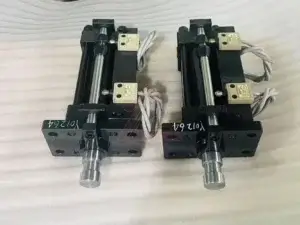
4. Applications in Injection Molding and Die Casting
The Mold Hydraulic Cylinder is essential in plastic injection molding and die-casting machines. In injection molding, the clamping cylinder holds the mold closed while the injection cylinder injects molten plastic. After cooling, the ejector cylinder pushes the part out. In die casting, similar cylinders handle clamping, core pulling, and part ejection under extreme temperatures and pressures.
Beyond primary molding machines, Mold Hydraulic Cylinders are used in auxiliary equipment such as hot runner systems, stack molds, and unscrewing mechanisms. They enable complex geometries by operating slides, lifters, and collapsible cores.
5. Key Design Features for Mold Applications
A Mold Hydraulic Cylinder intended for molding service must meet several specialized requirements:
Compact envelope: Fits within the limited space of a mold base or platen.
High force density: Delivers maximum force from a small bore size.
Precision and repeatability: Consistent positioning for perfect mold closure and part ejection.
Corrosion resistance: Often uses stainless steel or nickel-chromium rods to withstand moisture and molding compounds.
High-cycle durability: Capable of millions of cycles without seal failure.
Many Mold Hydraulic Cylinders also include integrated position sensors (linear transducers or proximity switches) for closed-loop control.
6. Advantages of Hydraulic Over Pneumatic for Molds
While pneumatic cylinders are sometimes used, a Mold Hydraulic Cylinder offers several advantages:
Higher force: Hydraulics can generate many times the force of pneumatics in the same envelope.
Smooth, controllable speed: Hydraulic flow control allows precise velocity regulation.
Hold-and-lock capability: Hydraulic cylinders can maintain clamping force without continuous energy input using check valves.
Compact size: For a given force, a Mold Hydraulic Cylinder is much smaller than a pneumatic cylinder.
7. Selection Criteria
When selecting a Mold Hydraulic Cylinder for your application, consider:
Required clamping or ejection force (calculate from material pressure and part geometry)
Stroke length
Operating pressure (typically 150–300 bar for molding machines)
Mounting style (flange, threaded body, clevis, or trunnion)
Rod material and coating (chrome, stainless steel, or ceramic)
Seal material (compatible with hydraulic fluid and temperature range)
Integrated sensor requirements
8. Maintenance Tips
To keep a Mold Hydraulic Cylinder operating reliably:
Inspect rod surface regularly for scratches or corrosion.
Check for external leaks at the gland and port fittings.
Monitor hydraulic fluid cleanliness; contaminated fluid is the top cause of seal failure.
Replace seals at recommended intervals (2-3 years or 5,000-10,000 operating hours).
Keep the cylinder exterior clean to prevent contamination ingress.
Conclusion
A Mold Hydraulic Cylinder is a purpose-built hydraulic actuator that enables precision mold clamping, part ejection, and core pulling in injection molding and die-casting machines. Whether you need a hydraulic clamping cylinder, ejector cylinder, core pull cylinder, mold opening cylinder, injection molding cylinder, or die casting cylinder, understanding this technology ensures correct selection and reliable operation. By choosing the right Mold Hydraulic Cylinder for your mold design, you achieve higher product quality, faster cycle times, and reduced downtime.